The Show Must Go On: Three Ways Performing Arts Venues Can Improve Security Processes

Why did this happen? Why now?

Twenty years ago, we asked ourselves these questions after hearing news of senseless terrorist attacks at iconic locations in major world cities.

Today, we’re still asking questions, but now we’re concerned about where the next attack might happen. Shootings and bombings are no longer limited to iconic venues in iconic cities. They can happen anywhere – at an indoor concert in Manchester, England, an outdoor show in Las Vegas, Nevada, a nightclub in Orlando, Florida. Terrorism has proliferated into many different towns and cities, perpetuated by individuals inspired in their basements and armed with weapons from stores in their neighborhood.

The security professionals responsible for protecting different types of venues including entertainment and performing arts centers also ask these questions. While most use methods such as deployed guards and closed-circuit TV (CCTV) cameras as the cornerstones of their security strategy, there are limitations to these methods. In the U.S., for example, security guards earn an average annual wage of just over 0,000 and the annual turnover at guard companies is between 100% to 300%. On average, a security guard will remain in the same job for only three to 12 months! Technology can help mitigate these inconsistencies and is critical to enabling the more effective protection of these venues.

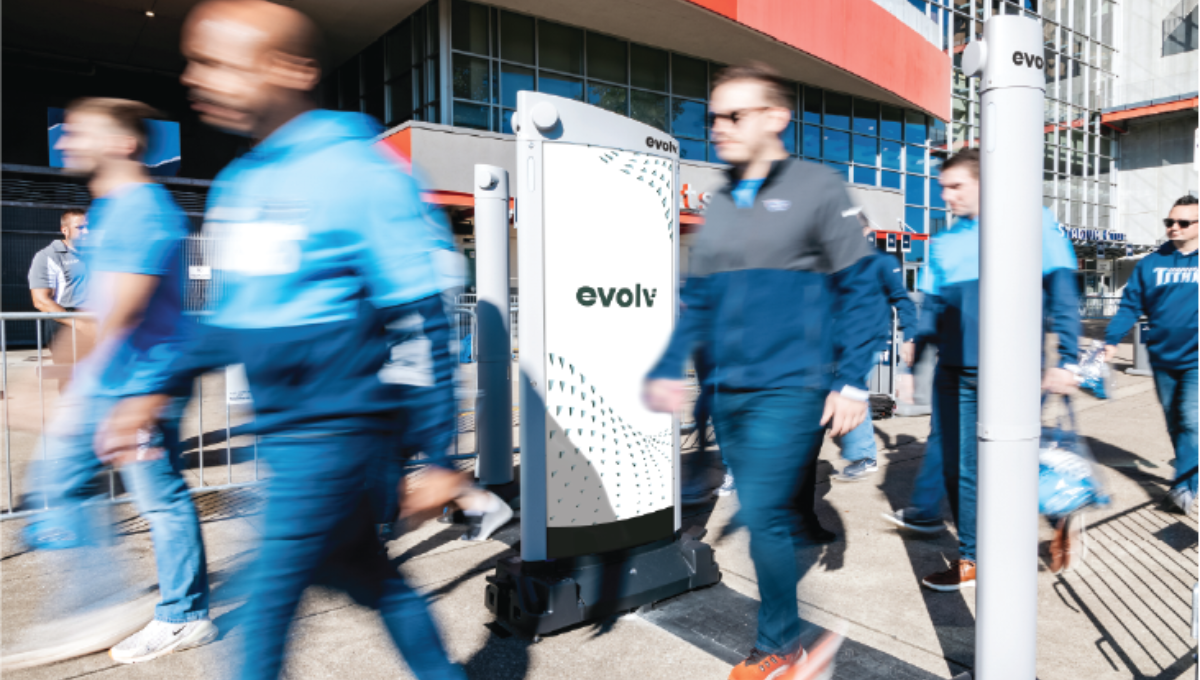
People going to see a movie, show, or concert are out to have an enjoyable experience. They have countless ways to spend their time and money, and organizations work hard to provide the best “entertainment” for their paying guests. They do not want to encumber their guests with long lines, slow security or burdensome processes. With improved technology, today it is possible for entertainment venues to offer a simple, unobtrusive experience to visitors entering while providing an enhanced level of security.

Performing arts venues pose a unique set of security challenges. Theaters, for example, tend to be high profile venues that play a prominent role in their cities. Live theater performances start promptly at a designated time, often with guests arriving from dinner or work just before showtime. Performers and patrons don’t want to be distracted by people filing in after the show commences, so doors are closed when the curtain goes up. As a result, security teams are under tremendous pressure to get people screened and seated quickly. Just before showtime is when the security process gets most chaotic.

Many performing arts venues are open and inviting by design. They were designed to encourage the public to come in and enjoy the art and architecture. This open environment runs directly counter to a secure building perimeter with checkpoints.

The “who” and the “what” are also unique elements for these organizations. The genre or artist can often dictate the type of crowd one might expect to see in attendance. The audience attending a chamber music recital is likely very different from the audience attending a rock concert. As entertainment venues broaden the types of performances they offer, security should be able to ”ramp up” or “ramp down” accordingly.

Lastly, guards are people and human behavior is inconsistent. Capability from guard to guard is different, and a specific guard’s security vigilance often wanes over the course of an evening. Very likely, the one hundredth person he or she screens is subject to a different level of scrutiny than the first. Experience, training, fatigue, and human error play a role in how thorough and effective a search is conducted.

  • Use security technology to improve upon the existing processes with more consistent and automated detection capability. Take the security approach to the next level by providing your guards with technology to augment their practices.
  • Offer the ability to consistently screen and to change the level of screening depending on when or where the event is or who the performer is.
  • Rather than using clunky metal detectors, use a blend of state-of-the-art technologies – high throughput technologies with sensors and artificial intelligence.

The threat landscape has shifted significantly in recent years. We could all use a night out to forget about the daily headlines. Performing arts organizations can help us enjoy our visits by adopting modern security methods that protect while keeping the user experience intact.    

To learn more about how to balance security and visitor experience, click here.

Evolv Technology to Present Aviation Lessons on Combatting Insider Threat at Global Security Exchange

BOSTON, September 12, 2018 – Evolv Technology, creator of the Evolv Edge® physical threat detection and prevention system powered by artificial intelligence, announced today it is presenting at Global Security Exchange (GSX) on a panel discussion titled, “Aviation Lessons on Combatting Insider Threat.” Evolv Technology’s Bill McAteer will share key learnings and best practices based on his more than twenty-eight years of working at Federal Agencies and in police and emergency management.

THE PANEL DISCUSSION:

Bill McAteer, CPP, account executive at Evolv Technology, and fellow panelists will discuss how theft, violence, smuggling, and sabotage are among the real insider threats facing organizations and the security professionals that support them. Recent incidents of aircraft sabotage abroad have heightened the concern. Theft and smuggling rings in the U.S. have brought additional attention to mitigating insider threat. Aviation security experts on the panel will examine new industry measures, vetting, identity management, access controls, and employee search protocols that are being implemented to enhance security in the aviation industry.

Other panelists include:

Shayne Bates, CPP, Principal Consultant for Stratum Knowledge, LLC
Michele Freadman, CPP, Deputy Director, Aviation Security Operations for Massachusetts Port Authority
Joshua Jackson, Regional Vice President, North America for Right Crowd Software
Donald Zoufal, CPP, Safety and Security Consultant for CrowZnext Consulting, Inc.

Session Number: 6308

WHERE:

Las Vegas Convention Center (LVCC), Room N102

3150 Paradise Road

Las Vegas, NV 89019

WHEN: Wednesday, September 26, 3:45 – 4:45 p.m. PT

ABOUT THE SPEAKER:   

In his role at Evolv Technology, Bill McAteer is a key sales executive that provides security solutions to airports and public venues. Prior to entering the private sector, Bill served in law enforcement where his diverse experience included working in county, city and at Federal Agencies. He retired as a Commander with the Port of Seattle Police Department. Bill has a Master’s Degree in Homeland Security and serves as a part-time lecturer with Northeastern University’s College for Professional Studies Master’s Program where he teaches Homeland Security and Aviation Security classes. Bill is an active member of the ASIS Florida West Coast Chapter (Tampa) and is a Certified Protection Professional with ASIS.

For company news and updates, follow us on Twitter at @EvolvTechnology and on LinkedIn. For related information, read our recent blog post about how customer Oakland International Airport is enhancing its employee screening program and safeguarding against insider threats.

Contacts

Corporate Contact for Evolv:
Melissa Cohen, +1-781-374-8047
mcohen@evolvtechnology.com
Or
Media Contact:
Alexandra Evans, +1-617-502-4300
evolv@pancomm.com

Five Factors to Improve Today’s Physical Security Screening Experience

Security screening technology is often measured by three factors – detection, alarm rates and throughput. At the macro level, these three metrics give a broad sense of whether or not a device will improve an overall security process. However, these three pieces don’t tell the whole story. Two other factors, closely tied to throughput, flesh out the overall security trade space. They are “touch rate” and “divestiture.”

  • The traditional factors – detection, alarm rates and throughput.
  • The five “must consider” factors – detection, alarm rates and throughput, along with touch rate and divestiture.

Only when the entire set of factors is considered as a whole, can the effectiveness and efficiency of the device be evaluated. In today’s world where physical security screening has become the “norm” in more and more of the places we gather, the latter two factors become increasingly important — to find a purpose-built device and the right process.

The age-old adage “there are two sides to every coin” speaks volumes. While “throughput” is important to security operators, it’s the combination of throughput, touch rate, and divestiture that matters to your customer.

With this is mind, when the U.S. Department of Homeland Security’s Transportation Security Administration (TSA) created the TSA Precheck Program, the focus was specifically on two things beyond detection: 1) touching people less and 2) letting them leave everyday items on or in their pockets and in bags. While “throughput” wasn’t the central tenant of the program, it was believed that doing the first two things for a growing population of travelers would ultimately speed up throughput for all travelers.

When the program was created its authors wondered whether these two things would be material enough to make a difference in the physical screening experience. More than half a decade later, there is a clear differentiation between the highly customer-focused TSA Precheck practice and “regular” screening, underscoring the point that customers place high value on an improved experience.

Customer experience matters.

Not all customer environments will be the same; each will have slightly different objectives. Some will be in high threat locations; others will not. Regardless of the customer or their venue, the following things will always ring true. First, your physical screening system must detect threats at a high level and with limited alarms. Second, your physical screening system must do this in a way that keeps people moving, minimizes physical touching and allows them to walk at their pace without losing control of their belongings. Finally, in a world of limited or shrinking budgets, your system must be able to deliver efficiencies – either in terms of hard budget savings or repurposed security resources.

If you’re reading this blog, it’s possible that you’re implementing a comprehensive security screening solution for the first time. Or, perhaps, you’ve already implemented something in response to growing threats over the past decade. In either case, I encourage you not to start at square one. Why not learn from the organization that has been the face of post 9-11 security for almost two decades? Certainly, the TSA has made mistakes. And, thankfully, they have also made significant advances. You can learn from both, and you don’t have to spend a decade to do it.

Consider the five factors discussed above and evaluate your overall security process through a customer lens. Is the technology in your current process, or the one you are considering, purpose built to meet today’s security concerns while also preserving the culture, look, and feel of your venue? If it isn’t, you have options. There will always be two sides to this coin, but there are ways to ensure that both shine for decades to come. Contact us to find out how.

Note: To underscore the importance of the customer experience, I highlighted the tangible changes to TSA Precheck screening. It’s important to acknowledge the foundation of the program is built on the concepts of trust and access, and the public’s willingness to share personal information for the benefit of this streamlined screening experience.