Security Teams: Best Practices to Prevent Active Shooters in the Workplace

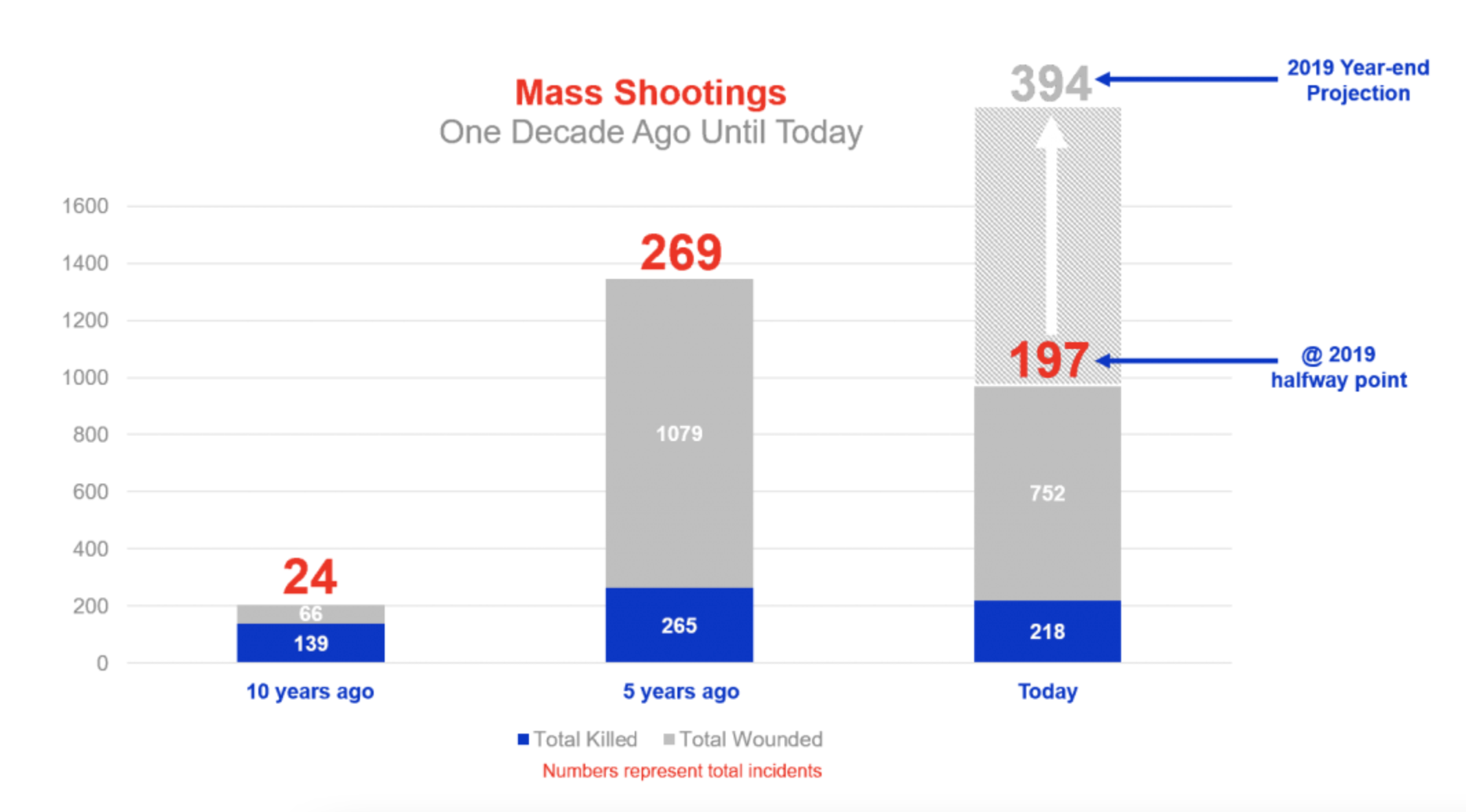
As the number of mass shootings continues to grow, thenumber of potential ‘soft targets’ seemingly grows as well.  One of the latest target of such violence wasthe workplace, where a mass shooting occurred at the municipal center in VirginiaBeach, claiming the lives of 12 people. This latest attack was thedeadliest mass shooting in the U.S. since November.

The shooter was a disgruntled employee, who previously hadgiven little indication of the potential threat he posed to hiscolleagues.  But the incident hammershome our sad new reality: the threat of an active shooter can touch us inalmost every facet of our lives.

Violence in the workplace is not a new phenomenon, but it isa growing concern.  Securityprofessionals, business leaders, human resource workers, and venue operatorsneed to proactively plan for these worst-case scenarios to protect employees. And,the best way to protect employees = PREVENTION!

Based on recent events and our years of experience in helping organizations provide greater physical security, here are some best practices to prevent incidents from happening in the first place.

A One-size-fits-all Approach to Security No Longer Fits

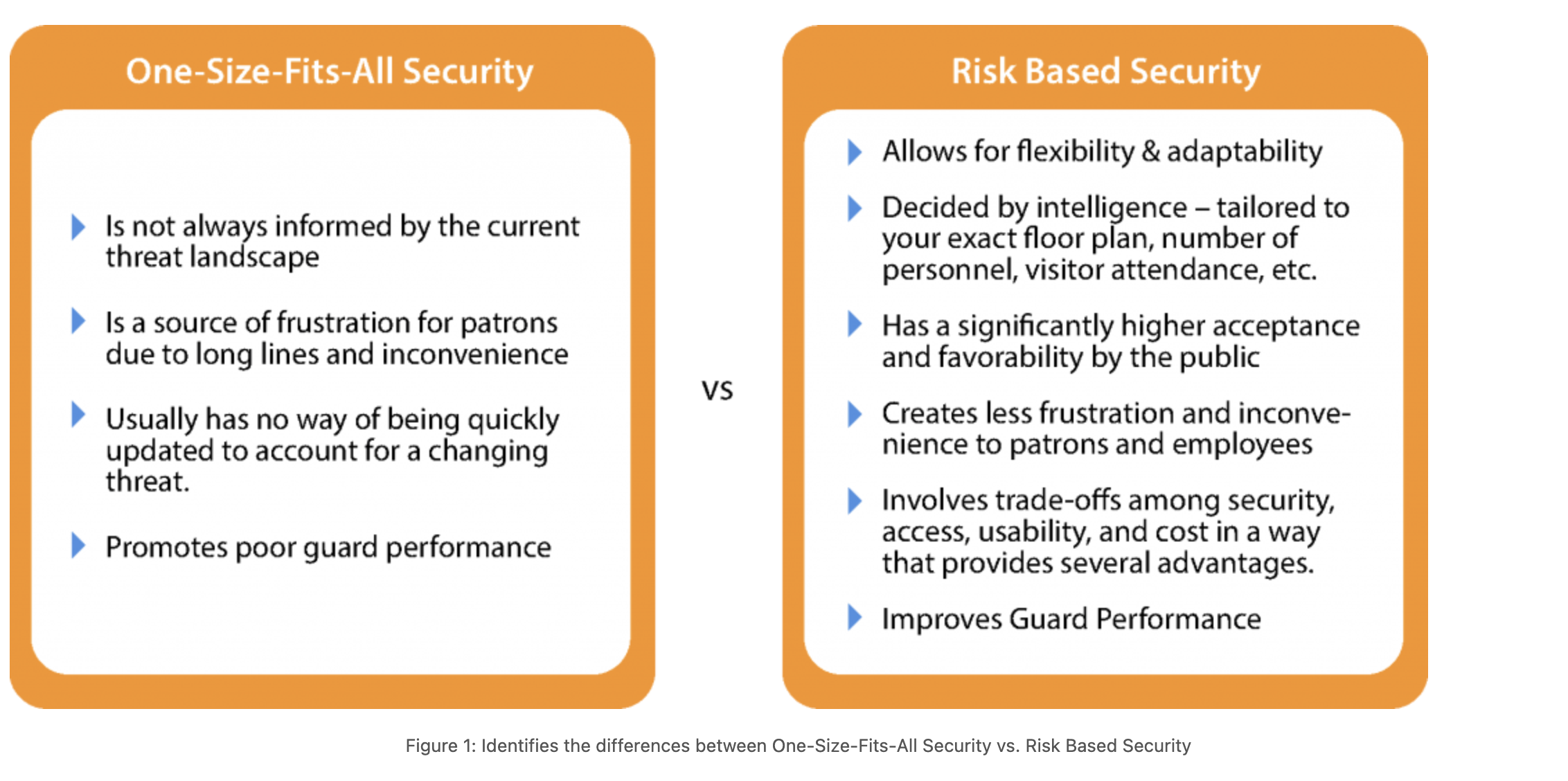
Security experts generally agree the use of a venue specific Risk Based Security (RBS) approach is preferable to “one-size-fits-all” solutions. RBS balances security, visitor experience, operational efficiency, and cost considerations. This will help you plan for high-pressure, emotional situations in the workplace, such as terminations or layoffs.

null

Interested in learning more about Risk Based Venue Security? Download the white paper authored by leading security experts, John Pistole and Mark Sullivan.

Know Your Facility

One of the first things any organization should do isperform an exterior physical security threat assessment. Walk the perimeter andidentify all entry and exit points for your facility. Determine if you’re ableto lock down the facility, and if so, identify what it will take to quicklymake that happen without letting unwanted persons in, or a person of interestto escape.

Upon performing your perimeter check and identifying gaps,work with local law enforcement to make them familiar with your facility.  They will also be able to provide additional preventativemeasures you and your staff can take to secure your facility and reduce yourthreat risk.

Your organization should focus on developing and communicating strong policy that clearly outlines what to do to prevent workplace violence.  Departments and individuals, such as HR, Security, facilities managers and executives need to work together to define the high-risk incidents and acts of violence most likely to impact their organization. They should proactively put together multi-layered security plans for these scenarios to prevent workplace violence.

One critical example of this planning scenario is how to deal with employees upon termination or resignation. Your policy group needs to determine when it’s appropriate to have Security escort terminated employees from the building, and how to handle an employee when they have given their notice. There needs to be clear lines of communication to ensure that IT and Security immediately revoke computer and building access upon termination so that former employees can’t return to the premises, or access company files remotely. Once your multi-layered security plan is in place, educating employees on a regular basis is critical.

Visible Security = Deterrence

The National Institute of Building Science recently released a study showing that proactive building security design can reduce the risk of an active shooter incident.

null

Maintaining a strong security presence can not only deterattacks from taking place in your workplace, but simultaneously show employeesthey’re being protected.

Adding tighter security measures, like security guards and video surveillance technology, can help protect employees and customers, while actively dissuading potential shooters from entering the premises.

Screen for Weapons WithoutUsing a Metal Detector

The reality is, onlya select few entering a facility pose a threat, which poses the question:how do you treat the majority of individuals as the non-threatening people theyare, while pulling out those very few for additional scrutiny?

Increasing security measures to protect employees should not create additional hassles on the way into work or make anyone feel like a suspect.  To ensure you mitigate risks, while maximizing throughput, think “out with the old, in with the new”:

Pipe Mail Bomb

  • Avoid Outdated Technologies

    In the past, walk-through metal detectors (WTMD) were our best option to discover metal weapons prior to an individual bringing them into a venue. However, they were simply not designed to detect and prevent today’s modern threats.

    Developed in the late 1900s, the WTMD technology has seen virtually no improvement and requires employees to stop and empty their pockets and bags. They also cannot distinguish between a computer or phone and a gun. This slow-moving, single-file security procedure creates long lines and frustrations for everyone involved, along with a soft target in and of itself.

Evolv Edge

  • The Next Generation in Security: New Advancements in Weapons Screening

    As the threats against our safety and security continue to evolve and become increasingly unpredictable, security systems must advance with them.

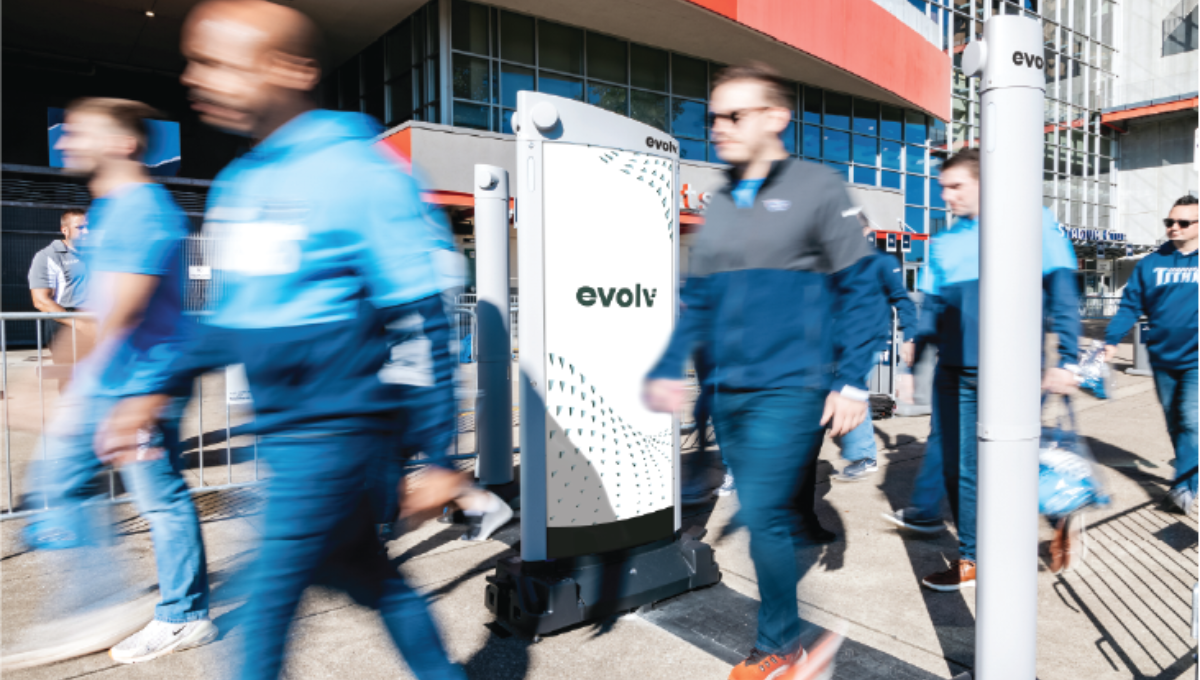
    Look to incorporate innovative solutions that can mitigate risks while maximizing employee throughput. New technology, such as advanced sensors and AI, are being leveraged for modern weapons-sensing physical security solutions specifically made for today’s threats.

    Screening solutions that detect guns and other weapons can help businesses better detect active shooters before they enter the building. These types of solutions ensure that security guards are better-informed of potential threats and can take quicker and more precise action to deter an attack from starting in the first place.

Neil Sandhoff Presents @ IAVM

Airport Security: When it Comes to Employees, Metal Detectors Are the Problem

The aviation security community has always been proactive and innovative with the introduction of new security technologies, policies and strategies. Whether its revamping screening processes for carry-on bags or drones for perimeter security, adoption rates for new technology aimed at thwarting threats has always been a consistent focus the aviation community. Yet there is one area of airport security that remains unsolved – insider employee threats.

While the vast majority of airport employees are not threats, out of the estimated 1million employees working in airports nationwide, it’s hard to overstate the importance of the need to protect against the insider threat. Especially with the steady uptick in insider threat incidents in recent years,A few examples include a baggage handler for Hartsfield-Jackson that was sentenced for gun smuggling, nine Dallas airport employees that admitted they plotted to smuggle drugs, weapons and plastic explosives, and a Horizon Air workerwho stole and flew commercial aircraft over the Seattle area.

Employees and Passengers Are Not the Same 

Unfortunately, the solution is not as simple as applying the passenger screening process to employees. While passengers plan to arrive hours before their flight to account for the expected airport security lines, it is unfair to expect the same scenario out of employees.

When shift changes occur, hundreds and in some cases, thousands of airport workers enter the airport at once. Forcing those individuals to undergo the slow-moving and single-file screening process that is required of passengers would inevitably prevent employees from getting to their posts at their scheduled start time, thus causing flight delays, which can negatively impact passenger satisfaction and airline finances.

MetalDetectors Are Part of the Problem 

Thesedifferences in screening scenarios shine light on the severelimitations of using metal detectors in the screening process.  

The technology in metal detectors is designed to detect only metal and is unable to differentiate between other everyday metallic items, such as cell phones or belt buckles. Because of this, individuals are asked to stop and divest of personal belongings, which inevitably creates delays and long lines. Further,when guards repeatedly find that the detectors’ alarms are due to those everyday items and not weapons, they become desensitized and inadvertently less effective in the screening process.

Despite this being the norm for passenger screening, this process cannot keep up with the demands of employee screening.  

Revamping the Employee Screening Process

With these significant limitations and challenges in mind, consider looking to replace antiquated screening solutions with more advanced technologies that leverage Artificial Intelligence (AI), and utilize advanced scanners, or even biometric capabilities.

If you do choose to onboard new technologies, ensure they meet the following capabilities to best protect against insider threats and improve the employee screening process:

  • Speed 

    Because airport shift changes can include up to thousands of employees at once, it’s important that your next screening solution quickly and efficiently move individuals through without sacrificing security.

    To do this, look for screening solutions that don’t require individuals to pause, pose, or divest of personal items. Technology that allows individuals to walk through with ease will best prevent bottlenecks, and ensure employees get to their stations on time.

  • Accuracy 

    Today’s threats extend far beyond the limits of metal, with bombs and other non-metallic weapons increasing in popularity every day.

    To ensure modern threats do not go unnoticed, your next screening solution should be able to identify several types of weapons, as well as differentiate between a gun, toy, or cell phone. With advanced intelligent detection capabilities, security guards are better-informed of potential threats and can take quicker and more precise action to deter an attack to stay “left of bang.”

  • Flexibility

    Implementing a rigid and predictable screening process can unfortunately create opportunities for people to use it against the venue that’s trying to stay protected.

    The ability to deploy screening solutions anywhere at any time creates an element of surprise and significantly limits the insider threat. Airports should look for flexible solutions that are self-contained and easy to move so that security checkpoints can be deployed on a whim. 

We can expect to see the insider threat problem proliferate across U.S. airports and beyond. To get ahead of this growing problem, consider reevaluating your employee screening process, educating yourself on the problem and identifying innovative solutions to address the ever-growing insider threat. An added benefit? Creating a no-hassle screening process for your employees can significantly impact job satisfaction and ultimately help with retaining employees.

Celebrating July 4th Should Be Fun AND Safe

Holidays andcelebrations bring people together — but in doing so, create “soft targets”,i.e. locations and venues that people gather that aren’t closely or heavilymonitored and protected.

Examples of large,well-known holiday gatherings include Rockefeller Center around Christmastime,the annual St. Patrick’s Day parade in Boston, and the New Year’s Eve fireworksshow at TIAA Bank Field in Jacksonville, Florida.

Since we know thatattackers are increasingly targeting public venues and large-scale gatherings,as security professionals, we have an opportunity to transform the way weapproach security to meet this evolving threat landscape.

Withone of the most popular holidays in America right around the corner, it’simportant to recognize the myriad ways we create soft targets during the fourthof July. Whether the Boston Pops July 4 Firework Spectacular, acommunity concert, or workplace barbeque, massive amounts of people areplanning to come together in celebration across the country.

Ona day intended to celebrate freedom, one of the last things venues want to dois burden guests with onerous security measures. However, allowing these largegatherings to go unprotected is a sure way to create a soft target and openyourself up to an attack.

Here are several proactive best practices that your venue – outdoor or indoor – can take to protect your staff and guests this 4 of July.

1. Collaborate with Law Enforcement

In the event of an attack, local law enforcement is essential to mitigating damage and protecting guests. Your venue security, law enforcement (e.g. police, fire department, etc.), and venue staff should all be introduced prior to an event. Establishing relationships between these is key to fast, streamlined emergency response.

2. Perform a Security Threat Assessment

In light of recent active shooter and bomb incidents, performing a security threat assessment and establishing specific response protocols will help safeguard your staff and guests.

In partnership with local law enforcement, walk the perimeter and identify all entry and exit points. Determine if you are able to lock down the event – and if so, identify what it will take to quickly make that happen without letting unwanted persons in, or a person of interest to escape.

It’s good to ask yourself these questions while performing your assessment:

  • Where are the gaps in our security?
  • What will we do if a threat is identified?
  • Do we have enough perimeter control measures? (i.e. gates, security personnel, signage, etc.)
  • Do we have screening systems in place to identify persons of interest and detect threats?
  • How do we physically lock down the event?
  • Will communicating to all security personnel and law enforcement be easy?
  • How easy will it be for law enforcement to enter the venue/event?
  • Where should local law enforcement be placed for rapid response?
  • Do we have proper evacuation signage for event attendees?
  • If an incident occurs, and exiting the event is not an option, do we have adequate areas for attendees to take shelter?

3. Build Emergency Response Plans & Procedures

Upon performing your security threat assessment with local law enforcement and your security staff, you will want to work together to determine safety plans and procedures in the case of an attack.

Think about including the following:

  • An emergency response & communications plan – to ensure all staff and local law enforcement know what to do and are notified immediately
  • A bomb threat plan – to manage bomb threat calls and know what to do if you locate a suspicious object
  • An evacuation plan – with venue layout and evacuation routes

4. Incorporate Visual Deterrents

While creating plans and procedures, as well as highlighting evacuation routes, are an important and necessary process to ensure you are prepared, there are a few ways to keep yourself left of boom/bang.

Notifying guests that there are screening solutions upon entrance has actually proven to prevent attackers from entering or even targeting a venue. For example, the Orlando nightclub shooting that took place in 2016 was actually intended for Disney World’s shopping and entertainment complex, however the shooter became spooked by police that were on-site and instead chose the night club as his target.

Thus, maintaining a strong security presence can deter attackers from executing their plans and simultaneously show guests they’re being protected. Whether you implement visible cameras, strategically place security guards and police on horseback, add signage identifying items guests are prohibited from carrying into the venue, or simply alert guests that they’ll be subject to screening, there are numerous ways to show an attacker that the venue is prepared to deter an attack. 

As Americans look forward to sporting red, white and blue, you and your staff need to be prepared for potential attacks on your celebrations. For more resources on protecting mass gatherings, the Department of Homeland Security provides several steps venues can take to strengthen security posture. And, for future events, consider implementing next-generation weapons-sensing technology to efficiently identify threats and improve your guests’ experience.

Looking to learn more about how to protect a soft target? Read our blog “Relying on 100-Year-Old Technology is Not the Answer to Stop Today’s Active Shooter.”