Entertainment And Retail Destination Distrito T-Mobile Keeps Visitors Safe With Evolv Technology

The venue is Evolv’s first customer in Puerto Rico 


Evolv Technology (NASDAQ: EVLV), the leader in weapons detection security screening, today announced its newest partnership, with Distrito T-Mobile. The entertainment complex is Evolv’s first customer in Puerto Rico, and reflects the company’s growing presence outside of the continental United States. 

Distrito T-Mobile, which opened in August 2021 and is located in the Miramar section of San Juan, drew more than 1.7 million visitors in its first six months of operation. Evolv’s state-of-the-art Evolv Express® weapons screening solution allows visitors to seamlessly walk into the 476,000 square-foot complex, without burdensome delays at the entrance. 

“Distrito T-Mobile is just getting started,” said Francisco Mariani, Distrito T-Mobile’s General Manager. “The response from the public so far has been outstanding, and we are so happy to have Evolv on board to help keep our visitors safe. Providing a secure entertainment destination is our priority”     

In addition to restaurants, a hotel, and a movie theater, Distrito T-Mobile is home to an urban park with ziplines and a rock-climbing wall. Coca-Cola Music Hall, which seats as many as 5,000 people per show, is also a major attraction, hosting a variety of entertainment activities, including concerts, family shows and corporate meetings. 

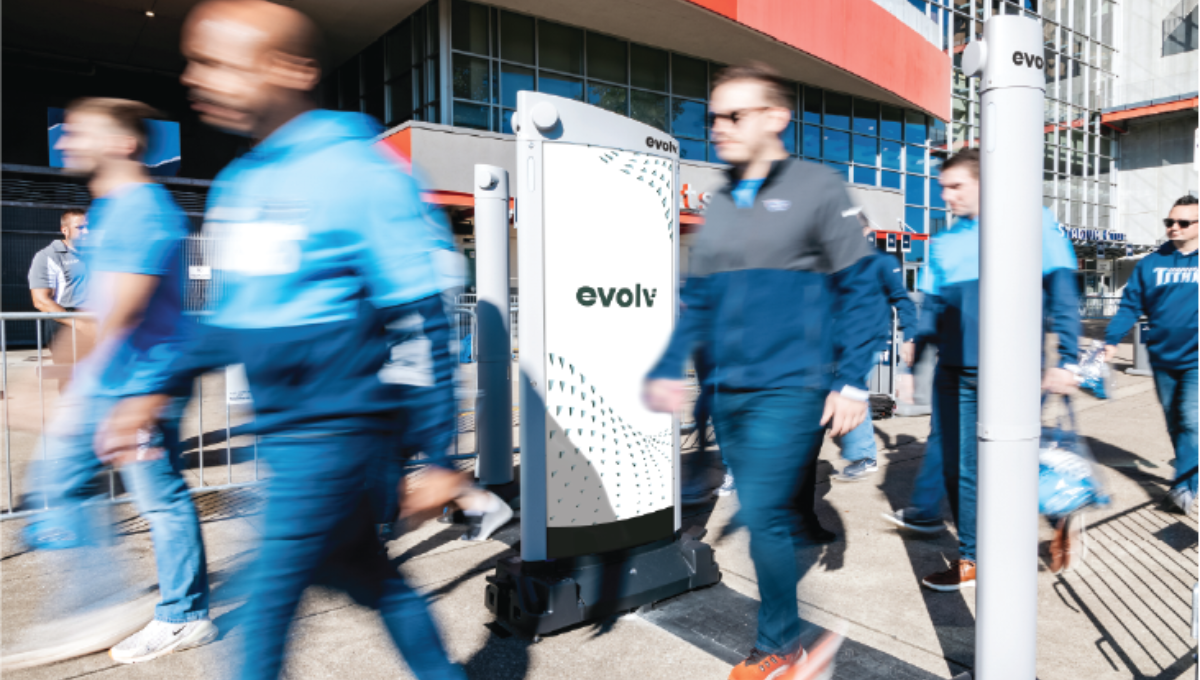
Protecting it all is Evolv Express®, which combines powerful sensor technology with artificial intelligence (AI) to provide safer, more accurate threat detection at unprecedented volume, ease and speed. The technology enables guests to walk through security screenings side-by-side, without removing items from their pockets or bags.  

“This partnership is exciting because not only does Evolv help visitors to Distrito T-Mobile stay safe, but the work we are doing together marks our expansion into Puerto Rico,” said Peter George, CEO of Evolv Technology. “Our mission is to help make the world a safer place, and this brings us another step closer to that.”  

Distrito T-Mobile is a part of Puerto Rico’s rebuilding efforts following Hurricane Maria and devastating earthquakes. The venue expects more than 3 million visitors by the end of its first year of operation, with more than 80 concerts and private events scheduled at the Coca-Cola Music Hall for the remainder of 2022. 

About Distrito T-Mobile 

Distrito T-Mobile is Puerto Rico’s premier entertainment destination. The 476,000 square-foot complex features a Caribbean Cinemas VIP movie theater, Toro Verde Urban Park, with ziplinesan arcade and virtual reality gaming center , a wide range of restaurants,the Coca-Cola Music Hall, and the first Aloft hotel in the Caribbean. Its facilities and concepts of food, beverages and entertainment connect at the heart of the project, Popular Plaza. A 50,000 square feet plaza with a fully digitized 14,500-footstage system with 19 LED screens and 19 million pixels, providing a 360 experience to visitors. This is the meeting point for locals and tourists looking for unique experiences and human connection in real-time and space.  For more information, visit https://distritot-mobile.com

About Evolv Technology 

Evolv Technology (NASDAQ: EVLV) is transforming human security to make a safer, faster, and better experience for the world’s most iconic venues and companies as well as schools, hospitals, and public spaces, using industry leading artificial intelligence (AI)-powered weapons detection and analytics.  Its mission is to transform security to create a safer world to work, learn, and play. Evolv has digitally transformed the gateways in places where people gather by enabling seamless integration with unparalleled analytics and insights.  Evolv’s advanced systems have scanned more than 250 million people, second only to the Department of Homeland Security’s Transportation Security Administration (TSA) in the United States.  Evolv has been awarded the U.S. Department of Homeland Security (DHS) SAFETY Act Designation as a Qualified Anti-Terrorism Technology (QATT) as well as the Security Industry Association (SIA) New Products and Solutions (NPS) Award in the Law Enforcement/Public Safety/Guarding Systems category. For more information, visit https://evolvtechnology.com.  

Evolv Technology, Evolv Express®, Evolv Insights™, and Evolv Cortex AI™ are registered trademarks or trademarks of Evolv Technologies, Inc. in the United States and other jurisdictions. 

For more information, visit https://evolvtechnology.com

Forward-looking Statements  

Certain statements in this press release may constitute “forward-looking” statements and information, within the meaning of Section 27A of the Securities Act of 1933, Section 21E of the Securities Exchange Act of 1934, and the safe harbor provisions of the U.S. Private Securities Litigation Reform Act of 1995 that relate to our current expectations and views of future events. In some cases, these forward-looking statements can be identified by words or phrases such as “may,” “will,” “expect,” “anticipate,” “aim,” “estimate,” “intend,” “plan,” “believe,” “potential,” “continue,” “is/are likely to” or other similar expressions. These forward-looking statements are subject to risks, uncertainties and assumptions, some of which are beyond our control. In addition, these forward-looking statements reflect our current views with respect to future events or our Company’s performance and are not a guarantee of future performance. Actual outcomes may differ materially from the information contained in the forward-looking statements as a result of a number of factors, including, without limitation, the risk factors set forth in our Annual Report on Form 10-K for the year ended on December 31, 2021, that was filed with the SEC on March 28, 2022, and other documents filed with or furnished to the SEC. These statements reflect management’s current expectations regarding future events and operating performance and speak only as of the date of this press release. You should not put undue reliance on any forward-looking statements. Although we believe that the expectations reflected in the forward-looking statements are reasonable, we cannot guarantee that future results, levels of activity, performance and events and circumstances reflected in the forward-looking statements will be achieved or will occur. Except as required by law, we undertake no obligation to update or revise publicly any forward-looking statements, whether as a result of new information, future events or otherwise, after the date on which the statements are made or to reflect the occurrence of unanticipated events. 

Evolv Technology Helps Makes School Safer in Central Illinois

High school students and teachers say the focus is back on learning

When students returned to the classroom following months of remote learning due to the pandemic, schools went back to making decisions about the best ways to keep students safe. For the Champaign Unit 4 School District in central Illinois, the solution has been the leader in weapons detection security screening, Evolv Technology (NASDAQ: EVLV). Champaign is using Evolv Express® at its Central and Centennial high schools, with impressive early results.

The Champaign school board’s decision to partner with Evolv was made after a number of security incidents, including students who were found carrying handguns, BB guns and knives, threats made via social media, and a shooting at a neighboring high school. To proactively address potential violence, the district instituted wand checks conducted by teachers and administrators. However, manually wanding students led to long lines and missed learning. Some students were missing their first period class entirely due to waiting up to two hours to enter school in the morning. Evolv has proven to be a more efficient method to help keep students, faculty, staff and visitors safe. In just its first two months of use, Evolv screened more than 182,000 visitors to the two high schools and detected multiple weapons.

Evolv Express® uses powerful sensor technology with artificial intelligence (AI) to provide safer, more accurate threat detection at unprecedented volume and speed. Students walk right through without having to stop, speeding up the process and making them feel safer without being intrusive.

“With the metal detectors and wanding, the students felt like they were in jail,” said Valarian Couch, chief information officer for the Champaign Unit 4 School District. “They felt like they had to be searched for everything. But if they do not feel safe enough to come to school, at some point we have to put mechanisms in place. With Evolv, they feel like it’s just another day – they get to walk into school and not have any problems. The teachers too. To have a safe environment and for the teachers to say, ‘Well, now we can actually start teaching,’ is huge.”

Two additional Express systems will be set up to screen fans at high school football games beginning this fall, and the district is looking at data provided by Evolv to determine whether to implement additional systems at the district’s middle schools. It is also working to integrate Evolv with its existing camera system for enhanced security.

“We believe no student should ever have concerns about security in school,” said Peter George, CEO of Evolv Technology. “We are happy to be working with the Champaign School District to help keep students and teachers safe and put the focus back in the classroom where it belongs.”

That sentiment is the basis behind GiveEvolv, an Evolv subsidiary, that donates Evolv’s state-of-the-art weapons detection at no cost to schools in need. Schools in areas impacted by gun violence that could not otherwise afford the technology are encouraged to apply for a grant at evolvtechnology.com/giveevolv.

About Champaign Unit 4 School District

Champaign Unit 4 School District 4 is a large unit school district serving more than 10,000 students in grades pre-K through 12 in Champaign, Savoy, and Bondville, Illinois. The diverse school community includes students hailing from 77 countries, speaking more than 80 different languages. The district’s 19 campuses employ more than 1,900 teachers, administrators, and support personnel.

About Evolv Technology

Evolv Technology (NASDAQ: EVLV) is transforming human security to make a safer, faster, and better experience for the world’s most iconic venues and companies as well as schools, hospitals, and public spaces, using industry leading artificial intelligence (AI)-powered weapons detection and analytics.  Its mission is to transform security to create a safer world to work, learn, and play. Evolv has digitally transformed the gateways in places where people gather by enabling seamless integration with unparalleled analytics and insights.  Evolv’s advanced systems have scanned more than 250 million people, second only to the Department of Homeland Security’s Transportation Security Administration (TSA) in the United States.  Evolv has been awarded the U.S. Department of Homeland Security (DHS) SAFETY Act Designation as a Qualified Anti-Terrorism Technology (QATT) as well as the Security Industry Association (SIA) New Products and Solutions (NPS) Award in the Law Enforcement/Public Safety/Guarding Systems category. For more information, visit https://evolvtechnology.com.

Evolv Technology, Evolv Express®, Evolv Insights™, and Evolv Cortex AI™ are registered trademarks or trademarks of Evolv Technologies, Inc. in the United States and other jurisdictions.

For more information, visit https://evolvtechnology.com.

Forward-looking Statements

Certain statements in this press release may constitute “forward-looking” statements and information, within the meaning of Section 27A of the Securities Act of 1933, Section 21E of the Securities Exchange Act of 1934, and the safe harbor provisions of the U.S. Private Securities Litigation Reform Act of 1995 that relate to our current expectations and views of future events. In some cases, these forward-looking statements can be identified by words or phrases such as “may,” “will,” “expect,” “anticipate,” “aim,” “estimate,” “intend,” “plan,” “believe,” “potential,” “continue,” “is/are likely to” or other similar expressions. These forward-looking statements are subject to risks, uncertainties and assumptions, some of which are beyond our control. In addition, these forward-looking statements reflect our current views with respect to future events or our Company’s performance and are not a guarantee of future performance. Actual outcomes may differ materially from the information contained in the forward-looking statements as a result of a number of factors, including, without limitation, the risk factors set forth in our Annual Report on Form 10-K for the year ended on December 31, 2021, that was filed with the SEC on March 28, 2022, and other documents filed with or furnished to the SEC. These statements reflect management’s current expectations regarding future events and operating performance and speak only as of the date of this press release. You should not put undue reliance on any forward-looking statements. Although we believe that the expectations reflected in the forward-looking statements are reasonable, we cannot guarantee that future results, levels of activity, performance and events and circumstances reflected in the forward-looking statements will be achieved or will occur. Except as required by law, we undertake no obligation to update or revise publicly any forward-looking statements, whether as a result of new information, future events or otherwise, after the date on which the statements are made or to reflect the occurrence of unanticipated events.
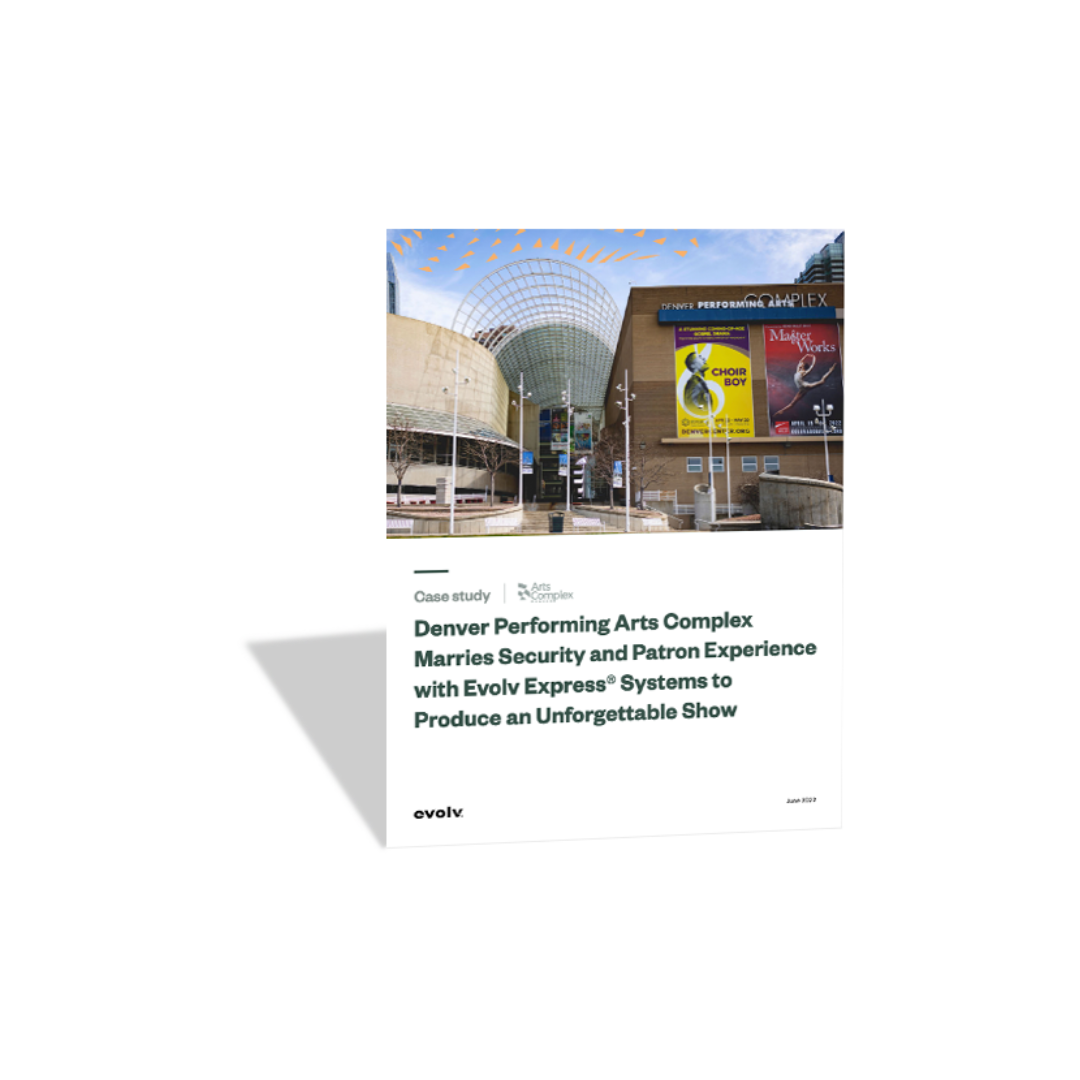

Denver Performing Arts Center Complex Marries Security and Patron Experience with Evolv Express® Systems to Produce an Unforgettable Show

The Denver Performing Arts Complex is an impressive set of venues. Sitting on a 12-acre campus of 7 theaters and multiple event spaces in the heart of downtown Denver, the Arts Complex is home to four esteemed arts institutions—Colorado Ballet, Colorado Symphony, Denver Center for the Performing Arts, and Opera Colorado. There, the traditional magnetometers the Arts Complex employed for security screening were intrusive—which negatively impacted the patron experience. Lori Garza, the former Patron Services Manager at the Arts Complex, and now a Customer Success Manager at Evolv, first saw an Evolv Edge® system in March 2019 and was excited about its potential. Fast forward, to when the Evolv Express® was installed, it enabled the Arts Complex to reduce the number of false positives dramatically. And implementing the Express, enabled them to achieve the following:  

  • Screen around 1,000 patrons in 15 minutes before show start times
  • Improve the experience of security personnel managing ingress security screening
  • Eliminate security screening queues

Case Study Video

Watch how Denver Performing Arts transforms guest experience while improving security with Evolv Technology

Read the case study to learn how you can start your journey to a more secure and guest-friendly security screening solution today.

Download Now

View more of our case studies on our resources page here.

Evolv Technology Takes Center Stage at Denver Performing Arts Complex 

Mile high city’s leading performing arts center is steeped in artificial intelligence and sensor-based security for better customer experiences 

Evolv Technology (NASDAQ: EVLV,), the global leader in weapons detection security screening, today announced that the Denver Performing Arts Complex has replaced its walk-through and hand-held metal detectors with Evolv Express® systems, Evolv Cortex AI™ and Evolv Insights®. This has resulted in better guest experiences, enhanced security, and less stress for staff and patrons as they enter the complex’s popular entertainment venues. 

The Denver Performing Arts Complex is home to the Colorado Ballet, Colorado Symphony, Denver Center for the Performing Arts and Opera Colorado. Each year, the Arts Complex attracts over one million guests attending upwards of 15 shows per week. Security at the venues previously consisted of staff monitoring the walk-through metal detectors and using hand-held detectors as each guest arrived. Along with guests voicing concerns that the process was intrusive, they also noted the time it required as they stood in line for 10-15 minutes to be screened. For others, the wait time was even longer as many guests don’t arrive at the entrance for security screenings until the last 15 minutes before the start of the show, creating queues with close to 1,000 people. This led to stress for patrons and security staff, especially when metal detectors signaled false positives, requiring additional security checks on individuals as they emptied their pockets and opened their bags. 

In its search for a more current and sophisticated approach to security, the Arts Complex conducted side-by-side comparisons of weapons detection security screening systems, resulting in the selection of Evolv Technology’s innovative solutions. 

“Metal detectors produce a lot of anxiety for security staff and guests. Not to mention they have a large footprint. Evolv Express’s smaller footprint and artificial intelligence make it possible for guests to easily walk through the screening lanes while the system identifies potential threats, reducing the number of false positives previously created by metal detectors,” said Aaron Eubanks, director of events security, Denver Performing Arts Complex. “This results in better guest experiences through shorter lines with higher quality security and less intrusive screenings.” 

As an integral part of the Evolv Express systems, Evolv Cortex AI software continuously improves security at the Arts Complex by detecting the latest weapon designs – a feature not possible with metal detectors. The Arts Complex’s security team also uses Evolv Insights analytics to conduct a deep dive into each ingress point, down to a detailed level of every minute and event. Through the Evolv Insights heat map, security can analyze where and when threats arose. This insight informs staffing to support spikes in visitor flow and potential security threats.   

“Entertainment venues have waited years to return to full capacity and are now welcoming guests back to sold-out events. Yet as gun violence continues to rise in this country, we believe the venues need to do everything in their power to ensure the safety of every patron and staff member,” said Peter George, CEO, Evolv Technology. “The Denver Performing Arts Complex exemplifies a successful venue that has taken a proactive approach to security while improving the overall experience for everybody entering its theaters.” 

About Evolv Technology 

Evolv Technology (NASDAQ: EVLV) is a leader in weapons detection for security screening, securing the world’s most iconic venues and companies. Its mission is enabling a better experience and better security for venues, creating a safer world to work, learn, and play by transforming physical security to make everywhere safer. It gives sports fans, theme park visitors, concertgoers, shoppers, employees, students, and others peace of mind so that they can gather without fear of violence. Its security screening has scanned more than 250 million people, second only to the Department of Homeland Security’s Transportation Security Administration (TSA) in the United States, and its technology combines powerful, advanced sensors with proven artificial intelligence (AI), security ecosystem integrations, and comprehensive venue analytics to reliably detect threats 10 times faster than traditional metal detectors.  

Evolv Technology, Evolv Express®, Evolv Insights® and Evolv Cortex AI™ are registered trademarks or trademarks of Evolv Technologies, Inc. in the United States and other jurisdictions. 

For more information, visit https://evolvtechnology.com

Forward-looking Statements  

Certain statements in this press release may constitute “forward-looking” statements and information, within the meaning of Section 27A of the Securities Act of 1933, Section 21E of the Securities Exchange Act of 1934, and the safe harbor provisions of the U.S. Private Securities Litigation Reform Act of 1995 that relate to our current expectations and views of future events. In some cases, these forward-looking statements can be identified by words or phrases such as “may,” “will,” “expect,” “anticipate,” “aim,” “estimate,” “intend,” “plan,” “believe,” “potential,” “continue,” “is/are likely to” or other similar expressions. These forward-looking statements are subject to risks, uncertainties and assumptions, some of which are beyond our control. In addition, these forward-looking statements reflect our current views with respect to future events or our Company’s performance and are not a guarantee of future performance. Actual outcomes may differ materially from the information contained in the forward-looking statements as a result of a number of factors, including, without limitation, the risk factors set forth in our Annual Report on Form 10-K for the year ended on December 31, 2021, that was filed with the SEC on March 28, 2022, and other documents filed with or furnished to the SEC. These statements reflect management’s current expectations regarding future events and operating performance and speak only as of the date of this press release. You should not put undue reliance on any forward-looking statements. Although we believe that the expectations reflected in the forward-looking statements are reasonable, we cannot guarantee that future results, levels of activity, performance and events and circumstances reflected in the forward-looking statements will be achieved or will occur. Except as required by law, we undertake no obligation to update or revise publicly any forward-looking statements, whether as a result of new information, future events or otherwise, after the date on which the statements are made or to reflect the occurrence of unanticipated events. 

Transparency sits on a spectrum

Juliette Kayyem is former Assistant Secretary for Intergovernmental Affairs at the Department of Homeland Security and an Evolv Technology Advisor

On the surface, we hear the word “transparency” and think it’s all-around a good thing, and something to expect from businesses, our government and the technology we use. But, in most cases, transparency is a spectrum, not all or none. We have a tendency to think of things as an on/off switch – either it’s transparent or secure – which doesn’t fit the complex and complicated world in which we live today. The best technology is transparent as to what it does without disclosing a “blueprint” to an enemy or releasing private information that shouldn’t be.

My perspective from having been in security for many years is not to ask whether something is transparent; rather, ask what rules, processes, and best practices are in place that can help guide the deployment of technology. For example, in some situations, that might be displaying signage disclosing to people that they are walking through detection technology designed to find weapons.

We need to judge the framework guiding transparency 

Today, we all live a bit in the “in between,” where there’s a big space between something being unlawful or violent and disclosure. Some information, like a breach of medical information, can be damaging or harmful to a person’s reputation, but doesn’t risk physical harm. Other information, like how to “trick” or get around security – like we’ve seen in hundreds of movies – can lead to real, physical harm to one or many people. Our job as security professionals is to identify our goal(s) for deploying processes and technology, the risks of those failing and our audience’s expectations for transparency – and find the place at the center where all of those can coexist.

Choices about transparency, security and “everyday life” are everywhere

Today’s threat environment means Americans are having to constantly make choices about how much transparency we – both as individuals and collectively as a society – require, and what we’re willing to live with in order to go about our lives. For example, when visiting a theme park, you may be aware of the screening technology you walk through to enter, but may not be aware of the videos and plain-clothed security professionals positioned throughout the park. Most of us are willing to visit the park for the experience it provides and to spend quality time with our families and friends, despite not knowing its exact security protocols. We trust the organization to share the information they feel won’t risk our security, and keep the rest from getting into the wrong hands.

In other words, we know there is a trade-off because we understand that security is complicated; there are multiple layers in place in order to prevent someone with bad intentions from getting access. And security measures are not just at the physical entrance, they begin with restricting access to information that can help bad actors navigate around – and through – those layers.

Expectations, like transparency, exist on a spectrum

When I’m in my own home, my expectations for privacy are greater than they are when I’m out at a big public event. (Although, even those expectations are shifting with the ubiquity of connected devices – speakers, refrigerators, thermostats, etc.) When I’m attending, say, a sporting event, my expectation for privacy shifts; I recognize that, for the safety and security of the crowd, I will be subject to things like screenings, security reviews and surveillance. And, in practice, most people will go through those crowds anonymously – until they bring a gun or weapon that is prohibited, and they/the risk is handled per the venue’s security protocols.

The reality is, just like everything, transparency isn’t black or white. While it’s easy to say something violates or doesn’t violate transparency, it is not as simple as that. In order to live in a society where we can gather together – at a concert, a football game, a museum – we all make trade-offs to ensure our own safety and security, as well as that of those with whom we gather. So, every time we rush to judgment on whether or not something is transparent, we need to stop and consider the overall framework, security risks and responsibility involved in making decisions about an individual’s – or large group’s – safety.

To read more about Juliette, visit her LinkedIn; follow her on Twitter or find her latest book, The Devil Never Sleeps, on Amazon

Fayette County Schools Deploy Evolv Express® Systems to Foster a Safe and Respectful Learning Environment

“We are committed to fostering a learning environment where our students feel safe and respected. We proactively pursued the GiveEvolv program on the premise that it would serve as a key enabler of this mission,” said Gary Hough, Superintendent of Fayette County Schools. Hough also wanted to find a solution that would enable Fayette County Schools to screen students, staff, and visitors for threats when entering school facilities. On previous occasions, and only in severe crises, some of the high schools in the district had used hand-held metal detectors to search students for weapons upon their arrival in the morning. “We knew these weren’t a viable option,” says Katie Keffer Hayes, the Principal at Oak Hill High School, which has around 1,100 students. “We had long queues pile up at our entrances, which were a threat themselves, and many of our students missed their first period of classes. Metal detectors simply are not a viable option for schools.” They then applied for the GiveEvolv Grant – which aims to grant schools with a fully funded Express system and subscription for 4 years. The GiveEvolv board selected Fayette County Schools, concluding they had found the perfect inaugural candidate for the program. By implementing the Evolv Express, Fayette County Schools were able to:

  • Eliminate lines for students waiting to pass through security screening
  • Reduce secondary security check alarms from around 40% to less than 10%
  • Bolster security of students and staff to promote a learning environment

Read the case study to learn how you can start your journey to a more secure and guest-friendly security screening solution at your school today.

Download NowLearn More

View more of our case studies on our resources page here.

Champaign Unit 4 School District Builds Trust with Students While Increasing Safety By Leveraging Evolv Express® System

One year ago, Valarian Couch was hired as the CIO at Champaign Unit #4 Schools in Champaign, Illinois and given a joint charter—overseeing the district’s IT infrastructure and operations, and managing the district’s physical security. Couch and the school board elected to have all of the students at Central High School pass through a walk-through metal detector in early October. “We literally had some students waiting in line for two hours,” he recalls. “The line went around the block with some students missing their first two classes of the day.” He knew this was not going to work out. “I did my research and identified Evolv as the answer,” he says. “The Evolv Express® completely changes this negative perception into a positive one of trust. It is time for us to enter into the 21st century, and the Evolv Express and its integration points with other security capabilities is an important facilitator of this trust.” By implementing the Evolv Express, Champaign District 4 Schools were able to:

  • Reduce 50%-plus false alarm rate with walk-through metal detectors to 5% without any compromise of detection
  • Sustain always-on weapons detection and screening without any security queues
  • Enhance security by integrating Evolv into video security management system and cybersecurity infrastructure

Read the case study to learn how you can start your journey to a more secure and guest-friendly security screening solution at your school today.

Download NowLearn More

View more of our case studies on our resources page here.

Best Practices to Secure Venues in a Dangerous World

Global Security Experts Weigh In


It seems like tragic news is hitting us in wave after wave these days, with barely time to process one horrific event before the next one happens. The recent May Buffalo store shooting was followed too closely by the Robb Elementary massacre.  Our world is getting more dangerous and bad people intent on doing harm are more prolific than ever.  

Security experts around the world acknowledge that when these tragedies are dissected (after the fact), there is a complicated series of events and a trail of crumbs that lead up to these individuals doing the unthinkable. These same global experts will also tell you that actionable protocols and security best practices exist for organizations of any size, from schools, to malls, to concert halls, to the local pub. These senseless tragedies can be stopped.

How to Create Venue Security in an Unsecure World  

Protecting the people in your venue is far more complex than it used to be. Today, a venue’s security is at the mercy of any number of dynamic variables such as an active shooter, smash and grab theft, an employee recently fired who returns with a gun, or a riot happening on the street outside, to name a few.

Evolv consulted with two global security experts to get their best practice recommendations for organizations to help them better anticipate, prevent, even de-escalate threats in progress.

Our global experts include:   

Mark Sullivan 

Mark Sullivan, founder of Mark Sullivan Consulting in St. Petersburg, Florida, and Washington D.C., has a long and distinguished career in global security and security solutions, consulting with some of the most innovative private sector security companies in the world. His experience includes a role as principal at Global Security & Innovative Strategies, and 35 years of service as a Special Agent with the U.S. Secret Service, including a presidential appointment as Director of the Secret Service from 2006 to 2013 leading high impact initiatives in protective operations, protective intelligence, and criminal investigations. He currently sits on eight Boards of Director and Security Advisory Boards, and is a sought-after global security expert and advisor.  

David Cohen 

David Cohen is one of the world’s leading authorities on intelligence analysis and operations, with expertise developed over a 35-year career with the Central Intelligence Agency (CIA), including as Director of CIA’s Clandestine Service and before that managing all CIA analysis for the US National Security community. He then served 12 years as NYPD Deputy Commissioner for Intelligence; a position established in the wake of the 9/11 attacks. He revolutionized how the NYPD collected, analyzed, and leveraged intelligence and established a global NYPD presence to protect New York City from another terrorist attack. Now President of Columbia Consultants, a risk assessment firm, he is on the Business Executives for National Security Advisory Board.

A Proportionate, Effective Threat Mitigation Approach Requires a Four-Step Plan

“The environment we’re living in today demands anticipation and preparation.”  – David Cohen

Those responsible for their venue security simply want to know they stand ready to effectively mitigate and deal with both external and internal threats—of every kind. Our experts agree: Organizations that use an enterprise-wide, four-step approach are in a better position to protect people and their physical venue.   

Here is a snapshot of those steps and what it means to take an enterprise-wide approach. We also offer step-specific insights from our experts. 

  • Assess  
  • Plan
  • Communicate
  • Train

 Step 1: Assess

This foundational first step requires you to build a threat-level matrix that includes probability and impact for both external and internal threats. Once complete, it becomes your customized threat mitigation guide. Use it to more confidently plan for and secure funding for any additional security resources you might need.      

“As a venue owner, I would want a security expert advising my staff as to what they think the greatest threats are and how they recommend we mitigate the risks from those threats. Do they advise I hire more security guards, update security plans, invest in additional forward-leaning technology, or improve training? Regardless of the recommendations, they will more than likely come at a cost. For many venues, there will always be the balance between justifying the operational costs with the value added. A way to justify that cost is by having an enterprise-wide solutions approach that increases our capabilities to protect us against our biggest threats. And finally, it’s important that every investment is made not because it is deemed a nice-to-have, but because it’s a need-to-have.” – Mark Sullivan 

  • Insight 1. Building a threat-level matrix helps you assess your threats, vulnerabilities, resulting risks, and how to best mitigate them.  If the end goal is prevention, all possible threats must be factored into a threat matrix.
  • Insight 2. Just the process of assessing threats, and ranking them from highest to lowest, is valuable because it forces venue owners and security experts to think through the range of issues they may have to deal with, including both internal and external threats. Your insurance company may require some form of physical threat, vulnerability, and risk assessment—but this is not enough. Because the world is more dangerous, small to very large venues are wise to build a matrix that addresses everything from a customer fall down your escalator to an active shooter in your lobby.  
  • Insight 3. Because threats are variable and dynamic, any matrix you build will be unique to your venue, —and its location—on any given day. As a result, consider it a living, 360-degree plan, a daily assessment of your current state of threats. A day with protests nearby presents a different threat level than a quiet day during the middle of the week.

Below are key elements to form the top of your threat level matrix. For each threat you identify, both internal and external, create enough detail and context for each to help you prioritize solution urgency and needed resources.

  • Threat type
  • Threat probability (high/medium/low)
  • People and property impact
  • Mitigation approach
  • Needed resources

Step 2: Plan 

This step is all about creating updated plans, policies, and procedures around your newly prioritized matrix of probable threats. Key to the success of any plan you implement is how well you cultivate and sustain solid relationships with security, law enforcement, and area businesses—and how you tap available intelligence to stay on top of dynamic threat variables.   

“Just like humans instinctively use situational awareness when they are out and about to keep themselves and their families safe from harm, organizations must learn how to proactively use situation awareness to help mitigate threats to their employees, students, customers, and property.” – David Cohen 

  • Insight 1. Once you garner approval for an enterprise threat mitigation plan, it’s critical to establish or re-establish a broad and deep relationship with local law enforcement and private security personnel. Make sure they know who you are and where you are located. Cultivate relationships and share vital safety information. Spend time with these contacts to develop trusted relationships and build a strong communications network for those times you need each other most.   
  • Insight 2. Sizeable venues should have some security anchor point, a location inside that can serve as an operation center housing resources like video, phones connected to local law enforcement, and a place for any hired security personnel to go in case of emergency or for shift breaks. 
  • Insight 3. Depending on your venue location and size, your level of situational awareness increases to the degree you create a plan for monitoring social media, the dark web, local news alerts, and other available communications intelligence that might tip you off to an impending threat. Once you create access to the best intelligence, make sure this marries up with your threat mitigation emergency plan. This helps you create a 24/7 plan that keeps you current and responsive whether you are closed or open.

Step 3. Communicate

“The best plan is meaningless if no one knows what is in it. It needs to be communicated often, and in detail, including building it into performance plans if necessary. There can be no room for doubt about the order of operations or chain of command when lives hang in the balance.” Mark Sullivan

  • Insight l. A plan is ultimately only as good as how well you engage the entire team that is responsible for implementing the plan. Critical is that they all understand their role in the plan and appreciate its importance for the safety and security of employees, students, customers, clients and visitors. For large venues and small, the repetition and reinforcement of this message starts at the top.
  • Insight 2. Even in large event venues, effective communication can be a challenge as a hefty security construct can often involve numerous moving parts that may or may not see themselves as an integrated whole. It falls heavily to leadership—via good communications skills—to ensure that the left and right hands not only know their own role in assuring venue security, but how they connect to each other. In brief, on security, the whole is greater than the sum of the parts.

Step 4. Train

“The ability to deescalate an internal threat situation is valuable training for every single one of your employees.” – David Cohen

  • Insight 1. It is important for management to take the initiative to train all employees at onboarding and on an annual basis—on the plans, policies, and procedures around threat identification and mitigation including threat de-escalation training. Teach them how to watch for dramatic or unusual behavior and act on it. Help them confidently own their role to speak up and make sure they have immediate access to the tools and technology they need to reach management and law enforcement in the face of an escalated threat. Depending on the size of your organization, training can be a ½ day seminar, or a series of workshops that spans weeks or months.
  • Insight 2. After hours, train all employees on the evacuation plan specific to your venue and their roles in moving people to and through locations in the venue, depending on the threat. Plan where you will all meet and the communication protocols for interacting with customers, security, and law enforcement in an active threat situation. 
  • Insight 3. Within legal bounds, it’s become increasingly important for organizations to know who is working for them. Use legal and available employee vetting and law enforcement services to do thorough background checks. One bad apple that somehow fell through the cracks can inflict far too much physical, property, and even reputational damage to your business. Be sure, if you let someone go, that you always conduct an exit interview to gauge potential rage or threat-based reactions. Teach your personnel how to manage and report any individuals they feel may try to cause harm.   

Conclusion

My most recent blog covered how the tragic bombing of the Manchester Arena in 2017 took 22 innocent lives, and how 650,000 venues throughout the U.K. may now be required to adopt security mitigation protocols as a result. This U.K legislation was driven by many, including Figan Murray, the mom of 22-year-old Martyn Hett who died in that bombing.

Mark Sullivan and David Cohen have identified a series of four steps that organizations can take to thoughtfully and proactively increase protection for the innocent lives within their walls. The spike of gun violence is a multifactorial issue; everyone agrees on this. What’s required now is a stake in the ground commitment of people coming together to make real change happen to protect their people and places.    

Commemorating National Gun Violence Awareness Day and Remembering our Mission

Today, as we commemorate National Gun Violence Awareness Day, our communities are reeling from a series of tragic events – Buffalo, Uvalde, and now, Tulsa, among the many others. These tragedies serve as a reminder of how imperative it is to find solutions that will prevent future lives lost to gun violence.  Please join us in supporting and representing National Gun Violence Awareness.  

Ten years ago, teenager Hadiya Pendleton was shot and killed on a playground in Chicago.  Soon after this tragedy, Hadiya’s childhood friends decided to commemorate her life by wearing orange, the color hunters wear in the woods to protect themselves and others.  Since Hadiya’s 18th birthday, June 2, 2015, “Wear Orange” has expanded to period of three days, starting the first Friday of every June, known as National Gun Violence Awareness Day and weekend. 

This year’s events include silent survivor walks, marches, blood drives, community building projects and mural painting, highway cleanups, art exhibitions, and charity runs. At Evolv, many of us will participate in these types of events and we wear orange today to support this important awareness day.  We believe that safety should be a basic human right.  We come to work each day with a deep sense of purpose to make the places where we work, learn, and play safer – with a focus this month on schools.  

When our children are at risk in an environment where they should only focus on learning and fun, it is unthinkable. The threat of violence in schools is personal for all of us here at Evolv.  My daughter is a second-grade teacher and has been now for over eight years. Each tragic headline about an attack on a school sends my mind racing with “what if” scenarios that never fully fade. This issue haunts me as a dad, as a human, and as the CEO of a company focused on keeping weapons out of all the places where they do not belong. 

Every school has policies prohibiting weapons on campus, but the ability to enforce those policies can be incredibly limited. Schools that can afford to install conventional walk-through metal detectors risk creating a prison-like environment that makes students feel like criminals and induces fear and anxiety and creates long lines and chaos each morning.   

And, worse yet, we’ve heard stories that when the morning bell is about to ring and the security line is backed up out the door, some will just turn the metal detectors off and wave all the students in without any screening at all.  Sadly, this is not uncommon. 

Vulnerable students, teachers, and staff deserve more. 

This is why we formed GiveEvolv, our charitable organization that helps keep schools safe through need-based donations of weapons detection systems. The available resources to address the threat to schools are heartbreakingly scarce. Weapons detection will not solve the problem of school shootings, but as part of a layered strategy that involves people, process and technology, it can help keep schools safer, reduce threats and increase peace of mind so our teachers and students can focus on education.  

Please visit our GiveEvolv website today and nominate a school you feel should receive a grant from us. Our mission is to make the places where we work, learn, and play safe, and keeping students safe in schools is paramount.