Evolv Technology Hits All the Right Security Notes at Dollywood Theme Park

Artificial Intelligence and sensor-based system has guests singing praises for easier and safer entry

Evolv Technology (NASDAQ: EVLV, “Evolv”), a leader in weapons detection security screening, today announced that Dollywood has selected Evolv Express®, its artificial intelligence (AI) based weapons detection system, to help guests safely enjoy the theme park.   

As part of its 37th season opening, Dollywood has been working with traffic engineers and security experts to expedite the way customers move through their parking lot, toll plaza, tram routes, and front gates.

With Evolv Express, guests arriving at the park don’t have to stop or remove items from their pockets or bags to enter the theme park. Evolv Express identifies weapons and other potential safety threats without compromising the guest experience. By using Evolv Express, Dollywood is able to streamline the islands of patrons entering and exiting the park, making it a much smoother and faster process.

“Today, proactively identifying and addressing security threats is more than a 9-5 job. It requires 24/7 attention on what’s physically happening in our park and what could happen in our IT infrastructure,” said Eugene Naughton, President of The Dollywood Company. “With Evolv Express, we believe  our patrons are safe as they breeze through the entrance. Additionally, using Evolv Insights™ complements our cybersecurity efforts by providing historical screening data to identify outliers and more effectively staff the park. With Evolv Express, Dollywood customers will have even more enjoyable experiences as lines are eliminated while security is enhanced.”

Dollywood is a highly awarded and widely recognized leader in the amusement industry, including being named one of the world’s top three theme parks. Each season, Dollywood welcomes more than three million people at its 160-acre theme park featuring more than 50 rides and attractions.

“As Dollywood prepares for the busy summer season and families and friends plan their vacations, they can rely on Evolv Express to quickly move foot traffic by screening 3600 people per hour and identifying weapons 10 times faster than metal detectors without compromising public safety,” said Peter George, CEO of Evolv Technology. “As more people get outside this summer, we’re proud of the work we’re doing for Dollywood and at theme parks across the country to help keep guests safe while playing an important behind-the-scenes role in helping them create fun memories.”

About Dollywood

Winner of the 2010 Applause Award, Dollywood consistently is recognized as one of the world’s best theme parks. Spanning 160 acres in the foothills of the Great Smoky Mountains, Dollywood offers more than 50 rides and attractions, including Lightning Rod, the Thunderhead wood coaster, the steel thriller Mystery Mine, the forward and backward launch Fire Chaser Express, and Wild Eagle, the country’s first wing coaster. Dollywood’s entertainment is recognized worldwide, having received more awards than any other theme park for its live entertainment, which showcases country, bluegrass, Southern gospel, classic rock ‘n’ roll and Appalachian music. Dollywood recently was ranked the #8 theme park in the world and the #6 theme park in the U.S. based on traveler reviews by TripAdvisor users. Daily demonstrations by more than a dozen master craftsmen offer a glimpse into the authentic artistry of the area’s rich heritage. In addition to mouth-watering, Southern-style food offered throughout the park, Dollywood hosts several of the South’s largest festivals with special performing groups and concerts. The park operates mid-March to January. More information is available at Dollywood.com.

About Evolv Technology

Evolv Technology (NASDAQ: EVLV) is a leader in weapons detection for security screening, securing the world’s most iconic venues and companies. Its mission is enabling a better experience and better security for venues, creating a safer world to work, learn, and play by transforming physical security to make everywhere safer. It gives sports fans, theme park visitors, concertgoers, shoppers, employees, students, and others peace of mind so that they can gather without fear of violence. Its security screening has scanned more than 250 million people, second only to the Department of Homeland Security’s Transportation Security Administration (TSA) in the United States, and its technology combines powerful, advanced sensors with proven artificial intelligence (AI), security ecosystem integrations, and comprehensive venue analytics to reliably detect threats 10 times faster than traditional metal detectors.

Evolv Technology, Evolv Express®, Evolv Insights™, and Evolv Cortex AI™ are registered trademarks or trademarks of Evolv Technologies, Inc. in the United States and other jurisdictions.

For more information, visit https://evolvtechnology.com.

Forward-looking Statements  

Certain statements in this press release may constitute “forward-looking” statements and information, within the meaning of Section 27A of the Securities Act of 1933, Section 21E of the Securities Exchange Act of 1934, and the safe harbor provisions of the U.S. Private Securities Litigation Reform Act of 1995 that relate to our current expectations and views of future events. In some cases, these forward-looking statements can be identified by words or phrases such as “may,” “will,” “expect,” “anticipate,” “aim,” “estimate,” “intend,” “plan,” “believe,” “potential,” “continue,” “is/are likely to” or other similar expressions. These forward-looking statements are subject to risks, uncertainties and assumptions, some of which are beyond our control. In addition, these forward-looking statements reflect our current views with respect to future events or our Company’s performance and are not a guarantee of future performance. Actual outcomes may differ materially from the information contained in the forward-looking statements as a result of a number of factors, including, without limitation, the risk factors set forth in our proxy statement/prospectus, filed with the Securities and Exchange Commission (the “SEC”) on June 28, 2021, and other documents filed with or furnished to the SEC, including our Annual Report on Form 10-K for the year ended on December 31, 2021, that was filed with the SEC on March 28, 2022. These statements reflect management’s current expectations regarding future events and operating performance and speak only as of the date of this press release. You should not put undue reliance on any forward-looking statements. Although we believe that the expectations reflected in the forward-looking statements are reasonable, we cannot guarantee that future results, levels of activity, performance and events and circumstances reflected in the forward-looking statements will be achieved or will occur. Except as required by law, we undertake no obligation to update or revise publicly any forward-looking statements, whether as a result of new information, future events or otherwise, after the date on which the statements are made or to reflect the occurrence of unanticipated events. 

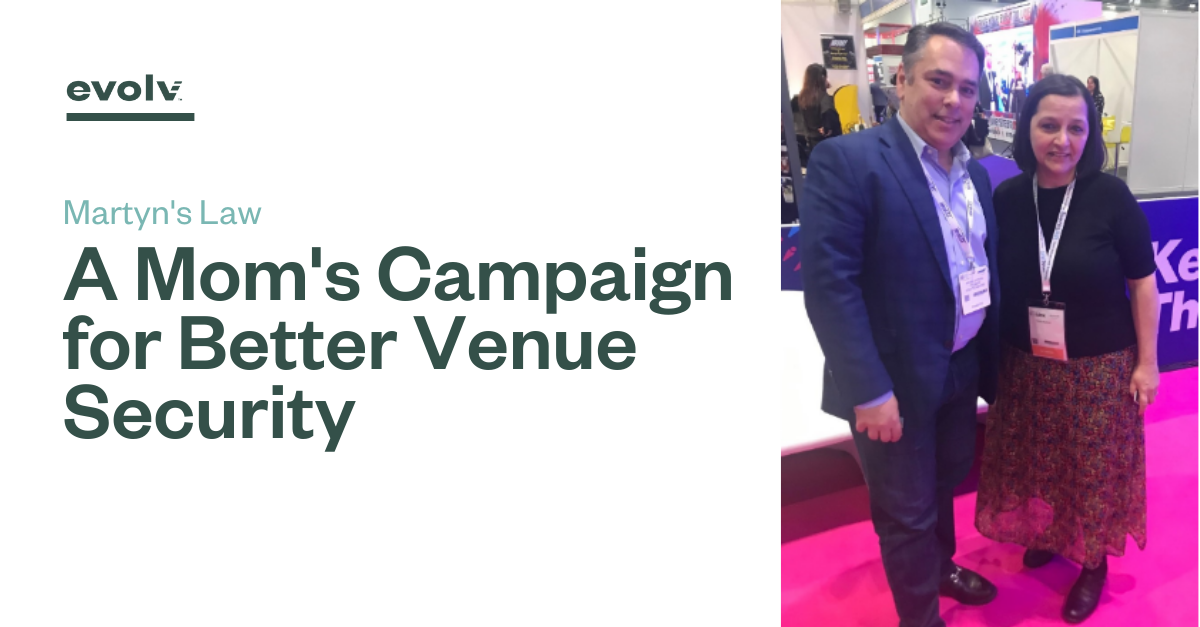
How A Mom’s Campaign for Better Venue Security May Impact 650,000 UK Businesses This Year 

Martyn’s Law Defined

Two years ago, at a national security conference in the UK, I sought out a presentation by Figen Murray. Figen is the mom of Martyn Hett, one of 22 victims killed in the horrific 2017 Manchester Arena bombing. Her loss is unimaginable. She remains a mom to four kids and has not stopped fighting for the kind of change that creates good out of the evil that happened that day.

I knew a little about Figen’s story and Martyn’s Law, the legislation in her son’s name. She and Nick Aldworth, a former UK counter terrorism government official, stepped us through how the breakdown in arena security and emergency response that day inspired them to pursue new venue security legislation called Protect Duty, or Martyn’s Law.

Figen’s tenacity to turn her grief into action remains a powerful witness and unparalleled display of human spirit. She inspired me that day and still does. In fact, just five years since losing her 29-year-old son, Figen received her master’s degree in terrorism and counterterrorism (CT) from the University of Central Lancashire last year.

In 2013, as many of you know, my wife narrowly escaped the bombing at the finish line of the Boston marathon, and I lost good friends in the Towers on 9/11. For me, those two pivotal events inspired the launch of Evolv. Figen and I share a similar heartfelt and focused mission to do the work we do.

What is Martyn’s Law and when does it go into effect?

In the simplest terms, Martyn’s Law is legislation that aims to create a coherent and proportionate approach to protective security. The proportionate part is very important because not all sites and venues are the same, so a blanket approach would be counterproductive. In 2017, at the time of the attack, there was no legislative requirement for UK organizations or venues to consider security measures at the vast majority of public places.

On January 11, 2022, on the heels of an 18-week consultation, Home Secretary Priti Patel officially agreed to bring forward legislation to the UK parliament requiring venues to put in place security measures to protect the public from terror attacks. Full details are expected to be laid out in a written ministerial statement, at the earliest possibility. The Home Office is also helping to develop a new interactive online platform, which is due to launch this year, aimed at providing advice for organizations on counterterrorism.

Who does Martyn’s Law apply to?

The proposed legislation is designed to apply to any place or space the public has access to—an estimated 650,000 diverse sites and venues across the UK, from small cafes and pubs to large arenas.

What is covered in Martyn’s Law and what does this mean for businesses in 2022?

The Law includes five key requirements for any publicly accessible location:

  • A requirement that spaces and places to which the public have access engage with freely available counterterrorism (CT) advice and training.
  • A requirement for those places to conduct vulnerability assessments of their operating places and spaces.
  • A requirement for those places to have a mitigation plan for the risks created by the vulnerabilities.
  • A requirement for those places to have a counter-terrorism plan.
  • A requirement for local authorities to plan for the threat of terrorism.

Advice from a UK counter-terrorism expert

It is understandable that businesses in the UK are wondering what the next best steps are and how to prepare for this legislation to go into effect. I asked Nick Aldworth to share his insights at this stage. Nick’s 36-year career included positions in policing and the military. He then became Detective Chief Superintendent in Counter Terrorism Policing where he held the role of National Coordinator (Protect and Prepare). Nick led the operational protective security responses to the London 2017 terrorist attacks and, prior to that, was the Chief Inspector of policing and security operations at the UK Parliament.

There are 650,000 businesses in the UK that may need to take some kind of action this year to map to Martyn’s Law. If the security measures they take are meant to be “proportionate”, what are these businesses expected to do and how quickly are they expected to do it?

Answer: Usually when novel-issue legislation is passed in the UK, the government will provide public awareness campaigns for some considerable time before they start to enforce the law. I expect that will happen in this case as businesses will understandably have to adapt to a new normal. Importantly, the idea of legal proportionality will only be defined over time, as cases are heard in court and precedents are set. However, as your readers will know, there are a range of options in any security solution. At the top end, there are solutions like the Evolv system, that provide effective screening in high-footfall situations. In less intense environments, the proportionate approach might include manual searching, or simply observant staff looking for suspicious behavior.

Where can businesses go to get relevant and current information about how they can implement Martyn’s law?

Answer: The UK is blessed with a government that provides authoritative information about how to reduce risk. The Centre for Protection of National Infrastructure, a government body, maintains a catalogue of tested and approved technical systems for businesses that want to follow the technical path. The police’s National CT Security Office provides advice on a range of issues from how to protect crowded places to how citizens can apply emergency first aid in terrorist situations. In the next few weeks, all this information will be brought into a single place, under the banner of Protect UK. This will be a digital platform that not only provides all the guidance in one place, but it also allows for the creation of credible communities that can exchange information.

If businesses want to start proactively responding in a phased approach to Martyn’s Law, how would a small pub, medium sized museum, and large event venue (for example) do this? What might be the priority measures for each?

Answer: For me, it’s always about getting your people engaged with counter terrorism first. When people are observant and engaged, they can disrupt a possible hostile incident or reduce the impact of an attack. In the UK, we run a program called See, Check and Notify (SCaN) that aims to help people understand how every employee can contribute to keeping their environments safe, while enhancing customer service. After people, it’s all about understanding your vulnerabilities and having a plan to deal with problems when they arise.

In your conversations with venue operators, how do you talk about the value to them? How does implementing better venue security and being in compliance with Martyn’s Law benefit them and their business?

Answer: This is a great question. Notwithstanding the imminent legal imperative (that already exists within public-liability laws), we talk about the moral imperative. We especially talk about the changing nature of terrorism that has led to anything being used as a weapon, against anybody, and anywhere. We discuss how the only way to combat such a potential proliferation of terrorism is by a whole-of-society approach. The last thing I always remind businesses is that good security is good CT security and both are good for business. At times of anxiety, customers want to feel safe and secure. They will stay in your venues longer and spend more money if they feel comfortable.

Why is Martyn’s Law, and the eventual compliance measures adopted by businesses, a good thing for the general public?

Answer: None of us want to live behind gates and walls; and we all want to enjoy our lives to the full. Proportionate security actually helps keep our societies free.

Conclusion

It is powerful how loss and tragedy can drive such remarkable and inspiring change for good. Figen is a hero for choosing the road less traveled. She has taken her grief and channeled it into action that will save lives in the UK.

Nick Aldworth has it right; none of us want to live behind walls and gates. We want to live freely and move freely. When the UK more formally adopts Martyn’s Law, these new security measures will make this possible, honoring Martyn Hett and the 21 others lost that day.

Improving Gameday Experience from Street to Seat

I recently had the pleasure of participating in a webinar that Evolv co-hosted with the Sports Business Journal.  These “lunch-and-learn” webinars have proven quite popular because they provide useful industry information in just an hour while attendees eat a sandwich (or perhaps a bagel, depending on time zone) at their desk.

In this case, the content was indeed valuable.  Two of Evolv’s pro sports clients, Mercedes-Benz Stadium (Atlanta Falcons and Atlanta United) and Nissan Stadium (Tennessee Titans), shared perspectives on how our Evolv Express®‘ guest screening system has improved the gameday experience for fans and stadium employees alike.

I also wanted to go beyond the recording and share two additional insights from the session.

Guest Experience Is Key

The webinar was attended by people from all the major sports and many other fan-driven organizations.  We asked them whether, in their personal experience, team performance or guest experience was a bigger driver of repeat attendance.  Fully 75% of respondents answered guest experience.  This is certainly consistent with my own nearly two decades in pro basketball and hockey. 

I also view this strong consensus as very empowering for the people behind the scenes who make our industry work.  We may never put on a uniform, but we can still move the needle in terms of making fans have fun and want to come back.  Because the converse is true – a poor guest experience is a major driver of fans choosing not to return – we’re also under pressure to deliver.  Just like athletes, we need to always bring our A-game.  Thankfully, technology is increasingly giving us an assist.  That’s literally true with Evolv Express, where Artificial Intelligence instantly and invisibly performs many of the functions that make traditional ingress screening so slow and uncomfortable.  And, by getting fans into our venues faster and more smoothly, it also gives them more time to enjoy all the other amenities our venues offer.

Guest Entry Is a Multi-Part Process

Several webinar participants asked questions about the impact of Evolv’s exponentially faster screening speed – up to ten times quicker than legacy systems – on ticket scanning.  They wanted to know whether Evolv Express simply moved the location of, rather than eliminated, ingress queues.  This is a great question from experienced operators.  The short answer is that if no other operations change, it is indeed likely that there will be increased queueing at ticket scanners, which operate at lower throughput.  But, it’s also quite easy to make operational adjustments to avoid this outcome.  One simple approach is to add more ticket scanners.  With all the physical space and personnel freed up by Express, there will certainly be the resources to do so, and handheld ticket scanners are inexpensive.  Another approach is to move the location of entry screening, to create more space between screening and ticket scanning.  This is easy to do with Express, which is portable and weather resistant.  Longer-term, we are actively working on partnerships between our system and ticketing systems so that the current multi-part process can be further streamlined and consolidated.

One of the very few positives for our industry to come out of the COVID-19 pandemic has been the rise of webinars.  In-person conferences are still the best way to connect and learn, but webinars add a lot to the mix.  Thanks to all who participated in ours.  We’ll continue to use this format to share information and show how Evolv clients are transforming the guest experience at their venues.

Feel free to watch the full webinar recording below.


Why it’s time for a new standard in security screening

In the security world, what has become common is not what is best for every situation. So many of the measures in place at venues right now exist in response to what happened years ago in different settings. 

Threats have changed, and technology has improved. There’s no reason to keep a solution in place just because it was the only option decades ago.  

The Old Standards are Outdated 

In 1972 – in response to a series of plane hijackings – the government put rules in place that all plane passengers should be screened. For those screenings, technology was used that had been developed for maximum security prisons and certain sensitive military facilities: walk-through metal detectors and x-ray machines. 

These tools, which worked well for places like prisons, have stayed the same even though situations have changed, and technologies have advanced in ways that better reflect the times we live in. Metal detectors, for example, are very good at detecting metal. But now, so many of us carry non-threatening personal items that contain metal, like cell phones, eyeglasses and umbrellas, that we’re forced to completely empty our pockets before we pass through traditional metal detectors. 

We Need to Protect Targets of Least Resistance 

Over time, the threats have shifted as well. Instead of hard targets like government buildings or forward-operating bases, terrorists have focused on soft targets like nightclubs and stadiums. In the United States, there has been a steady stream of active shooter events at these types of settings. 

The response has usually been to add more metal detectors, which, because of the bottleneck created by the slow process of emptying pockets or false alarms, tend to create other soft targets (people waiting in line) outside of a venue. 

These venues tend to be places that are not protected by government mandates in the way that airports are – places like schools, emergency rooms, performing arts centers and office buildings. For attackers, these are targets of least resistance. When plotting the kind of high probability, high consequence event that we all fear, attackers will seek out a place where they can do the most damage with the least resistance (such as having to pass through a metal detector). 

Setting the New Standard 

Current mainstream security standards don’t do enough to protect soft targets. Evolv recognizes the desperate need for standards to reflect today’s threats and exists to address the question: How do we create a seamless experience that enables security professionals to create a safe environment? To answer that question, we should consider the following: 

What are the real threats of concern? 

Security personnel are not looking for tiny pieces of metal in your pocket. They’re looking for weapons. We have technology that can identify exactly what items we should be concerned about in a security screening so that every item doesn’t trigger an alarm – only items of concern. 

What personal items do people carry most often? 

There are items that people carry in their pockets or purses every day that pose no threat, but still set off metal detectors. Evolv’s ability to identify those – phones, keys, ear buds – cuts down on false alarms and allows people to get where they need to be more quickly. 

Who’s going to be running the system? 

You need to make sure the technology is right for the security team running the system. For someone who might be monitoring the system for an eight-hour shift, it needs to be simple. Nuisance alarms – the kind of alarms that are set off by the everyday metal objects mentioned above – can become exhausting for an individual who has to screen someone for something that isn’t a real threat. That can affect the detection of actual threats. The system should be easy to use and quickly identify actual threats. 

How well does the system work with existing security measures? 

We want a seamless entry where there’s no bottleneck…but we also know that our customers need to be able to integrate our systems with existing security measures, such as surveillance cameras. This allows for quick and comprehensive threat detection and notification, enabling security personnel to take immediate action.  

We need to constantly challenge our assumptions of what real threats are, and think differently about the world we’re living in when it comes to threat assessment. We need to employ the appropriate technology to prevent the kind of high probability, high consequence events that can result at a target of least resistance. Evolv exists to help you avoid being one of those targets, and we are setting a new standard when it comes to keeping people safe. 

Webinar: Eliminating Ingress Lines for Fans & Staff

Secure, rapid, free-flowing, and relaxed guest entry is a goal that most public venue and live event operators share. In April, we co-hosted a free webinar with Sports Business Journal in which two best-in-class operators, the NFL’s Atlanta Falcons and Tennessee Titans, described how they have accomplished this goal after deploying the next-gen Evolv Express® guest screening system.

Their experience in simultaneously improving guest, staff, and security outcomes is relevant well beyond sports, and the lessons they learned can be applied in many settings and industries.

Achieving SAFETY Act Designation and Setting a New Standard

It is a significant milestone that the Evolv Express® product has received DHS SAFETY Act Designation®. We have been working with the Department of Homeland Security for quite some time on this. Independent validations like SAFETY Act designation and our strong showing in the recent NCS4 Operational Exercise are important milestones for Evolv Express as a truly disruptive technology to transform the ingress. 

Having Safety Act designation can provide vendors like Evolv, and our customers, with important legal liability protections that encourage investment to prevent terrorist attacks. While these protections are important, accomplishing the mission of keeping people safe while also protecting the visitor experience requires more.  Achieving SAFETY Act Designation is viewed by many as a de facto standard for physical security technology.   

Visitors have never been more aware of their ability to choose virtual alternatives to in-person experiences. To fill their facilities and venues, enlightened operators will need to reach for a higher standard of security and visitor experience. There are some specific principles that are important in a new standard. 

Zero-Wait Should Be Standard

Although no one likes being stuck in a line, few people realize just how vulnerable they are standing in a line outside the security perimeter. That crowd is a soft target that is vulnerable. Eliminating the line outside the security perimeter is ideal.  However, many of today’s technologies (designed decades ago), require people to wait and go through one at a time.  Zero wait time means people need to walk through at the pace of life without stopping, removing items or breaking their stride.  Achieving zero-wait requires fast, accurate weapons detection and rapid alarm resolution. Zero-wait should be standard

Data-Driven Decision-Making Should Be Standard

Most modern organizations are accustomed to using analytics to drive decisions in key areas of their business, but this revolution has been slow to reach physical security. There is a tremendous amount of data associated with the ingress of people, their arrival curves at different entrances, and the speed of ingress.  Analytics should provide better data for pre-event planning, and improved post event analysis.  This includes how many staff members to assign at different locations, the impact of changing threat sensitivities for different operational scenarios, and other factors that affect the visitor’s experience.  This is only possible on a digital native platform, but current standards are silent on the topic of data analytics. Data-driven decision-making should be standard.

Machine Learning Should Be Standard

Modern machine learning is pervasive in cybersecurity but curiously absent in traditional security screening technology and standards. The ability to train multivariate statistical models with real-world data allows for more accurate, nuanced weapons-detection decisions to be made in real-time. These algorithms require sensors that provide a rich data set from which important characteristics can be gleaned.  And the more data is gathered, the better the models get over time. Old school metal detector signal processing will never be able to keep up with modern machine learning. Machine learning should be standard.

Image-Aided Alarm Resolution Should Be Standard

As the number of visitors passing through a system increases, and the amount of training and tenure of security guards gets lower, there is an increased chance of human error.  Technology can be a key enabler to reduce human error by having the technology do the monotonous tasks and have people focus on the critical judgments to assess a threat / no threat scenario.  Adding an image of an individual to help ensure they are assessing the right individual and a directive interface to show where to focus provides significantly more guidance for a security professional.  Image-aided alarms can help avoid invasive full-body pat down searches and dramatically shrink the alarm resolution window. That’s an obvious win for everyone, but it isn’t addressed in any existing security screening standard. Image-aided alarm resolution should be standard.  

Digital Integration Into the Security Infrastructure Should Be Standard

Keeping people safe requires a thoughtful combination of advanced technology solutions produced by many different vendors. Unfortunately, most security screening solutions function as isolated analog silos that don’t share or receive data from other systems. It shouldn’t be that way. The screening system should function as an intelligent node in a fully networked nervous system that supports the right response at the right time. That requires a digital-native platform with robust integration APIs and a network of partnerships between vendors. Sadly, this kind of integration currently falls outside most existing security screening technologies. Digital integration should be standard

Conclusion

 I’d like to reiterate that we are very happy that Express has received SAFETY ACT designation. We value what the DHS is offering through the SAFETY Act process and look forward to ongoing collaboration. However, in the present environment we believe that SAFETY Act designation is table stakes. Our mission demands that we aim to not only keep people safe, but also deliver an outstanding visitor experience. This standard requires digital-native technology that makes the most of modern analytics, machine learning, image-aided alarm resolution, and digital integration. We believe that Express embodies this new standard today, and we’re hard at work to raise the bar even higher in the future.

Evolv Technology Awarded U.S. Department of Homeland Security (DHS) SAFETY Act Designation for Evolv Express®

This distinction qualifies Evolv Technology to receive the SAFETY Act’s benefits for selected Anti-Terrorism Technologies

Evolv Technology (NASDAQ: EVLV, “Evolv”), the global leader in weapons detection security screening, today announced that Evolv Express®, its artificial intelligence (AI)-based weapons detection system, has been awarded the U.S. Department of Homeland Security (DHS) SAFETY Act Designation as a Qualified Anti-Terrorism Technology (QATT).

Technologies that are awarded the SAFETY Act Designation have undergone rigorous use and review to meet and/or exceed the DHS’ performance standards that include examination of test results for weapons detection, operational use and effectiveness, manufacturing and quality assurance practices, and customer feedback.

The Support Anti-Terrorism by Fostering Effective Technologies Act (SAFETY Act) was introduced by Congress in 2002 to incentivize the creation of technologies to combat terrorism in the wake of 9/11. The SAFETY Act is intended to ensure that the threat of liability caused by a terrorist event does not deter manufacturers or sellers of effective anti-terrorism technologies from developing, commercializing and deploying technologies that could potentially save lives. The Acting Under Secretary for Science and Technology is the deciding official for current SAFETY Act applications.

This Designation demonstrates Evolv’s belief that the security industry demands a new standard for security screening that can adequately address threats to crowds where people gather without impacting their experience. The pinpointed accuracy of threats detected, insightful analytics that help improve security operations, and the continual improvements through machine learning are features that set Evolv apart from existing standards. Evolv Express is the only high-throughput weapons detection screening system to achieve SAFETY Act Designation.

“Visitors today demand a free-flowing contactless experience, but for decades the industry has developed technology to meet outdated detection standards without any regard for these new demands,” said Mike Ellenbogen, founder and head of advanced technology, Evolv Technology. “I’m proud of the way our team has recognized the need for and established technology to address the evolving threat landscape, in a way that satisfies the demands placed on all locations where people gather. We no longer need to sacrifice safety for experience.”

“We’re honored to receive the SAFETY Act Designation which we believe further supports the effectiveness of our technology, and ultimately, our ability to help keep people safe,” said Peter George, Evolv Technology President and CEO. “Not only does the DHS’s SAFETY Act Designation further validate our AI-based technology to the physical security market, but we believe it will also provide our customers and their visitors with increased assurance that Evolv helps to provide the safest possible venue entry, without the traditional metal detector experience.”

Screening 3,600 people per hour – 10 times faster than metal detectors – Evolv Express combines powerful sensor technology with proven AI, security ecosystem integrations, and comprehensive venue analytics to provide safer, more accurate threat detection at an unprecedented speed and volume. To learn more about Express, please visit: https://www.evolvtechnology.com/products/evolv-express.

About Evolv Technology

Evolv Technology (NASDAQ: EVLV) is a leader in weapons detection for security screening, securing the world’s most iconic venues and companies. Its mission is enabling a better experience and better security for venues, creating a safer world to work, learn, and play by transforming physical security to make everywhere safer. It gives sports fans, theme park visitors, concertgoers, shoppers, employees, students, and others peace of mind so that they can gather without fear of violence. Its security screening has scanned more than 200 million people, second only to the Department of Homeland Security’s Transportation Security Administration (TSA) in the United States, and its technology combines powerful, advanced sensors with proven artificial intelligence (AI), security ecosystem integrations, and comprehensive venue analytics to reliably detect threats 10 times faster than traditional metal detectors.

Evolv Technology, Evolv Express®, Evolv Insights™, and Evolv Cortex AI™ are registered trademarks or trademarks of Evolv Technologies, Inc. in the United States and other jurisdictions.

For more information, visit https://evolvtechnology.com.

Forward-looking Statements

Certain statements in this press release may constitute “forward-looking” statements and information, within the meaning of Section 27A of the Securities Act of 1933, Section 21E of the Securities Exchange Act of 1934, and the safe harbor provisions of the U.S. Private Securities Litigation Reform Act of 1995 that relate to our current expectations and views of future events. In some cases, these forward-looking statements can be identified by words or phrases such as “may,” “will,” “expect,” “anticipate,” “aim,” “estimate,” “intend,” “plan,” “believe,” “potential,” “continue,” “is/are likely to” or other similar expressions. These forward-looking statements are subject to risks, uncertainties and assumptions, some of which are beyond our control. In addition, these forward-looking statements reflect our current views with respect to future events or our Company’s performance and are not a guarantee of future performance. Actual outcomes may differ materially from the information contained in the forward-looking statements as a result of a number of factors, including, without limitation, the risk factors set forth in our prospectus, filed with the Securities and Exchange Commission on September 3, 2021, and other documents filed with or furnished to the SEC, including our Annual Report on Form 10-K for the year ended December 31, 2021 that we filed with the SEC on March 28, 2022. These statements reflect management’s current expectations regarding future events and operating performance and speak only as of the date of this press release. You should not put undue reliance on any forward-looking statements. Although we believe that the expectations reflected in the forward-looking statements are reasonable, we cannot guarantee that future results, levels of activity, performance and events and circumstances reflected in the forward-looking statements will be achieved or will occur. Except as required by law, we undertake no obligation to update or revise publicly any forward-looking statements, whether as a result of new information, future events or otherwise, after the date on which the statements are made or to reflect the occurrence of unanticipated events.
Evolv Technology Helps Mercedes-Benz Stadium Fans Stay Safe

Nine out of 10 fans say that security screening is not a point of contention for them, as stadium leverages Evolv to improve guest experience and rate in top quarter of NFL Stadiums

Evolv Technology (NASDAQ: EVLV, “Evolv”), the leader in weapons detection security screening, today announced results from its partnership with Mercedes-Benz Stadium in Atlanta to provide a more enjoyable, frictionless, and safe experience for fans. The stadium uses the company’s artificial intelligence (AI)-based system, Evolv Express®, to screen fans as they arrive at the stadium for games and other events, without requiring them to stop or remove items from their pockets or policy-compliant bags.

Prior to installing Evolv Express, seven out of ten fans cited their arrival at the stadium as an area of frustration and dissatisfaction. Since implementing Evolv Express, nine out of ten fans say that security screening is not a point of contention for them. The stadium has also dramatically reduced the percentage of guests flagged for a security re-check and increased the speed of entry for fans.

The stadium, home to the NFL’s Atlanta Falcons and MLS’s Atlanta United, hosts an average of 40-50 major events and more than 200 private events each calendar year including the SEC Football Championship, Chick-fil-A Peach Bowl, and countless concerts by world-renowned artists.

“Our objective is to make attending events at Mercedes-Benz Stadium feel like you’re walking into a friend’s house — to a place you belong or even own,” said Karl Pierburg, Chief Technology Officer, AMB Sports and Entertainment, parent company of the Atlanta Falcons, Atlanta United, and Mercedes-Benz Stadium. “It was critically important to us to find a way to allow secure entry without degrading the guest experience at all. Evolv has transformed the entry experience for us and contributes to the high marks we get in general when it comes to entry experience, where we rate in the top quarter of all NFL stadiums.”

Evolv Express uses powerful sensor technology with proven AI to provide safer, more accurate threat detection at unprecedented volumes and speed of entry. With Evolv Insights, security staff can use historical screening data to make predictions about throughput, with the goal of improving the fan experience while making the stadium more secure.

“Venues like Mercedes-Benz Stadium are recognizing that fans should not have to sacrifice experience for safety,” said Peter George, CEO of Evolv Technology. “Finally, fans are able to gather back together after almost two years of capacity limitations, isolation, and health concerns – and they should be able to enjoy these gatherings safely, from the moment they arrive at the stadium until the game clock ticks down.”

Evolv’s innovative security screening technology has been used to enhance safety at a number of major sporting events, including the U.S. Open Golf Championship, and it is part of the state-of-the-art fan experience at Lower.com Field, the brand-new home of the Columbus Crew in Major League Soccer.

About Evolv Technology

Evolv Technology (NASDAQ: EVLV) is a leader in weapons detection for security screening, securing the world’s most iconic venues and companies. Its mission is enabling a better experience and better security for venues, creating a safer world to work, learn, and play by transforming physical security to make everywhere safer. It gives sports fans, theme park visitors, concertgoers, shoppers, employees, students, and others peace of mind so that they can gather without fear of violence. Its security screening has scanned more than 200 million people, second only to the Department of Homeland Security’s Transportation Security Administration (TSA) in the United States, and its technology combines powerful, advanced sensors with proven artificial intelligence (AI), security ecosystem integrations, and comprehensive venue analytics to reliably detect threats 10 times faster than traditional metal detectors.

Evolv Technology, Evolv Express®, Evolv Insights™, and Evolv Cortex AI™ are registered trademarks or trademarks of Evolv Technologies, Inc. in the United States and other jurisdictions.

For more information, visit https://evolvtechnology.com.


Forward-looking Statements  

Certain statements in this press release may constitute “forward-looking” statements and information, within the meaning of Section 27A of the Securities Act of 1933, Section 21E of the Securities Exchange Act of 1934, and the safe harbor provisions of the U.S. Private Securities Litigation Reform Act of 1995 that relate to our current expectations and views of future events. In some cases, these forward-looking statements can be identified by words or phrases such as “may,” “will,” “expect,” “anticipate,” “aim,” “estimate,” “intend,” “plan,” “believe,” “potential,” “continue,” “is/are likely to” or other similar expressions. These forward-looking statements are subject to risks, uncertainties and assumptions, some of which are beyond our control. In addition, these forward-looking statements reflect our current views with respect to future events or our Company’s performance and are not a guarantee of future performance. Actual outcomes may differ materially from the information contained in the forward-looking statements as a result of a number of factors, including, without limitation, the risk factors set forth in our proxy statement/prospectus, filed with the Securities and Exchange Commission (the “SEC”) on June 28, 2021, and other documents filed with or furnished to the SEC, including our Annual Report on Form 10-K for the year ended on December 31, 2021, that was filed with the SEC on March 28, 2022. These statements reflect management’s current expectations regarding future events and operating performance and speak only as of the date of this press release. You should not put undue reliance on any forward-looking statements. Although we believe that the expectations reflected in the forward-looking statements are reasonable, we cannot guarantee that future results, levels of activity, performance and events and circumstances reflected in the forward-looking statements will be achieved or will occur. Except as required by law, we undertake no obligation to update or revise publicly any forward-looking statements, whether as a result of new information, future events or otherwise, after the date on which the statements are made or to reflect the occurrence of unanticipated events.

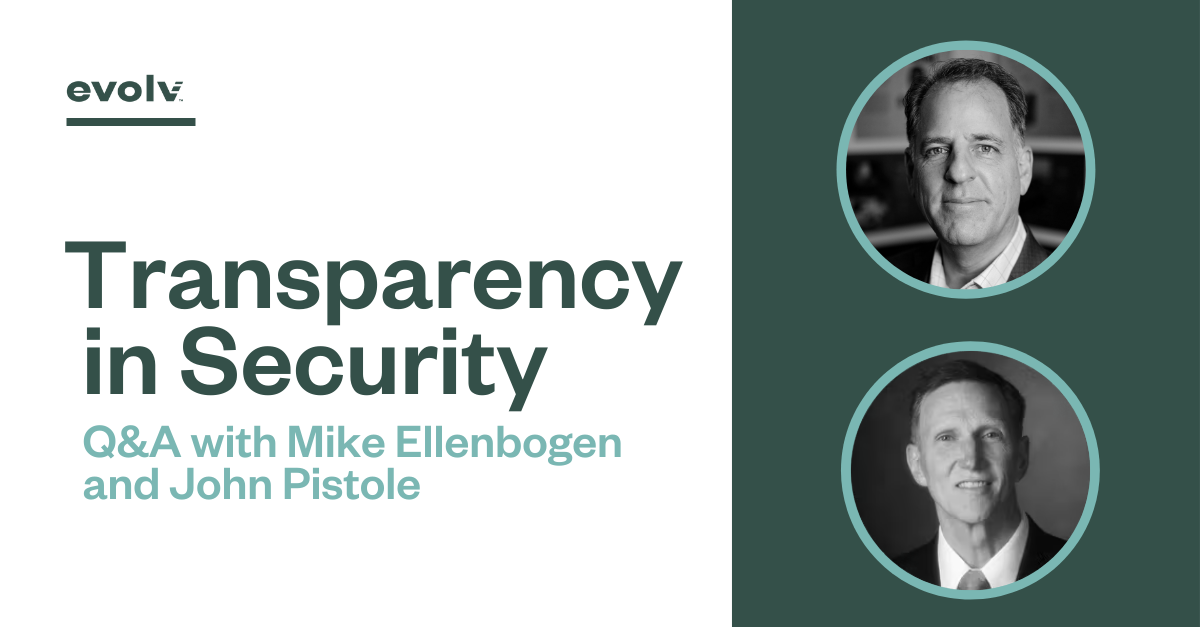
Transparency in Physical Security: Q&A with John Pistole and Mike Ellenbogen

The need to provide transparency without helping potential attackers is a fundamental paradox of the security industry. In their long and distinguished careers, former TSA Administrator John Pistole and Evolv founder Mike Ellenbogen have spent decades thinking about these issues and successfully finding the right balance.  That’s why we consulted with John, Mike, and other advisors to develop the Evolv Transparency Statement. The following Q&A is excerpted from recent conversations with John and Mike to provide additional insight into how we approach transparency. 

How has transparency featured in your career? 

John Pistole 

In 31 years in the government, mainly in the FBI and as the TSA Administrator, I found that transparency is one of those key issues that help define the trust and reputation of agencies, of the U.S. government overall, and of companies that provide security technologies. Each company or agency must be as transparent as possible while maintaining the core mission of keeping the public safe. 

 Mike Ellenbogen 

I grew up in aviation security technology where there is a very well-recognized and understood policy around transparency. In essence, at least regarding public release of technical details, there is no transparency. The specifications are classified by the TSA in the US and the ECAC in the EU. That specific information is called sensitive security information, and it’s very closely-held for what I believe are all the right reasons. 

The systems are tested by security professionals who have a legitimate need to know and hold the appropriate security clearances. These are independent professionals with a great deal of experience and resources to test in ways that most people cannot. These professionals have great credibility in the industry, so certification from a group like TSA is universally recognized as an indicator that the technology is fit for purpose.  

In aviation the people who know all the details don’t share them publicly. In fact, it’s illegal for them to do that, and that is well understood within that community. Outside of the aviation community, there are more questions because the standards aren’t as clearly defined. But it doesn’t change the basic requirement to keep detailed sensitive security information away from anybody who might use the information to exploit or attempt to penetrate a physical security system. That’s the goal at the end of the day. 

What kinds of information about weapons screening systems is most sensitive? 

Mike Ellenbogen 

I think it’s about granular specificity. The specific type and configuration of threats that are tested, the performance against those threats, and the specific weaknesses associated with those tests are the most sensitive. That information should be closely held. For example, it doesn’t make people safer if you publicly share that an attacker can defeat weapons screening by disassembling a particular handgun and placing one piece in their shoe and another piece under their hat. Sharing that kind of information only helps the bad guys. 

I do think that we can talk broadly about different categories of capabilities in a way that doesn’t disclose specific weaknesses that could be exploited by a bad actor. However, giving untrusted people a specific report that identifies known weaknesses just makes it more attractive for the bad guys to attempt to penetrate the facility and makes it easier for them to succeed. 

Are bad actors actively looking for sensitive information? 

John Pistole 

We saw this in the real world on Christmas day 2009, when Al-Qaeda in the Arabian Peninsula sent Umar Farouk Abdulmutallab from Brussels to Detroit with a non-metallic IED hidden in his underwear. They knew in advance that there was no detection for non-metallic bombs in most airport security protocols and regimens in use at the time. We know that they discovered this vulnerability through extensive online research. We also know that they conducted multiple scouting missions to probe and test for vulnerabilities at specific facilities using specific screening methods. It was a sophisticated intelligence gathering operation.  

Mike Ellenbogen 

I think bad actors are always looking for ways to circumvent the security processes in place. We see it in loss prevention all the time: people know that if you have a foil-lined bag, you can walk out with stolen goods without being detected by loss prevention technology. So that information has gotten out and it is being exploited on a regular basis. It’s a constant game of cat and mouse. 

What are the tradeoffs between transparency and security? 

John Pistole 

There’s a dynamic tension between how much information can be disclosed to the public and information that provides a roadmap to the bad guys. When I was at TSA, some original equipment manufacturers were disclosing information about their detection capabilities that, given my FBI background, I did not want to have out there. We had some good discussions with the manufacturers, and they agreed that on future iterations of their products they would not publish as much information publicly. Of course, they also agreed that they would provide that detailed information to us in a closed setting, which is necessary to know that their equipment can detect capably. 

How do government Inspector General Offices provide appropriate transparency without undermining security? 

John Pistole 

It’s usually a conversation between the Office of the Inspector General and the agency. Of course, the attorneys get involved to make sure that they are doing their job. There’s usually the unclassified document and then a classified annex that is not available to the public. But members of Congress and others can view the classified annex to have a better assurance of what the findings were and then what steps the agency is taking to address any issues. This helps provide appropriate accountability and oversight without compromising the safety of the public. 

Who needs access to sensitive security information about the capabilities and limitations of weapons detection technology? 

John Pistole 

The people who need to know are those who have been determined to be trustworthy to have that information. The more people who know, the greater likelihood that something will be shared inappropriately and/or inadvertently. In the US government the people with a need to know are people who have a security clearance at the secret or top-secret level, and then compartment segments after that, depending on how sensitive the information is. In the private sector, there may not be such a formal classification system in place, but it’s still compartmented information. Not everybody in the company needs to know everything about the businesses.  

Mike Ellenbogen 

In the private sector, the people with the most significant need to know are usually the security professionals who are responsible for protecting the organization from threats. They need to understand what the capabilities of the technologies that they’re deploying are, and where the potential limitations might be so that they can mitigate them. These professionals usually think in terms of layered defense, so they need to know what every individual component or layer is capable of. Those individuals need to know what specific technologies can and cannot do. 

It’s also important to realize that bad actors are looking at the people and processes just as much as they are looking at the technology. We talk about security systems as a combination of people, processes, and technology. Security professionals are rightfully concerned about the actions of any individual that creates an opening for a threat. It could be giving up passwords. It could be employees allowing unauthorized people to piggyback through turnstiles or secured doors. Bad actors know that well-intentioned people will hold a door open. They’re taking advantage of known weaknesses that originate with people and processes. 

Some people say that the most secure approach is full public disclosure for everybody. What’s your view? 

John Pistole 

I disagree with that view strongly. People who say that absolute transparency is best simply don’t understand the security business. They apparently don’t have an informed perspective or insight into just how determined the terrorists, spies, competitors, and other bad actors are in their efforts to harm individuals, countries, and companies. I get that “give full disclosure for everybody and let everybody make informed decisions” sounds great, but when you provide that carte blanche to everybody, that necessarily includes people with bad motives who are out to cause you harm. If there was no TSA security in the past 21 years, I can’t imagine we would have been able to avoid having more 9/11-type attacks. It just begs the imagination to think full transparency is the best outcome. 

Conclusion 

As John and Mike noted, providing appropriate transparency without assisting adversaries is an ongoing challenge faced by security vendors and practitioners alike. The Evolv Transparency Statement is our attempt to describe the principles that guide our approach to transparency. We will continue to consult with our customers, partners, advisors, and industry professionals to update our approach over time. As always, our mission to keep people safe will be our primary guide. 

About John Pistole 

John Pistole is the former administrator of the United States Transportation Security Administration (TSA) and a former deputy director of the Federal Bureau of Investigation. He is currently the president of Anderson University. In his role as Administrator of the TSA starting in 2010, Pistole led a 60,000-strong workforce, the security operations of more than 450 airports throughout the United States, the Federal Air Marshal Service, and shared security for highways, railroads, ports, mass transit systems and pipelines. Under his leadership, the TSA worked to transform as a risk-based, intelligence-driven counterterrorism agency dedicated to protecting the nation’s transportation systems. Prior to his leadership with the TSA, Pistole served as a 26-year veteran of the FBI with extensive national security and counterterrorism experience. After the attacks of September 11, 2001, John was placed in charge of the FBI’s counterterrorism program, eventually becoming the FBI’s Executive Assistant Director for national security. In 2004, Pistole was named Deputy Director for the FBI and contributed to the formation of terrorism policies during both the Bush and Obama administrations. John earned his bachelor’s degree from Anderson University in 1978. He went on to earn a juris doctorate from Indiana University Robert H. McKinney School of Law. 

About Mike Ellenbogen 

Mike is Founder and Head of Advanced Technology at Evolv Technology. Mike has spent more than 20 years shaping the explosives detection industry including as co-founder and CEO/President of Reveal Imaging Technologies, Inc., as Vice President of Product and Business Development of PerkinElmer Detection Systems where he was responsible for Research and Development, Engineering and Marketing, and as Director of Marketing of Vivid Technologies, where he was instrumental in the transition following Vivid’s acquisition by PerkinElmer. At both Vivid and PerkinElmer, Mike was responsible for market research, definition and development of new products and product enhancements. He has been issued 16 patents in the field of X-ray inspection and automated detection technology and has been broadly published within the security industry. Mike holds a Physics degree from Colgate University. 

Evolv Express® Receives Top Honor In Security Industry Association Awards

Weapons Detection System Lauded For Its Speed, Reporting, And Enhanced Management Of Processes

Evolv Technology (NASDAQ: EVLV, “Evolv”), the global leader in weapons detection security screening, received the Security Industry Association (SIA) New Products and Solutions (NPS) Award in the Law Enforcement/Public Safety/Guarding Systems category for Evolv Express®, its artificial intelligence (AI) based weapons detection system. The announcement was made earlier today at the International Security Conference & Exposition (ISC) West, the largest security industry trade show in the U.S.

Evolv Express combines cameras, sensors, AI, and advanced video analytics with cloud connectivity to distinguish weapons from other commonly carried items. Evolv Express also has the capability to communicate an identified potential threat item to other security technologies used by the customer, automatically initiating a  security protocols and supporting a coordinated security response at the customer site.

 “This recognition is particularly meaningful to Evolv because it underscores our dedication to assisting professionals on the frontlines of protecting the public. We believe it also validates that our technology provides the highest degree of weapons detection accuracy,” said Peter George, Evolv Technology CEO. “To be recognized by such an esteemed organization in the security industry is a tremendous honor, and an incredible way to cap off our presence at this year’s event.”

Formerly the New Product Showcase Awards, the NPS Awards is the SIA’s flagship awards program recognizing the best and most innovative security products, services and solutions available. Entrants are reviewed by a panel of more than 30 independent judges with extensive industry experience who dedicate significant time and provide careful evaluation to ultimately select honorees. Entrants in this year’s program made face-to-face presentations to the judges during ISC West, which was held at the Venetian Expo in Las Vegas, Nevada.

To learn more about Express, please visit: https://www.evolvtechnology.com/products/evolv-express.

About Evolv Technology

Evolv Technology (NASDAQ: EVLV) is a leader in weapons detection for security screening, securing the world’s most iconic venues and companies. Its mission is enabling a better experience and better security for venues, creating a safer world to work, learn, and play by transforming physical security to make everywhere safer. It gives sports fans, theme park visitors, concertgoers, shoppers, employees, students, and others peace of mind so that they can gather without fear of violence. Its security screening has scanned more than 200 million people, second only to the Department of Homeland Security’s Transportation Security Administration (TSA) in the United States, and its technology combines powerful, advanced sensors with proven artificial intelligence (AI), security ecosystem integrations, and comprehensive venue analytics to reliably detect threats 10 times faster than traditional metal detectors.

Evolv Technology, Evolv Express®, Evolv Insights™, and Evolv Cortex AI™ are registered trademarks or trademarks of Evolv Technologies, Inc. in the United States and other jurisdictions.

For more information, visit https://evolvtechnology.com.

Forward-looking Statements

Certain statements in this press release may constitute “forward-looking” statements and information, within the meaning of Section 27A of the Securities Act of 1933, Section 21E of the Securities Exchange Act of 1934, and the safe harbor provisions of the U.S. Private Securities Litigation Reform Act of 1995 that relate to our current expectations and views of future events. In some cases, these forward-looking statements can be identified by words or phrases such as “may,” “will,” “expect,” “anticipate,” “aim,” “estimate,” “intend,” “plan,” “believe,” “potential,” “continue,” “is/are likely to” or other similar expressions. These forward-looking statements are subject to risks, uncertainties and assumptions, some of which are beyond our control. In addition, these forward-looking statements reflect our current views with respect to future events or our Company’s performance and are not a guarantee of future performance. Actual outcomes may differ materially from the information contained in the forward-looking statements as a result of a number of factors, including, without limitation, the risk factors set forth in our prospectus, filed with the Securities and Exchange Commission (the “SEC”) on September 3, 2021, and other documents filed with or furnished to the SEC, including our Annual Report on Form 10-K for the year ended December 31, 2021 that we intend to file with the SEC on March 25, 2022. These statements reflect management’s current expectations regarding future events and operating performance and speak only as of the date of this press release. You should not put undue reliance on any forward-looking statements. Although we believe that the expectations reflected in the forward-looking statements are reasonable, we cannot guarantee that future results, levels of activity, performance and events and circumstances reflected in the forward-looking statements will be achieved or will occur. Except as required by law, we undertake no obligation to update or revise publicly any forward-looking statements, whether as a result of new information, future events or otherwise, after the date on which the statements are made or to reflect the occurrence of unanticipated events.