Evolv Technology Utilized at World Premiere of 1883 at Wynn Las Vegas 

Guests of Yellowstone Prequel Series Enjoyed Evolv Express®’ seamless and frictionless entry screening experience  

Evolv Technology (NASDAQ: EVLV), the leader in weapons detection security screening, today announced that its award-winning Evolv Express® systems were used to enhance safety at the world premiere of the highly anticipated prequel to Yellowstone – 1883. Evolv’s system allowed cast and guests to seamlessly enter the venue without stopping or emptying their pockets (unless directed by security staff).

Evolv is transforming the physical security industry with Evolv Express, by providing the world’s first AI-enabled weapons detection screening system. Built on its Evolv Cortex AI software platform, Evolv continually improves its customers’ security posture through machine learning and on-demand analytical insights in a way that legacy metal detectors and other analog screening systems have not provided.

We believe the entertainment industry often sets the stage for the future, and the screening of ‘1883’ is a great example,” said Peter George, CEO of Evolv Technology. “As a security industry, we can enable safe and seamless experiences; we don’t have to sacrifice one for the other. By using innovative technology like AI, we can change the way we safely gather for events, just as we have done for the Tennessee Titans, the Atlanta Falcons, the U.S. Open, and many more.”

Evolv Express provides advanced, sensor-based AI-driven technology for weapons detection screening at unprecedented volume and speed. Additionally, Evolv’s data and analytics provide security staff with powerful insights, which are used to help predict and better manage the pace of crowds through the screening process, as venues strive to deliver zero-wait time for guests. The world’s most iconic venues and companies place their trust in Evolv to protect their employees and visitors, including Nissan Stadium, Mercedes-Benz Stadium, Lincoln Center, The Boch Theatre, Six Flags, and hundreds of others.

Evolv’s systems have been used to screen more than 150 million people, second only to the Department of Homeland Security’s Transportation Security Administration in screening people in the U.S.

About Evolv Technology

Evolv Technology (NASDAQ: EVLV) is the leader in weapons detection for security screening, securing the world’s most iconic venues and companies. Its mission is enabling a better experience and better security for venues, creating a safer world to work, learn, and play by transforming physical security to make everywhere safer. It gives sports fans, theme park visitors, concertgoers, shoppers, employees, students, and others peace of mind so that they can gather without fear of violence. Its security screening has scanned more than 150 million people, second only to the Department of Homeland Security’s Transportation Security Administration (TSA) in the United States, and its technology combines powerful, advanced sensors with proven artificial intelligence (AI), security ecosystem integrations, and comprehensive venue analytics to reliably detect threats 10 times faster than traditional metal detectors.

Evolv Technology, Evolv Express®, Evolv Insights™, and Evolv Cortex AI™ are registered trademarks or trademarks of Evolv Technologies, Inc. in the United States and other jurisdictions.

For more information, visit https://evolvtechnology.com.

Forward-looking Statements

Certain statements in this press release may constitute “forward-looking” statements and information, within the meaning of Section 27A of the Securities Act of 1933, Section 21E of the Securities Exchange Act of 1934, and the safe harbor provisions of the U.S. Private Securities Litigation Reform Act of 1995 that relate to our current expectations and views of future events. In some cases, these forward-looking statements can be identified by words or phrases such as “may,” “will,” “expect,” “anticipate,” “aim,” “estimate,” “intend,” “plan,” “believe,” “potential,” “continue,” “is/are likely to” or other similar expressions. These forward-looking statements are subject to risks, uncertainties and assumptions, some of which are beyond our control. In addition, these forward-looking statements reflect our current views with respect to future events or our Company’s performance and are not a guarantee of future performance. Actual outcomes may differ materially from the information contained in the forward-looking statements as a result of a number of factors, including, without limitation, the risk factors set forth in our prospectus, filed with the Securities and Exchange Commission on September 3, 2021, and other documents filed with or furnished to the SEC. These statements reflect management’s current expectations regarding future events and operating performance and speak only as of the date of this press release. You should not put undue reliance on any forward-looking statements. Although we believe that the expectations reflected in the forward-looking statements are reasonable, we cannot guarantee that future results, levels of activity, performance and events and circumstances reflected in the forward-looking statements will be achieved or will occur. Except as required by law, we undertake no obligation to update or revise publicly any forward-looking statements, whether as a result of new information, future events or otherwise, after the date on which the statements are made or to reflect the occurrence of unanticipated events.


2022 Predictions: Q&A with Juliette Kayyem

We sat down with advisory board member Juliette Kayyem to talk about safety, returning to public events, and the role technology plays in providing security as crowds return to public venues.

As background, Juliette is as a national leader in America’s homeland security efforts across government, academia, journalism, and the private sector. She is a professor at Harvard’s Kennedy School of Government, where she is the Faculty Director of the Homeland Security Project and Security and Global Health Project. 

She presently serves as a CNN National Security Analyst as well as CEO of Grip Mobility, a technology company looking to provide transparency in the rideshare industry. Juliette  has spent more than 20  years managing complex policy initiatives and organizing government responses to major crises in both state and federal government. Most recently, Juliette was President Obama’s Assistant Secretary for Intergovernmental Affairs at the Department of Homeland Security.

Juliette is the founder and primary consultant of Kayyem Solutions, LLC. Her team provides strategic and operational advice in resiliency planning, risk management, mega-event security, infrastructure protection, and cybersecurity. These companies have included AirBnB, Zemcar, UPS’ Americans for Securing All Packages, CyPhy, Evolv Technology, as well as numerous financial, educational, and retail clients where she provides advice and training. Kayyem is the author of Security Mom, a memoir that explores the intersection, and commonalities, of her life in homeland security and as a mother. Her upcoming book, The Devil Never Sleeps will be published in March 2022.

Q. What do you think will change in the security industry over the next 12 months?

A.  When I think about security, it’s really about secure flow. It can be about the secure flow of networks, goods or people, for example. Everybody wants security, but you also have to let people be together. The faster and more reliably you can do that, the more security becomes integrated into how we want to live.

Over the next 12 months, I believe there will be a growing acceptance of risk mitigation. For a long time, we deluded ourselves into thinking that risk elimination was possible, yet this is not really how security professionals think of things. Instead, you want a variety of efforts to minimize risk in a world that’s always going to have risk. For example, consider COVID-19. Even if you’re vaccinated, there are lots of other actions you’re going to take depending on risk factors such as being immunocompromised or around others that aren’t vaccinated.

There’s also a certain level of risk when you go to concerts and events. It’s not just COVID-19, there’s also the risk of active shooters and the potential for a climate event such as a big wind or flash flood. This is why it’s really important that we view ourselves as mobile and become more comfortable with a variety of tactics and techniques that will minimize risk as we get together again, especially in crowds.

Q. Due to COVID-19 and the rise in mass shootings, what do you think Americans are willing to do now to enter public places?

A.  As security has changed over the years, Americans have become more sophisticated about it. Making places safer is part of a network of things going on where a sophisticated event host or entity uses a variety of tools and resources to ensure a safer environment. It’s not just one tool, it takes a toolbox to mitigate security risks. Yet sometimes the way we talk about security is a binary notion of safe or unsafe. The popular discourse on the topic has been to commercialize fear. While there’s no perfectly safe place, we have an obligation to make it safer to go to public places and I think the American public gets that.

Q. In terms of the public’s willingness to go through a screening process, where do their attitudes about technology converge and where do they diverge? 

A. What you have to keep in mind is that security was built to keep the public from conveniently moving from point A to point B. Whether it’s traditional surveillance, cargo, or a security review that requires a driver’s license for a person to enter a building, these protocols exist precisely for inconvenience.

Technology will converge with the American desire for convenience, speed, and flow. And that’s not a bad thing as long it’s part of a risk reduction philosophy. In that way, technology is going to make security more integrated into the fabric of how we want to live rather than a nuisance.

Where they diverge is in privacy. Thinking about what it means to live in today’s world with this much information can be worrisome. Technology is trying to do things to protect our identities, but I think there’s a certain amount of discomfort about where technology is taking over privacy. Much of it is simply generational as even my kids sort of laugh at the idea of privacy. Nothing is private anymore!

Q: Do you believe over the next 12 months that we’ll see adoption over hesitancy when it comes to prioritizing physical security?

A. I hope so. I’ve been working in security my whole career, and one of my biggest fears is that there’s still a separation between cybersecurity efforts and physical security efforts. The thought that the security threats either go after the wires or they go after the people is jaw dropping.

As we saw with the Colonial Pipeline incident earlier this year, a cyberattack is going to have physical consequences and we have to be prepared for that. Since no single piece of technology is going to stop all bad things from happening, we have to get better at what is known in the security industry as “all hazards planning.”

In some ways, COVID-19 may have the potential to drive this. Since we have all become so dependent on our networks there’s a growing realization that we can’t bifurcate network security from physical security.  

Q: Do you think there’s a frustration in the industry that physical and cybersecurity have not yet converged? If so, do you see it happening?

A: Yes, I think the market is demanding the convergence. We’ve had major hacks such as Sony and Solar Winds and most of the time it was about stealing information. Going back to the Colonial Pipeline incident, I think we’ll look back on it as a pivotal point in thinking about response capacity. If you remember, once it was determined to be a ransomware attack, Colonial’s only option was to shut down its entire system for six days. Prior to that, they never seemed to contemplate that an attack on the wires would have physical consequences.

I also think that company boards and insurers are demanding the convergence of physical and cybersecurity and we’re seeing more of it. Also, customers and employees will start to demand it. In my consulting work, companies have been instituting new security mandates and discovering just how much employees want it. When these companies increased their security, recruitment efforts improved significantly. For example, at United Airlines, once they instituted new safety mandates, they received 20,000 applications for approximately 2,000 flight attendant positions.

Q: We talked about security progression over the past year, do you think we’ll see any regression?

A: I think we’re going to regress as more people get together in person. When we’re together, there’s inevitably more risk. As venues fully open, there’s a risk in dropping our pandemic behaviors such as wearing a mask. During the pandemic, we didn’t see a drop off in gun violence, but we did see a drop off in other kinds of threats. It’s these types of threats that make us realize that we might not be as safe as we could be.

Q: How can we facilitate action without a lack of policy? Is it the responsibility of the businesses?  

A: The experience of feeling safer is something we should capitalize on even if the government is not demanding it. Yet if a place becomes too much of a hassle to get into, people stop going. And if it feels too vulnerable, people also stop going, as demonstrated by Evolv’s recent research. It is a fine line, but there are ways to find the sweet spot and have a market deferential. For example, technology like Evolv’s is customer friendly and we’re seeing the market demand for it.

Q: Has COVID-19 changed the security threats that we currently face? If so, how?

A: I think the pandemic has made us less safe in tactical ways. The reliance on the Internet and technology to communicate is a vulnerability that we didn’t have before. And some of the consequences of frustration and isolation through COVID-19 has led to a lack of goodwill as tension and violence increase.

On a larger geopolitical scale, COVID-19 has made us more vulnerable because of our inability to respond adequately for large portions of it and this impacts how we’re perceived by the world. It’s an irony that while the United States still remains a dream and vision for the world, particularly our immigrants, we are fragile in the context of COVID-19 and January 6, for example.

Q. Are there specific domestic or international issues we should be keeping our eyes on that impact safety?

A: I do worry about the lack of common respect for the Constitution. If you scratch the surface of our politics today, it feels like violence is right there. That concerns me as a security specialist because of the potential for radicalization, the use of weapons, and the vulnerabilities of our public officials. This is something we have not addressed adequately. While we have addressed the political and legal fights, they aren’t actually about violence and the threat of violence in our society.  

Despite all this, what gives me hope is that 77% of all eligible Americans are now vaccinated. The vast majority of Americans still think about their responsibility to each other and this makes me happy.

To read more about Juliette, visit her website and follow her on Twitter.

NFL Football, Fun & Families: The Human Side of Better Security

 The pandemic has created a renewed desire for human connection and novel, fun experiences. We want to surround ourselves with friends, family, and a good dose of freedom from the many pressing concerns of life. For football fans everywhere, attending a live NFL game in one of the nation’s premier stadiums ranks right up there.   

And yet, fans have gotten used to staying at home and watching NFL games on a big screen TV, even though many prefer to get to a live game, feel the energy, and cheer for their team with other fans. Understandably, the fan experience has changed; everyone wants touchless everything from payments to ticketing to security screening.  

Stadium operators understand that the overall fan experience is more important than ever. There is a renewed focus on the end-to-end guest experience, including new security screening designed to help get families from their parked cars and into their stadium seats in a faster, safer, seamless, and touch-free way. The goal? Smooth sailing right into the experience fans came for.  

“Understandably, the fan experience has changed; everyone wants touchless everything from payments to ticketing to security screening.”

Transformed security that serves everyone 

 No one disputes the need for increased stadium safety and security in today’s heightened threat environment. As co-founder of Evolv, I’m incredibly aware of the devastating impact a single bad actor can have on thousands. It happens all too often. For those of us in the industry, we take seriously our role to protect the innocent masses from the bad few. And yet, I’m also a huge proponent of getting families and friends back into NFL stadiums without unnecessary concerns around weapons and dangerous people, and the anxiety created by crowds outside the stadium, long lines, and slow, manual, one-at-a-time high touch approaches to security screening. The desire is to return to worry-free fun.  

Our goal is to help make this happen. Evolv Express® is a weapons detection system that uses sensor technology and artificial intelligence (AI)—in combination with security ecosystem integrations—to help stadiums more quickly and effectively detect threats at an unprecedented speed and volume. Fans entering the venue can simply walk through the system at a natural pace with their family and friends. Meanwhile, targeted visual alerts are delivered onscreen to guard staff, helping them identify specific, potential threat items.  

Let’s take a closer look at how touchless physical screening for weapons detection creates advantages for three key audiences: security personnel, families, and stadium operators.  

The advantages for security staff  

The security staff at big stadiums have a taxing job. In most cases, they’re using older metal detection technology, visual bag checks, and hand-wanding technologies to screen thousands. By individually screening one person at a time, they are inadvertently causing security backups and long lines, which can turn happy fans into frustrated fans quickly. As the lines build twenty minutes before kickoff, the security team feels pressure to move people in faster. The manual processes can start to break down, and human errors can increase.   

“Using AI and advanced sensors to distinguish true weapon threats from everyday items essentially lets tech do what it does best and, by extension, lets the security staff do what they do best.”

When trained security personnel can easily screen 3,600 fans per hour instead of 360 with manual processes, they can let the technology do the work of initially screening everyone while they focus on what they’re trained to do; using their skill and expertise to interact with people, make judgement calls to resolve specific human issues, and address guests alerted by the system who may have a concealed weapon or pose a threat. Security staff job satisfaction increases because they’re doing human-to-human risk mitigation work, not manually checking every single person, the vast majority of whom pose no threat and are there simply to enjoy the gameday experience.  

Using AI and advanced sensors to distinguish true weapon threats from everyday items essentially lets tech do what it does best and, by extension, lets the security staff do what they do best.  

The advantages for families and fans 

Families who pay for that big stadium, NFL game day experience—rather than watching from home—choose it for the elevated experience, memories, shareable pics, and hopefully a win by their team. But if the experience at the perimeter checkpoint is more about waiting in a long, cold security line followed by a single-file screening process including bag check and metal detection (which might alert for a 9-year old’s cell phone) then the experience quickly becomes more about anxiety and entrance commotion—before they’ve even entered the stadium grounds.  

“Ingress tends to be one of the most congested experiences in live sports, which is especially annoying because it’s the fan’s first interaction with the venue on game days. That makes technology like Evolv Express even more important for the live sports industry coming out of the pandemic.” –Sports Business Journal, November 2021 

Juxtapose this scenario with no waiting and no lines, the ability to walk side by side as a family past touchless screening without breaking stride, and the guest experience is night and day. The family can focus on being together, the event, and all the bells and whistles the venue has created for an exceptional, whole-fan experience.  

Families can focus on what’s beyond security, not on the security. 

“Stadium operators want their fans to fully enjoy the experience and feel well-protected everywhere inside their venue. And, they want their security teams to have the assurance that they can reliably pinpoint and stop threats. This shouldn’t be a tradeoff.”

The advantages for venue operators 

Because NFL stadiums only host games weekly or bi-weekly during the season, and with the current nationwide labor shortage, it’s not easy for stadium operators to consistently find the trained security staff they need. Nissan Stadium, home to the Tennessee Titans, recently installed Evolv’s AI and sensor scanning technology and have seen their security screening personnel needs drop by 66%. This advantage enables them to move the staff who worked old machines to a wider venue perimeter to detect prohibited items and potential threats further out—increasing fan safety even more.  

As well, the AI built into the Express creates event analytics that stadium operators can use to more accurately plan and staff the busiest entrances. This allows them to balance staff with the expected throughput for each gate and deploy them in greater numbers inside the venue at specific high-traffic locations. They can evaluate the past arrival curves at each gate by time of day, weather, and type of event.   

Stadium operators want their fans to fully enjoy the experience and feel well-protected everywhere inside their venue. And, they want their security teams to have the assurance that they can reliably pinpoint and stop threats. This shouldn’t be a tradeoff.  

Creating a win-win experience   

When fans don’t notice security technology, that’s a game changer. When technology helps security personnel do what they’re trained to do, they are more effective and experience higher job satisfaction. When stadium operators can remove the biggest fan criticism of the game day experience and have access to planning data that helps them make smarter staffing decisions, they improve operational efficiencies and maximize their profitability. That’s a win all the way around.  

Evolv Technology Proves a Safe Bet for Little River Casino Resort

Michigan Casino, Resort and Entertainment Center Welcomes a Full House with Evolv Express®

As the Little River Casino Resort reopens at full capacity, the Manistee, Michigan-based property is partnering with Evolv Technology (NASDAQ: EVLV). Evolv, the leader in weapons detection for security screening, will provide for the safety of guests and support the casino’s mission to improve the overall customer experience. 

Little River Casino Resort selected the award-winning Evolv Express® screening solution to boost safety and streamline the flow of foot traffic to its event center. Evolv Express provides advanced, sensor-based AI-driven technology for weapons detection at unprecedented volume and speed. Additionally, Evolv’s data and analytics provide security staff with powerful insights, which are used to help predict and better manage the pace of crowds through the screening process as venues strive to deliver zero-wait time for guests.

“With safety being our number one priority, our goal was to purchase an advanced screening system designed to increase overall weapons detection during events, while also screening large numbers of people in a much more efficient and effective manner, essentially streamlining the process for our valued guests,” said Melissa Medacco, Security Director for the Little River Casino Resort. “We knew there had to be a better way and that’s when our research led us to Evolv. Not only do they offer a more advanced technology for weapons detection, the system is also portable. This makes it even easier to use as crowds increase during certain days and events and to put away and store when necessary.”

By replacing the casino’s metal detectors with Evolv Express, queues are reduced dramatically overall without compromising safety. Additionally, by requiring fewer staff to manage the screening process, the casino has assigned more team members to cater to its guests’ needs.

“Little River Casino Resort’s selection of Evolv demonstrates the growing need for advanced weapons detection in casinos of all sizes,” said Peter George, CEO, Evolv Technology. “We’re honored to be part of the casino’s efforts to take advantage of the latest in weapons detection safety technologies without detracting from the customer’s experience.”

About Little River Casino Resort

The Little River Band of Ottawa Indians opened Little River Casino in 1999 as a standalone casino until the completion of their resort in 2001. When Little River Casino opened they had 600 slot machines and one dining option.

Today, Little River Casino Resort features 292 luxurious hotel rooms, a 95 space RV park, two indoor pools, one outdoor pool, an indoor winter garden, a courtyard with three fire pits, a gift shop boutique, a spa & salon, several restaurants and bars, a 1600 seat event center, 4 conference rooms, an off-site gas station/c-store, an off-site golf course, roughly 1,100 slot machines, 26 table games featuring various card games, craps and interactive stadium roulette as well as a retail sportsbook. Little River Casino Resort is conveniently located at the corner of M-22 and US-31 in Manistee, MI.   

Little River Casino Resort is owned and operated by the Little River Band of Ottawa Indians.

About Evolv Technology

Evolv Technology (NASDAQ: EVLV) is a leader in weapons detection for security screening, securing the world’s most iconic venues and companies. Its mission is enabling a better experience and better security for venues, creating a safer world to work, learn, and play by transforming physical security to make everywhere safer. It gives sports fans, theme park visitors, concertgoers, shoppers, employees, students, and others peace of mind so that they can gather without fear of violence. Its security screening has scanned more than 100 million people, second only to the Department of Homeland Security’s Transportation Security Administration (TSA) in the United States, and its technology combines powerful, advanced sensors with proven artificial intelligence (AI), security ecosystem integrations, and comprehensive venue analytics to reliably detect threats 10 times faster than traditional metal detectors.

Evolv Technology, Evolv Express®, Evolv Insights™, and Evolv Cortex AI™ are registered trademarks or trademarks of Evolv Technologies, Inc. in the United States and other jurisdictions.

For more information, visit https://evolvtechnology.com.

Forward-looking Statements

Certain statements in this press release may constitute “forward-looking” statements and information, within the meaning of Section 27A of the Securities Act of 1933, Section 21E of the Securities Exchange Act of 1934, and the safe harbor provisions of the U.S. Private Securities Litigation Reform Act of 1995 that relate to our current expectations and views of future events. In some cases, these forward-looking statements can be identified by words or phrases such as “may,” “will,” “expect,” “anticipate,” “aim,” “estimate,” “intend,” “plan,” “believe,” “potential,” “continue,” “is/are likely to” or other similar expressions. These forward-looking statements are subject to risks, uncertainties and assumptions, some of which are beyond our control. In addition, these forward-looking statements reflect our current views with respect to future events or our Company’s performance and are not a guarantee of future performance. Actual outcomes may differ materially from the information contained in the forward-looking statements as a result of a number of factors, including, without limitation, the risk factors set forth in our prospectus, filed with the Securities and Exchange Commission on September 3, 2021, and other documents filed with or furnished to the SEC. These statements reflect management’s current expectations regarding future events and operating performance and speak only as of the date of this press release. You should not put undue reliance on any forward-looking statements. Although we believe that the expectations reflected in the forward-looking statements are reasonable, we cannot guarantee that future results, levels of activity, performance and events and circumstances reflected in the forward-looking statements will be achieved or will occur. Except as required by law, we undertake no obligation to update or revise publicly any forward-looking statements, whether as a result of new information, future events or otherwise, after the date on which the statements are made or to reflect the occurrence of unanticipated events.
 

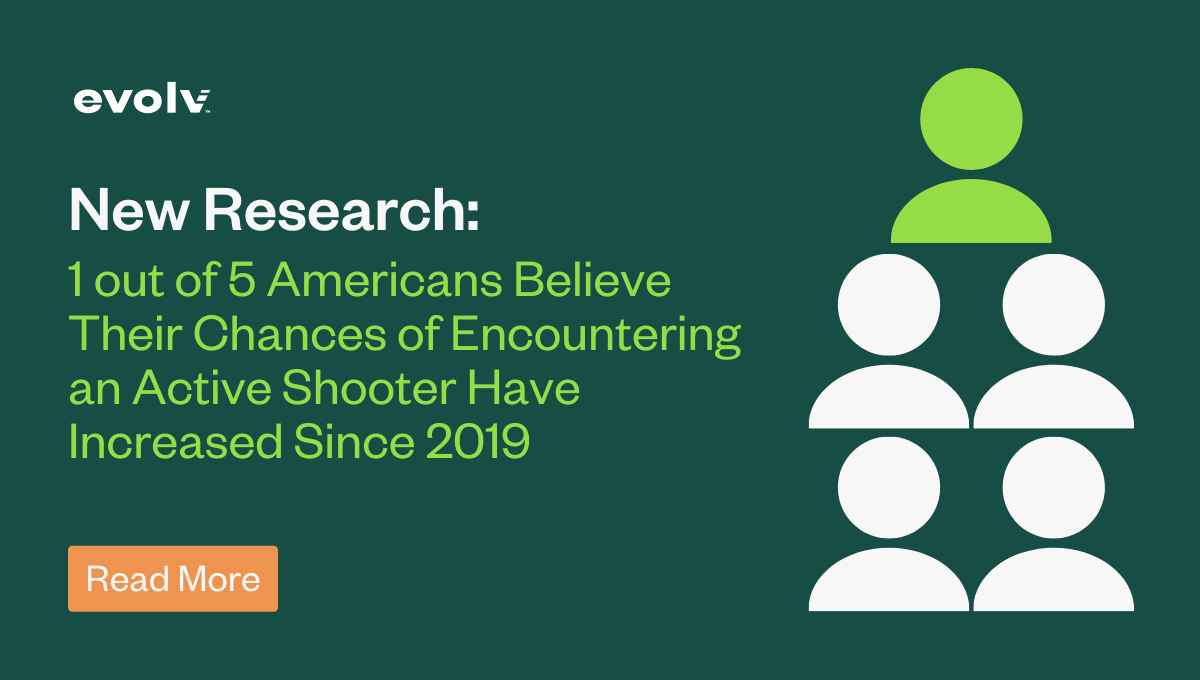
New Research: 1 out of 5 Americans Believe Their Chances of Encountering an Active Shooter Have Increased Since 2019

The survey, commissioned by Evolv Technology, quantifies the mental toll gun violence takes on Americans


●       More than half of Americans are willing to go through weapons detection screening at everyday locations, such as the grocery store, workplace or movie theater

●       One third (31%) report increased anxiety when going into a large gathering

●       28% feel they are likely to encounter an active shooter in their lifetime

●       Nearly one third (29%) have been in a location where someone unexpectedly opened fire

Evolv Technology (NASDAQ: EVLV), the leader in weapons detection security screening, today announced the findings of a study – Guns in America: A Survey on Public Violence, Anxiety, and Threats – it commissioned with market research firm Equation Research that reveals the mental toll gun violence takes on Americans across the country.

Key findings:

●       Nearly 8 out of 10 (77.8%) Americans think gun violence is a problem in America.

●       Nearly half (44.9%) of Americans report being anxious (extremely / moderately) about gun violence in America.

●       At the type of locations where high-profile mass shootings have taken place, Americans routinely check the exits and/or review their mental plan in case of an active shooter, as well as report higher levels of anxiety:

o   In a movie theater (Aurora, CO – 2012): 62.6% check exits/review mental plan; 28.6% report some level of anxiety (extreme or moderate)

o   In a grocery store (Boulder, Colorado; Collierville, TN – 2021): 49.1% check exits/review mental plan; 28.4% report some level of anxiety (extreme or moderate)

o   In a bar / night club (Orlando, FL – 2016): 29.7% report some level of anxiety (extreme or moderate)

●       15.3% of Americans feel they are at higher risk of encountering an active shooter based on their religious affiliation.

o   Among members of the Jewish religion, 49.1% believe they are more at risk. Those identifying as Muslims: 43.6%, Orthodox: 36.8% and Roman Catholic: 15.9%.

●       Of those who have been in a location where someone unexpectedly opened fire, 18% were in a bar/night club

“The United States is awash in guns and gun violence, but far from being numb to the violence, the survey results indicate that the American public is filled with more anxiety than ever, and that anxiety is slowly eroding any sense of trust that we can go about our daily lives safe from harm,” said Peter George, CEO, Evolv Technology. “We believe our research demonstrates that the most effective way to alleviate this nationwide anxiety is to democratize access to security for all public spaces, so that the public can feel confident when they gather and venues can take appropriate measures to meet their duty to keep their visitors safe.”

Regional differences

While the findings reveal that Americans everywhere feel an impact from shootings and terrorist incidences, there are some notable disparities in the level of anxiety and perception of gun violence based on where they live.  

●       Americans who live in the South (75.3%) are more worried about shooting and terrorist attacks than other regions of the country.

o   Northeast: 72%

o   West: 68.2%

o   Midwest: 66.5%

●       82% of those who live in the Northeast think gun violence is a problem in the U.S. vs. 71% of those who live in the West.

o   Likewise, 81.2% of those who live in urban areas [think it’s a problem] vs. 73% of those in rural areas.

●       Nearly 4 out of 10 (37.5%) Americans believe they are less at risk of encountering an active shooter based on where they live. 

o   Nearly half of those who live in a rural area (47.9%) feel they’re at less risk of an active shooter vs. 28% of those who live in an urban area.

●       When asked who Americans believe is most responsible to keep them safe, the answers differ based on where they live:

o   More Americans in the Northeast (30.5%) believe the local police are responsible than the rest of the country (West: 26% / South: 24.5% / Midwest: 24.4%)

o   On the contrary, less Americans in the Northeast (33%) believe they are responsible for their own safety (Midwest: 39.6% / South: 41% / West: 42%)

All places are not created equal

It’s clear that Americans are concerned about the risk of shootings in everyday locations, but for many, some carry more – and elicit higher levels of anxiety – than others.

●       More than 3 out of 10 (31.3%) Americans list “large gatherings” as the top answer when asked where they have increased anxiety as a result of gun violence and/or terrorist activity.

o   Bar/night club: 28.8%  

o   Movie theater: 28.5%

o   Mall: 26.4%

o   School: 16.4%

o   Places of worship: 12.6%

●       When attending large events, Americans are most concerned with:

o   COVID-19: 46.2%

o   Large crowds: 37.2%

o   Active shooter/shooting: 30.9%

o   Long lines: 28.6%

o   Terrorist attack: 20.6%

What Americans will do for safety

The pervasive feeling of anxiety and worry carries over into what Americans are willing to do in order to reduce the threat of a terrorist attack or mass shooting. When asked whether they would be willing to go through extra steps [to reduce those threats] at everyday locations, such as the grocery store, workplace or movie theater, they answered:

●       Go through weapons detection screening: 56.7% 

●       Have bags checked: 46.4%

●       Check guns at the door: 43.6%

●       Be patted down by a security professional: 37.4% 

●       Only 21.5% would not be willing to go through these extra steps

“What the data overwhelmingly reveal is that a mass shooting or terrorist incident has rippling effects across the U.S. population; it doesn’t just affect the people that were there,” said Joel Dvoskin, PhD, ABFP, clinical and forensic psychologist. “We have an epidemic of national trauma from the violent events that have already taken place, and don’t appear to be stopping, which I predict will only add to the trauma quantified by these findings. And most troubling, we now have a population that is demonstrating significantly increased rates of rage and instability as a result of lockdowns and isolation caused by the COVID-19 pandemic. We could be seeing an increased reason for Americans to be anxious, which explains their willingness to take extra steps to reduce threats. Evolv’s sponsored research has quantified the below-the-surface anxiety so many Americans live with, which is critical for us to start addressing the root cause – and begin taking steps towards a solution.”

Click here for the full report.

Survey Methodology

Evolv Technology commissioned Equation Research to conduct the survey, which ran from October 20 to October 28 2021. The survey captured responses from a broad distribution of 2,015 adults in the U.S. aged 18 and older.

About Evolv Technology

Evolv Technology (NASDAQ: EVLV) is a leader in weapons detection for security screening, securing the world’s most iconic venues and companies. Its mission is enabling a better experience and better security for venues, creating a safer world to work, learn, and play by transforming physical security to make everywhere safer. It gives sports fans, theme park visitors, concertgoers, shoppers, employees, students, and others peace of mind so that they can gather without fear of violence. Its security screening has scanned more than 100 million people, second only to the Department of Homeland Security’s Transportation Security Administration (TSA) in the United States, and its technology combines powerful, advanced sensors with proven artificial intelligence (AI), security ecosystem integrations, and comprehensive venue analytics to reliably detect threats 10 times faster than traditional metal detectors.

Evolv Technology, Evolv Express®, Evolv Insights™, and Evolv Cortex AI™ are registered trademarks or trademarks of Evolv Technologies, Inc. in the United States and other jurisdictions.

For more information, visit https://evolvtechnology.com.

Forward-looking Statements

Certain statements in this press release may constitute “forward-looking” statements and information, within the meaning of Section 27A of the Securities Act of 1933, Section 21E of the Securities Exchange Act of 1934, and the safe harbor provisions of the U.S. Private Securities Litigation Reform Act of 1995 that relate to our current expectations and views of future events. In some cases, these forward-looking statements can be identified by words or phrases such as “may,” “will,” “expect,” “anticipate,” “aim,” “estimate,” “intend,” “plan,” “believe,” “potential,” “continue,” “is/are likely to” or other similar expressions. These forward-looking statements are subject to risks, uncertainties and assumptions, some of which are beyond our control. In addition, these forward-looking statements reflect our current views with respect to future events or our Company’s performance and are not a guarantee of future performance. Actual outcomes may differ materially from the information contained in the forward-looking statements as a result of a number of factors, including, without limitation, the risk factors set forth in our prospectus, filed with the Securities and Exchange Commission on September 3, 2021, and other documents filed with or furnished to the SEC. These statements reflect management’s current expectations regarding future events and operating performance and speak only as of the date of this press release. You should not put undue reliance on any forward-looking statements. Although we believe that the expectations reflected in the forward-looking statements are reasonable, we cannot guarantee that future results, levels of activity, performance and events and circumstances reflected in the forward-looking statements will be achieved or will occur. Except as required by law, we undertake no obligation to update or revise publicly any forward-looking statements, whether as a result of new information, future events or otherwise, after the date on which the statements are made or to reflect the occurrence of unanticipated events.
The Rise of Gun-Free Spaces in America

Today we released the results of our original research on the mental toll of gun violence in the United States. The news is not great. We must do better. Meaningful progress is within reach. It’s time for urgent, pragmatic action.

Over 80% of Americans expressed significant anxiety about gun violence. We are living in an era of unprecedented anxiety. It’s significantly more anxiety than we felt at the height of the Cold War and in the immediate wake of the 9/11 attacks. What’s different about gun violence? It turns out that a shocking number of us (29%) have personally experienced unexpected gunfire or know someone who has (38%). It’s an actual threat in every community. It’s not theoretical. It’s real. And it’s not OK. 

The root cause of gun violence and all the related anxiety is, of course, that guns are everywhere. America has more guns than people. This is not going to change anytime soon. The Second Amendment stands firm and the votes to overturn it do not exist. We cannot assume the guns will disappear someday. We need a gun violence reduction plan. . It’s time to get real. We need a pragmatic plan that keeps the guns out of shared spaces where they are legally prohibited and yet still get in and do harm. It’s time to democratize security by massively exercising the existing right to create and enforce gun-free spaces. 

Imagine a future where everywhere you go became a safe, gun-free oasis. A future, where you aren’t thinking twice about going out, or checking for nearby exits, or mentally reviewing your escape plan. What if you had full confidence that there were no guns in your workplace, school, university, grocery store, place of worshipstadium, museum, convention center, theme park, performing arts venue, casino, hotel, hospital, or government office? All these places already prohibit guns, but not all of them are able to enforce their policies. What if they could, and did? And what if they could do it in a way that doesn’t make these places feel like a prison or TSA checkpoint at the airport? That’s the future we deserve, but it’s only possible if we massively democratize security. 

Who is responsible for democratizing security? Everyone has a vital role to play: 

  • The government must exercise its unique lawmaking and regulatory powers to further expand and strengthen the right and ability to create gun-free spaces. The new laws and regulations must pass constitutional scrutiny but still have an impact. Protecting property rights—specifically the rights to make spaces gun-free—is a cause that has the potential to enjoy bi-partisan support. It’s doable. 
  • The people—all of us—bear responsibility for demanding more gun-free spaces and advocating for them within our sphere of influence. Our voices can strengthen the resolve of the policymakers and send vital demand signals to the marketplace. 
  • All the venues and facilities where we gather must act on their duty of care by creating more gun-free spaces and more effectively enforcing their gun-free policies. This must be done without compromising the experiences that attract us to these spaces in the first place. It’s challenging, but not impossible. 
  • The physical security industry, which includes Evolv, must race to create technological and process innovations that will radically drive down the cost and complexity of creating and enforcing gun-free spaces. The early results are promising. 

I firmly believe that if we work hard in the decade ahead, we can make real progress in reducing gun violence. It is not OK to go on living with this chronic fear that is gradually impoverishing our daily experiences. It’s time to protect our treasured freedoms through focused, sensible action. A vast, growing network of truly safe, totally gun-free gathering spaces feels like a good place to start. I hope you’ll join the fight to make it happen. #GoGunFree 

Digital Threshold Live powered by Evolv – “The Transformation of Security in Modern History”

What is Digital Threshold Live?

Digital Threshold Live is a webcast series hosted by Evolv interviewing security leaders across a variety of verticals bringing you security trends, best practices and thought leadership to help you provide a safer tomorrow. It’s time we make everywhere safer.

Watch Digital Threshold Live powered by Evolv – “The Transformation of Security in Modern History”

How has the scope of security changed in 2021? What is driving this transformation? What do we see on the horizon for 2022? As you start to think about how to move your company down this path, listen to two security leaders about how they have started the security transformation.  

Four Key Takeaways

Transforming Your Business

Setting a clear vision for the company, establishing trust and confidence, and creating a safe environment for your employees to take risks are all necessary to transform your business.

Predictive Data

The pandemic has illustrated the need for security data to make business decisions. In preparation for all future unknowns, predictive data allows businesses to feel better prepared and be able to pivot faster.

Digital Transformation

Even in this age of digital transformation, security will always have a physical component, so when looking at successful security businesses, those that blend both physical security and data will be the most successful.

Audient Shift

We are seeing an audience shift in the industry with security decisions moving up to the c-suite level experts which are elevating the importance and influence of security professionals.

About STANLEY Security

STANLEY Security, a division of Stanley Black & Decker (NYSE: SWK), is a global provider of integrated security, health and safety solutions and services. With more than 200 locations, serving six continents, we’re trusted by customers across the globe for innovative solutions; seamless installation and integration; reliable maintenance; 24/7 monitoring; and insightful analytics. At the heart of our business is a vision for creating safer, healthier and more efficient environments – guided by a purpose to help the world progress.

Learn More

About Evolv

Evolv Technology provides touchless security screening that delivers safety without sacrificing the visitor experience. Evolv Express® spots concealed weapons and other threats using advanced digital sensors and artificial intelligence. It’s incredibly accurate and can screen up to 3,600 people per hour – 10 times faster than traditional metal detectors. Our customers include L.L. Bean, Six Flags Theme Parks, Wynn Las Vegas, and hundreds more.

Learn More

The ROI of Data-Driven Security

In the critical role of safeguarding the public, security leaders polled find two of their top challenges to be reactive approaches and subjective decision-making. While intuition and “gut-feel” are essential to protecting physical security, quantitative data can help teams support a more proactive security posture with evidence-based decisions around staffing, resourcing, training, and ConOps (concept of operations) planning.

But analog security technologies like walk-through metal detectors, visual bag scans, and wanding don’t capture information accounting for their own performance. Security teams must rely on manual counts, observation, or word-of-mouth to understand their effectiveness and even to learn what threats they are catching.

Weapons detection with Evolv Express® is different. It combines sensors, cameras, and artificial intelligence to pinpoint the location of possible weapons threats on visitors’ persons or in their bags, ignoring everyday metal items so most people can walk right through and removing the burden on guards to visually assess almost everyone for possible weapons threats.

And, as it works, Evolv Express collects and communicates quantitative data at the threshold of every venue. While most people simply walk through the system at a natural pace—avoiding long lines, unsafe “soft target” scenarios, and potential health risks from close personal contact—Evolv Express captures information about visitor flow rates, alarm rates, and threat types.

Presented in its easy-to-use companion application, Evolv Insights, these analytics help venues augment the ways they safeguard physical security with evidence-based decisions across resourcing, planning, operations, staff training, and ConOps procedures.

This infographic demonstrates the real-world impact that data can have on physical security, including improved knowledge of vulnerabilities, enhanced security ConOps, accelerated reporting to venue leadership, and better experiences for both guests and security teams.

Evidence-based decision making results not only in improved security, but in always-improving security. It enables a constantly advancing, continuously learning approach that can lead to more proactive security and operations. With real-world data from every entryway, security teams can better adapt to new threats and better meet the changing needs of their venues—and their visitors.

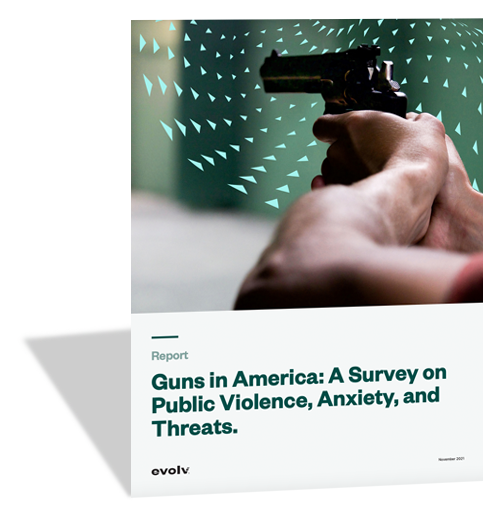
Report: Guns in America: A Survey on Public Violence, Anxiety, and Threats

Download Now

“Guns in America: A Survey on Public Violence, Anxiety, and Threats” is a new report that quantifies not only the impact Americans’ anxiety around guns has on their everyday lives but also demonstrates the choices they make – and the businesses they patronize – are affected by the level of risk or threat Americans perceive those places to have.  

Download this report to learn more about the mental toll gun violence, shootings, and terrorist events are having on Americans across the country. 

Download Now

eBook: Five Ways Data Improves Physical Security

Summary

Access to digital information is changing the world dramatically, and physical security is no exception. Leading venues across sports, entertainment, theme parks, industrial workplaces, schools, healthcare, and places of worship can improve their security posture by leveraging better information about visitor curves, alarm rates, and threats across their venue during specific events … if they know where to find it.

Evolv Express® screens your visitors for weapons threats while they simply walk through at a natural pace. It also captures and presents critical information about visitor flow rates, alarm rates, and threat items in its companion, web-based application, Evolv Insights™— improving the data available for evidence-based decision-making across venue security and operations teams.

Fill out the form below to download the eBook and learn about five ways to utilize data to improve your physical security.