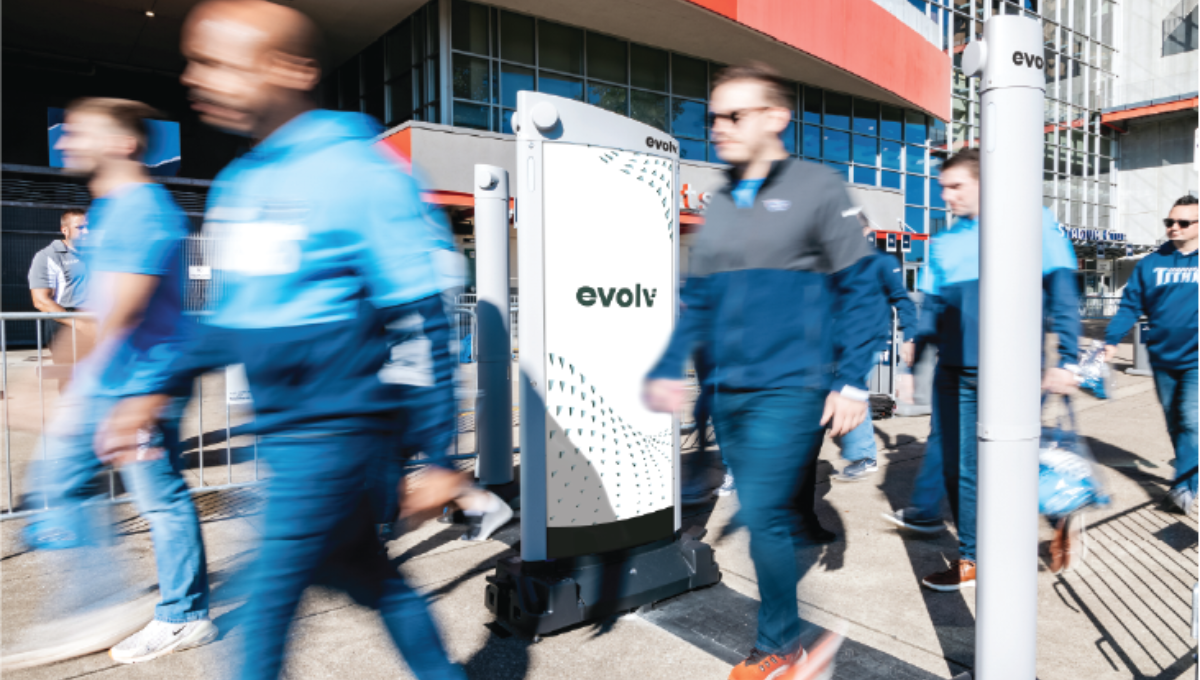
Shining a Spotlight on Better Event Security

Mass shootings like the one that occurred this past weekend at The Jacksonville Landing entertainment complex and last year at the Route 91 Harvest Music Festival in Las Vegas shake us to our core. They make us feel vulnerable in moments when we should instead feel excited. Large performance spaces have been cultural cornerstones for thousands of years because they uniquely bring together people regardless of race, creed or gender over a shared love for the arts. Attacks like these exploit one of the most powerful uniting forces in our society.

The challenge for security professionals is that these venues take a number of different forms. For example, in the Boston area you could see Moulin Rouge at the Emerson Colonial theatre, the Eagles at TD Garden arena and Cirque du Soleil’s LUZIA under a big top at the grounds of Suffolk Downs – all within the same month. As adversaries shift their focus to public places and become increasingly innovative in their strategies, we need a new approach to venue security.

A New Focus for Attackers

Since adversaries have moved on from hard targets such as airplanes, government facilities and military bases, there has been a significant shift to soft targets such as performing arts centers, sporting venues and arenas. While this is widely known – our CEO tells the story often of the anxious conversations he recently witnessed fellow parents having as he picked up his son’s friends to take them to an Imagine Dragons concert at a stadium – not enough is being done to address this new focus of keeping loved ones safe.

Further, the attack method and the perpetrator have changed. The rise of crowd-sourced terrorism has led to readily accessible means for an attack. Firearms, vehicles and home-made explosives are within reach as adversaries shift their focus from high-profile locations to anywhere people gather.

Raising the Current on New Security Technology

While attackers have focused in on specific venues, security screening technology has been largely unchanged. Today when you go to a see a show at a theatre, you’ll likely wait in line for sometimes 30-45 minutes before approaching a metal detector for which you have to empty your pockets or divest personal items before walking through. Many stadium and arena operators no longer even allow visitors to bring backpacks or other bags into their venues to improve the efficiency of screening.

Advancements in technology are changing this status quo, providing higher throughput and improved threat detection with less disruption. Some combine personnel and bag screening to help minimize removal of personal items and speed up the process. These technologies are using the latest sensors, software and user experience design principles to provide an improved level of security with a better visitor experience.

While technology is an important component to an effective security plan for a performing arts center, it’s just one piece of the puzzle. When building a security plan, facility managers should work to understand their threat vectors, vulnerabilities, and mitigation plans. They should incorporate the following components into a comprehensive security plan.

  • Intelligence: Understand and identify the threats to the area, building, and people in it. Work with various federal, state, and local enforcement agencies and leverage the facility team’s network of contacts. Threats are constantly changing; therefore, intelligence must be ongoing.
  • People and Training: Guards and officers serve as the frontline, they know the facility and the people in it. They should be trained on an ongoing basis in security protocols as well as identifying suspicious behavior.
  • Processes and Protocols: Facility managers can no longer use a “one-size-fits-all” approach to security. They need tailored systems and well thought out processes and protocols – like risk-based security – to ensure security layers are properly deployed throughout a venue.
  • Technology: As mentioned above, new technologies can provide threat prevention beyond the capabilities of guards to significantly improve screening operations. CCTV and access control expand the reach of the team on the ground. Further, facial recognition technology can be employed to recognize and authorize employees in an employee screening application or to adjust screening for VIPs.
  • Visitor Experience: With new technology and processes, it’s important that customer experience is not a secondary consideration – especially at a performing arts center. A security experience can maintain a level of calm and unobtrusiveness.

By employing a holistic approach, security guards and facility managers at performing arts centers can be armed with the information they need to quickly and confidently assure a safe environment for their visitors. With the right technology, they can effectively screen and adjust layers of security in response to changing threat levels without impacting visitors and their normal pace of life. In fact, when selecting new technologies, facility managers should look for solutions that provide a balance between improved security and a better visitor experience.

While related issues like the gun control debate may divide us, cultural experiences like seeing a show or going to a concert unite us. We can all agree that we deserve to feel safe in all the places we gather. At Evolv, we will continue to innovate to bring intelligence and security at the perimeter of soft targets to keep people safe – at performing arts centers and beyond.

Read more here about safeguarding against soft target attacks.

The Dangerous Dawn of the DIY Gun Industry

In the first episode of his new show “Who Is America,” comedian Sacha Baron Cohen did a surreal bit in which he persuaded three U.S. Congressmen and former Senator Trent Lott to support his character’s desire to train children as young as four years old to carry guns to help stop school shootings. “Kinder Guardians,” he called them.

Well, how’s this for surreal? On July 10, five days before the episode aired, it became legal for anyone in most parts of this country — convicted murderers, known terror suspects and, yes, even children — to easily and legally make a gun in their own basement. And not just any gun, mind you. An untraceable gun.

This development is the result of the U.S. State Department’s decision to settle a lawsuit brought by Austin, Texas-based Defense Distributed, which sued the government in 2015 for the right to publish plans to 3D print a handgun, along with other designs including milling instructions to program a desktop 3D CNC machine to create guns and gun parts. Today was the day Defense Distributed had planned to relaunch the company’s online repository of files, which is calls DefCad.

Fortunately, a Federal judge in Seattle issued a temporary restraining order yesterday in a case brought by eight states, preventing the distribution of the CAD files, pending the trial. While it turns out Defense Distributed had already started distributing the files, the website relaunch was sure to attract the attention of people who our society has decided should not have access to guns. As the blurb on Defense Distributed’s website (now turned upside down, in protest of the restraining order) proclaimed: “The age of the downloadable gun formally begins.” Rarely has the phrase “dodging a bullet” rung so true.

Defense Distributed’s vision is a big deal. While there’s been a DIY gun movement for years, you needed some expertise in metal-working and a hobbyist’s passion for guns, manufacturing or both. Not anymore. Defense Distributed has made making a real gun at home as easy as buying a home-brew kit to make your first batch of beer. Say you want to build your own AR-15 without the government having any knowledge. There are just four simple steps. First, put down a 50 deposit to get one of Defense Distributed’s Ghost Runner metal milling machines (while the full price isn’t listed on the website, this excellent article in Wired says the machine costs ,200.) Second, buy legally-available gun parts, such as the muzzle and the grip of an AR-15, as well as a slightly-unfinished “lower-receiver” from Defense Distributed or another gun supplies website. (The sale of finished “lowers” for all guns has been regulated until now, as the lower contains the trigger mechanism and therefore is the part that controls whether a gun is single-shot, semi-automatic or automatic). When the “80%” complete lower arrives in the mail, follow the instructions to set it properly in the Ghost Gunner. Fourth, download the file for the part you want to make from Defense Distributed’s website, and then drag and drop the file onto the icon for your Ghost Gunner on your PC. With the push of a button, the machine will complete the milling of the lower, so it can be combined with other AR-15 parts you’ve purchased legally.

Note that the news today is not just about plastic guns. Defense Distributed became well known back in 2013 when it unveiled designs for a handgun called the Liberator that could be printed with a 3D-printer. While a technical milestone of sorts, this and other plastic firearms are only capable of a limited number of shots before they self-destruct. The real threat is the ability to make your own high-quality, fully functional mil-spec semi-automatic weapon.

As an American citizen, I am concerned that the State Department’s decision nullifies the one thing that everyone from the NRA to Parkland student activist Emma Gonzalez could agree on: that people who are known to be dangerous to the public should not be able to get a gun capable of inflicting mass casualties. Suddenly, every Federal measure put in place to make life difficult for mass shooters—the disgruntled teenage boy tired of being bullied at school, the furious ex-husband with a jealous grudge, the radicalized religious zealot—is rendered ineffective. Unless there are state or local laws in place, would-be murderers will not need to submit to background checks, or take the chance that a sharp-eyed gun shop owner will notify authorities of suspicious behavior. They’ll also have an easier time skirting “Red Flag” laws, such as the one passed by Massachusetts on July 3, that gives family members and house-mates the right to request confiscation of guns from people they consider to be dangers to themselves or others.

No doubt, some state and local laws will provide legal checks on Defense Distributed’s “guns-on-tap” vision. On July 30, two days before it planned to relaunch distribution of its CAD files, the company agreed to block access to the site in Pennsylvania to avoid legal action by the state’s Attorney General. It’s also illegal to sell guns and gun parts made with a Ghost Gunner to others without a Federal Firearms License, and in some cases may be illegal to even let someone else use their Ghost Gunner, according to Defense Distributed’s website.

Regardless of what happens with the lawsuit filed by the eight states and the District of Columbia, some checks on Defense Distributed’s “guns-on-tap” vision will remain. The State Department’s decision to allow distribution of the CAD files did not lift Federal prohibitions on the use of DIY milling machines for commercial purposes, without a Federal Firearms License. The machines are supposed to be only for personal use. Defense Distributed warns would-be customers on its website that it may be illegal to even let someone else use your Ghost Gunner in some jurisdictions. Many states and municipalities also have laws regulating use of DIY gun technology–and that will no doubt rise now that the topic has become front-page news.

Contact your elected officials and ask them not to lower the bar.

Read more here about today’s threat vectors and tomorrow’s security threats.

Q&A with Juliette Kayyem, CEO of Zemcar and National Security and Crisis Management Expert

We had an opportunity to sit down with Juliette Kayyem, national security & crisis management expert.  Here’s what she had to say—smart connections and breaking down thick wall barrier are the key to 21st century security.

For centuries, security has been achieved mostly through building walls between people and places. Setting up barriers. That model no longer works, says Juliette Kayyem, former Assistant Secretary at the Department of Homeland Security and advisor to Evolv. In today’s interconnected world, we simply can’t build enough walls and barriers to guarantee safety. So what to do?

Q:  With the increase in horrific lone wolf attacks on soft targets—not just obvious targets like sports arenas and concert halls, but also nightclubs and restaurants—it feels like there’s no way to guarantee safety. It’s easy to lose hope, to accept this as the new normal. What’s the right response?

A: The most important thing is to secure the flow of people, goods and ideas. We simply can’t minimize the risk of violence to zero. Our goal has to be to make things safer. Our job is to minimize risk, and to remember what kind of society we want to live in.

Q:  So rather than focus on building barriers thick enough to guarantee safety, we should focus on building barriers that are as thin as possible to deliver the best balance of safety and flow. Is that right?

A: That’s right. In the past, we pretty much gave up on the idea of protecting soft targets. Look at how we protect airports. You can move the perimeter a mile back to make the airport safer, but wherever you stop you’re still surrounded by soft targets.

Q:  So a light layer of security on soft targets is better than no security at all.

A:  Of course. Look, there’s no easy fix, but companies have to understand that their obligation is to create a layered defense to protect their customers and employees and other visitors. There’s way too much of a focus on stop versus go in the security industry. That’s what I like about Evolv. Everyone else is selling stop and go. Evolv is about securing the flow. They’re focusing on flow, not making you decide between stop and go.

Q:  Do you think security professionals are really ready to accept this layered approach, or that some venues will be less secure than others? That’s not what their CEOs—or the public, for that matter—wants to hear.

A:  Of course, security professionals don’t like to talk about this publicly. But when you’re alone in a room with them, they almost always talk honestly about the need for layered defenses. Look, we all know there’s not one solution to all your problems. Think of the head of security for an NFL team. He’s got to balance safety with customer experience—because he already hears about it every time a friend of the owner complains about the fact that it took 14 minutes to get to through security. That’s not going away.

Q: What kinds of companies can benefit the most from Evolv’s approach?

A:  I think Evolv’s products are right for markets that have a lot of competitive pressure and are not highly regulated. Think about well-known restaurants. The time will come when it will be impossible for them, and other companies serving the public, not to have some security.

Q: So why were you an advisor to Evolv?

A: I have the luxury to choose whom I get involved with, but I loved these guys the first time I met them. They are a very committed group of people, and it’s important to me to work with people who want to bring people together—rather than push people apart.

Read more here about how CSO’s no longer need to choose between security and convenience.

Whitepaper: Balancing Security, Visitor Experience, Operational Efficiency and Cost Considerations

Summary

All security systems are designed to keep people safe. The challenge is balance. Does the security present an undue burden, either to the provider or to the customer, does it evoke a sense of safety, and does it operate within the cultural bounds of the venue? And of course, how much does it cost? Security experts generally agree the use of a venue specific risk-based security (RBS) approach is preferable to “one-size fits all” solutions. Flexibility and adaptability are key factors in RBS solutions, allowing “tailored” systems designed to mitigate risk while maximizing customer movement or throughput with minimal disruption.

Evolv Edge was designed and built to aid an organization’s move toward a risk-based security approach and provide balanced detection across a range of threats in a changing environment.

Download this whitepaper to learn how Evolv Technology’s Edge system provides the best RBS solution to detect metallic and non-metallic threats that cause mass casualties.

Download Now

Fill out the form to download this whitepaper to learn about balancing security, visitor experience, operational efficiency, and cost considerations

The world is full of soft targets and we’re defining a new approach to protecting them

We are focused on the mission of keeping people safe. Here’s a quick look at how we see our challenge, our opportunity and our vision for the future of screening at soft targets around the globe.

A dynamic adversary

Another mass casualty event at yet another soft target. Riyadh, Bangladesh, Istanbul, Orlando, Brussels, Paris and San Bernardino.

Questions emerge: Were the terrorists lone wolves or known wolves? Were they inspired or directed? How can we improve protection? Should we push the perimeter out? Are we creating new soft targets with new checkpoints?.

We’ve spent the past three years talking with hundreds of professionals about securing their people and their facilities from active shooters and suicide bombers. These professionals provide protection to stadiums, transportation hubs, subways and rail, office buildings, special events, hotels and entertainment venues, military facilities, critical infrastructure such as chemical and nuclear facilities, and landmarks. They do this in the U.S., Canada, Europe, Asia, and the Middle East. The needs may differ among them, but their mission is the same: keep their people and places safe.

Defining a new approach

We have accumulated, synthesized and prioritized the needs of this global group of security professionals to define an entirely new approach to physical security. We have researched, evaluated, built and tested a wide range of sensors, software, and analytical approaches to detect the physical security threat. We have studied and analyzed the operational realities of keeping soft targets safe. We’ve looked outside the physical security industry for innovative approaches and technologies to bring to bear on the physical security mission.

Enter Evolv

One thing is crystal clear: We need to provide better security without disrupting people’s everyday pace of life.

This should be accomplished with the latest sensors, software, and analytics, combined to provide a seamless screening experience, letting the public easily pass through while trapping those intending to do us harm. Our product is emerging from development, none too soon to help protect the next set of soft targets.

Our Products

The most effective security processes incorporate means to adjust sensitivity based on risk level. Our products enable risk-based adjustment as a core capability built into the technology. These adjustments can be made for a specific individual, location or time of day. Settings allow for different detection sensitivity and threat sets, based on intelligence, site-specific factors or a randomness protocol.

Our technology is designed to enhance the look of your location, not detract from it. Products are easily deployed at access points, lobbies, and entrance ways with little to no infrastructure modifications. Our design approach is to minimize the impact on your location by carefully designing the product and the ways it can be used.

Randomness is an important component in an effective security protocol to counter surveillance activities or to disrupt planned operations. Our screening products can be rapidly relocated and set-up to enable unpredictable screening at different locations throughout your facility.

Today’s security environment demands multiple layers, both visible and discreet. Results are typically fused at a command center, providing a more complete picture of the security situation. Our products improve situational awareness by inserting real-time multi-sensor data into the overall picture. In addition to providing screening results at the unit and to the command center, real-time information can be served to mobile security officers or others connected to the operation.

– Real-time video surveillance
– Facial recognition and known wolf matching
– Firearm and explosive detection

We have designed our products from the ground up to detect and prevent threats that can cause mass causalities. From sensors to software to networking, they are focused on keeping your people safe while allowing free flow and movement. We use a combination of sensors, built on active millimeter wave, that inform automated detection algorithms to provide a fully automated ‘red light’ or ‘green light’ decision. Detection settings can be adjusted based on the latest threat level. Evolv products are designed for high detection rates with minimal false alarms, to focus on the threats and minimize the impact on your visitors.