The Next Step in Democratizing Security

In view of today’s announcement, I wanted to provide a little more color about how this all relates to our mission and why this moment is so important to that mission. People who join Evolv, including me, come here because we want to make the world a safe place to live, work, learn, and play. We think of ourselves as the human security company because we want security to be less invasive, more human and effective. 

I believe this mission is now more urgent than ever because we’re the only company democratizing security in a way that will actually make a difference. That’s a bold statement, but we’re living in a time when bold action is required. Democratizing security is going to be a huge effort, and I believe we’re much more likely to pull it off as a public company.  Here’s why we’re so passionate about doing this right now, in this way.

The world is more dangerous than ever before. There were 661 mass shootings in the United States in 2020, a 40% annual increase in a year when most gathering spaces were restricted or shut down. New gun purchases were up 64% last year in the United States, a country that already had more guns than people. US CDC research says 40% of adults reported recent battles with mental health or substance abuse during 2020, with the prevalence of anxiety up 3X and depression up 4X year on year. Some of that anxiety may recede as we come to terms with the pandemic, but all those guns are still out there and the polarization and inequality that drive many acts of violence remain. In this chronically volatile environment, keeping weapons out of gathering spaces must be a top priority for every venue and facility.

Consumers demand touchless experiences everywhere. Even before the pandemic, seemingly every aspect of the consumer experience was going touchless: payments, tickets, retail, bathroom fixtures, doors, minivan hatches, you name it. Crowded security lines and hands-on bag checks were just a nuisance in the past, but now they are unthinkable. No one wants security guards touching their stuff or their person without good reason. The future of the security experience must be touchless and fast.

Analog security processes won’t cut it anymore. Traditional security products are too slow, costly, and error prone for today’s world. Even the most motivated well-trained guards can only do so much, especially when they are fighting a flood of nuisance alarms from outdated analog technology that can’t tell the difference between a gun and a phone. As I wrote last year, I believe that the future of security is fully digital.  This digital transformation will not only reduce costs, but also unlock innovations that transform the experience from a trial to be endured into a social gathering to be enjoyed.

Security screening isn’t just for airports and jails anymore. It comes as no surprise that very few of the 661 mass shootings in the U.S. last year happened at airports or jails, where security screening is mandatory. The shootings happened at all the other places where people gather: schools, industrial workplaces, offices, malls, places of worship, and stadiums. These facilities need the protection that security screening provides, but they’ll never deploy it at scale until it costs far less without the jailhouse or airport experience. That’s what we do, and we’re now ready to scale it up.

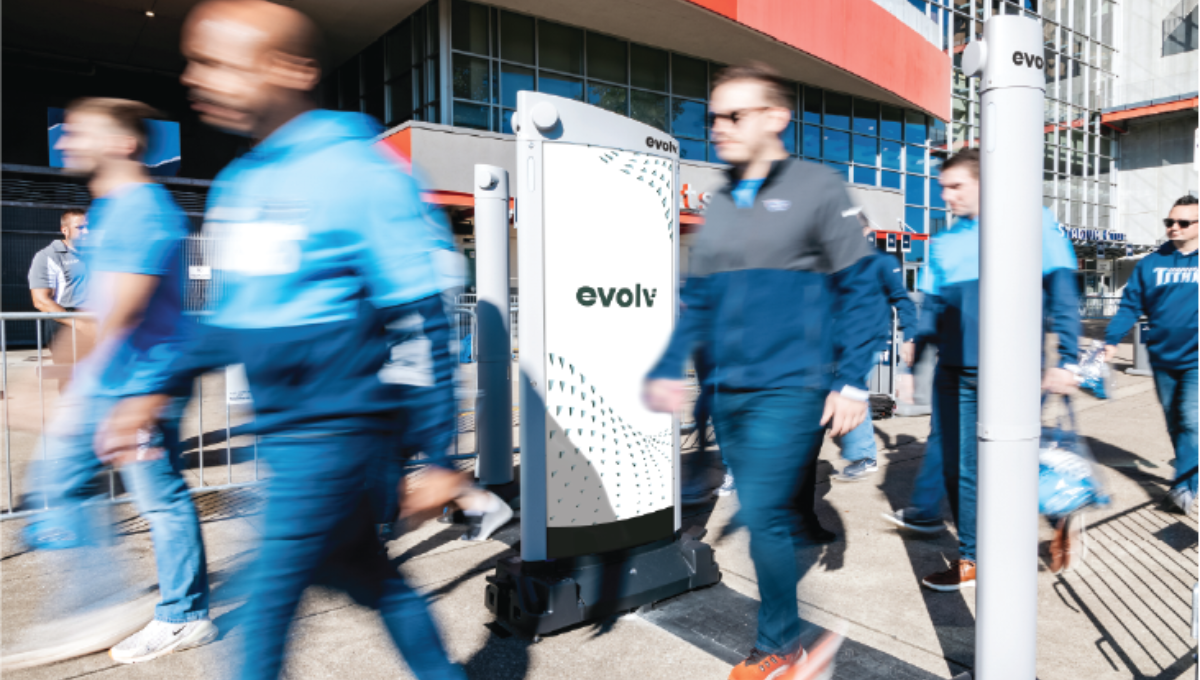
The barriers to democratizing security have fallen. Security screening operations based on our technology costs up to 70% less than traditional screening based on walk-through metal detectors, and we do it up to 10 times faster. And we offer our technology under a modern annual subscription pricing model that reduces up-front costs and gives customers access to future product enhancements. Our customers tell us that we find weapons their old systems would have missed, that their employees and visitors love the experience, and that the promised cost savings are real. In summary, it is now possible for most large facilities to keep dangerous weapons out while keeping visitors, students and employees happy.

The capital we raise through today’s transaction will help us build toward realizing our vision and accomplishing our mission. That means extending our product portfolio, ramping up our sales and marketing activities, and scaling up production of our current products. Being a public company provides access to capital for these activities both now and in the future.

The SPAC approach to becoming a public company has been fantastic because it not only accelerates the whole process of becoming a public company, but also allows us to work with the team at NewHold. Their deep networks, expertise, and experience will be very useful as we rapidly scale our disruptive businesses.

Manchester City’s new Touchless Security Screening

Supporters will Benefit from an Improved Matchday Experience at the Etihad Stadium

Welcoming thousands of supporters into sports stadia in a time-efficient manner has always been a priority for clubs around the world.

With the onset of the Coronavirus pandemic ensuring that the highest standards of public health and safety are maintained, alongside an efficient and smooth operation, has never been more important.

New Technology

In June of 2019, Manchester City FC entered into discussions with Evolv about the company’s Evolv Express® system, which provides security screening using touchless technology.

The club witnessed firsthand the free-flow nature of the touchless system the company provides, benefiting from the ability to screen thousands of supporters in a timeframe that would not have been achievable before.

Following the onset of the Coronavirus, the world of sports shut down and the once vibrant matchday which saw thousands of supporters enjoying live sport fell silent.

Over the summer months, the English Premier League began ‘Project Restart’ to bring the sport back in a ‘Behind Closed Doors’ format. Whilst this meant that Manchester City supporters were unable to attend matches, the wider club operation sprang back into action with new guidelines in place to protect everyone on site at the Etihad Stadium, which included social distancing.

Evolv Express was piloted for the remainder of the season’s matches and was used to ensure that everyone who entered the stadium was able to do so in a manner which prioritised health and safety, as well as ensuring they benefited from an efficient experience with minimal queuing times.

When the Etihad Stadium is permitted to reopen its doors to supporters again, Evolv Express will remain in place so that supporters can be welcomed back with fast, touchless and respectful screening, providing them with an enhanced matchday experience.

It’s Time to Go Touchless!
Sign up for a live virtual demo.

Whitepaper: How Fast, Reliable Screening is Crucial to Bringing Back Live Events

Summary

While these days we all yearn to return to some semblance of normal life, a Harris Poll survey commissioned by Evolv Technology indicates most aren’t going to feel comfortable returning to concerts, sporting events and the like for several months after the pandemic has subsided. The reluctance largely has to do with security screening methods that, while necessary and welcome, create lines and crowding that are unacceptable to large swaths of would-be event attendees.

Download Now

Fill out the form to download this report to learn more about visitor sentiment regarding COVID, mass shootings and their physical safety at live events.

Digital Threshold News: Episode 6 – A Conversation on Innovation, Ideation and Data

Where is the pace of innovation, ideation and data heading? It’s a substantial question with multiple answers. Technology and those behind it are at their crux problem-solvers, and the world still has plenty of problems to solve.

In looking at technology’s future, Evolv started the year utilizing its next episode of Digital Threshold Live to talk about innovation, the art of the possible, tech trends that are emerging and what’s next.

Host Anil Chitkara, Evolv Technology Co-founder and Head of Corporate Development, invited Bilal Zuberi, Partner at Lux Capital and Evolv Advisor, to the show. Lux Capital focuses on “investing in people inventing the future.” Zuberi has a passion for startups that solve big, practical problems. His insight and experience brought lots of hot topics to the surface during the conversation. 

Zuberi’s Story

Zuberi is a Pakistani immigrant that came to the U.S. for school whose father joked he should learn to make toothpaste.

“My dad told me to learn how to make toothpaste, because it was expensive, but they don’t teach you that studying chemistry,” he said.

What he did learn would fuel his American dream story. After earning his Ph.D. from MIT, he went from academia to industry.

“I wanted to make an impact on a greater number of people,” Zuberi said.

And he has by investing in companies that bring a greater value to society through technology that helps all and pushes humans to the next frontier. 

The Source of Innovation Has Shifted

Zuberi also spoke about the major changes with innovation. The patent system began the invention economy, but innovation was top-down until the past few decades, starting with the military, then commercial, then the consumer. 

The consumer technology evolution turned this around, as risk capital became available on the basis of an idea. Zuberi cites the iPhone is a great example. The touchscreen was a consumer product before it moved to other applications. That paradigm shift sets up where the world is now on innovation.

Tech Trends and Themes

So, how does Zuberi make investment decisions? Many times, it’s a process that starts with one company and plots a path. 

“We invested in a company that made satellite antennas, and they told us about a company producing nanosatellites, and then that led to a company using machine learning and AI to process satellite imagery. Then it was a cloud company to hold the data,” he said.

The themes he’s currently most excited about are biocomputation and simulations. Simulations allow you to model the physics of the space then throw in many different variations of what could happen. This type of application is very conducive to security in venues.

“With scenario modeling to plan, then real-time responses improve, [it’s about] turning data into how to respond, not just what’s happening,” Zuberi explained. 

Simulation can lead to better decision-making and making people and places safer. While the technology used in such an application isn’t unique, as it could be replicated, the differentiator is the speed of innovation.

What Did CES Show the World about Innovation?

To cap the conversation, Zuberi and Chitkara spoke about this year’s virtual Consumer Electronics Show (CES). Trends that Zuberi picked up on relate to our current world.

“We’ve brought things outside of the home to the inside—education, healthcare, work, food, which leads to new problems and new technology,” he said. 

Business models for technology are also evolving. First, it was sell something, then sell something better in two years. Then it was sell the hardware and the software. Now, the hardware is free, but the subscription is the revenue generator.

Other key topics included automation and specificity – the idea of a solution that’s smarter and more targeted, not simply automated, trends in sanitization, the infrastructure our world will need to better accommodate innovative technology solutions, and more.

The service is what matters now, Zuberi believes. He also noted that there’s a quote of “software eating the world.” The answer? Data and simulation can fill it back up. The trick is to use the data deliver better solutions and experiences.

You can view the OnDemand version of the webcast by clicking on the video below.

To view our OnDemand version of Episode 6 or register for future episodes of Digital Threshold Live, click here.

Don’t have time to watch? Click here to listen to the podcast.

Data and Simulation Are Rebuilding the World

Bilal Zuberi, Partner at Lux Capital, tells Evolv Technology Co-Founder Anil Chitkara about some of his group’s latest investments and the trends he sees being relevant in the technology and automation spaces based on learnings from CES.

Simplicity is in the Details: Addressing the Deep-Tech Challenges of the Digital Threshold

A conversation between Evolv Technology’s Founder and Head of Advanced Technology Mike Ellenbogen and Chief Scientist Alec Rose.

Evolv Technology started as a small team with a clear mission: return confidence and peace of mind to people visiting public spaces by changing the paradigm of how security professionals can assure venues are safe from the most serious threats without compromising visitor experience. While this mission was created during ongoing and escalating terrorist threats and attacks, it was well before our current global pandemic environment. But it has never been more relevant or more prescient. According to the recent Harris Insights poll, “Consumer Sentiment – Advancements in Security Screening,” the pandemic has only served to heighten consumer, employee, and visitor expectations and safety and security awareness when it comes to work, travel, shopping, entertainment, and general interactions.

It is this core mission that has attracted innovative people like Chief Scientist Alec Rose to Evolv. According to Alec, he was “doomed from the get go” when it came to math and, later, physics. He grew up with a math teacher mother and electrical engineer father and solved “fun mental math problems” from a young age. His path to Evolv, and developing complex algorithms to solve the basic idea of keeping people safe while they do their ordinary things, seemed destined.

I sat down with Alec to understand what drives him to solve the big deep-tech challenges of the space we call the digital threshold.

Mike Ellenbogen: What brought you to Evolv?

Alec Rose: I always found math fun and interesting, but I needed a real problem to apply it to. Physics was that pathway because it’s about fitting the simplest possible model to a complex problem. I definitely see myself as a physicist—I love it and am always looking for a new piece of the puzzle to learn and new tools to apply. I studied physics in college. From there I got my electrical engineering PhD degree at Duke, although even then I did everything I could to take all my courses out of the physics department to stay close to math and theory.

At Duke, I worked with Professor David Smith who was developing metamaterials for millimeter wave imaging. You and Anil (Evolv co-founder Anil Chitkara) had been following David and his work and started Evolv to essentially commercialize this work. Through this, I met you both. One thing led to another and I became Evolv’s Director of Advanced Development in 2013 and then Chief Scientist in 2020. The evolution of my role here has allowed me to blend my desire to distill a complex problem down to the simplest possible model, with the goal of keeping people safe in a non-intrusive way.

Mike: How are you able to blend these to address the deep-tech challenges of the digital threshold?

Alec: I’ll never forget one of the first things I learned in my college Intro to Physics class. We were presented with a seemingly complex problem: what happens when a horse gets struck by lightning? To break it down, our professor instructed us to start with the assumption that the horse is a giant metal sphere, because we know how to solve for this simplification. There’s no need to get bogged down by the microscopic details. Instead, always try to distill the problem down to its simplest form to get a tangible, actionable answer. I use this as a guiding principle every day at Evolv.

My graduate work was in electromagnetics and specifically the area of metamaterials, which is essentially a toolbox of solutions for creating artificial composites to solve different problems. If we wanted to bend light a particular way, if we wanted to make a particular antenna, there was a tool in the toolbox for that. I initially joined Evolv to be the “metamaterial specialist.” But I wanted to go beyond that because I was always driven by that horse analogy—to distill the most critical problems we are faced with in the digital threshold down to their simplest form and solve for that.

My path at Evolv expanded from metamaterials, to millimeter wave imaging, to reconstruction techniques within imaging—how do we consume and analyze reams of radar data, for example, to create a semblance of a person and the guns that a person might be carrying? From there, my focus quickly moved to the world of automated threat detection and computer vision. While much of my focus is now on algorithms, sensors, and their interface, as well as machine learning, I never stray too far from electromagnetics.

Mike: Venue and facility thresholds are the spaces where someone goes from being an outsider, an unknown, to a person who’s either a trusted employee, or a welcomed fan or patron. From your perspective, what are the core technical challenges that you’re drawn to in this threshold area? What are the real problems that have to be solved there?

Alec: I’m very interested in the role of the guard at the threshold. They’re often the first person that anybody meets when entering a venue. Not only are the guards responsible for spotting a gun or a bomb but they’re often asked general information questions. They suffer fatigue just like anybody else. It’s easy to blame them for long lines or missed threats. I want to make the process more synergistic with the guard. How do we make it easier for them to quickly and unobtrusively scan for, or monitor for, a threat? And all while reducing false alarms. If you lower the false alarm rate, guards are less stressed because they’re chasing fewer phantoms. And visitors are less stressed because fewer are getting stopped.

Mike: Why are there so many false alarms?

Alec: Unlike the electronic articles surveillance systems that most retailers use, we don’t have control over the shape, size, or materials of the things that need to be stopped from crossing the threshold. The possible space of threats is gigantic and it’s inevitable that in trying to protect against all of these possible threats, overlaps with some common items that people might carry will occur, creating a false alarm.

Mike: How do these overlaps occur?

Alec: The signature we look for on certain threats can be very similar to the signature on something quite benign. For example, the steel barrel of a rifle can look very similar to the steel pole of an umbrella. Since we want to catch all possible rifles while trying to let through all possible umbrellas, there’s going to be some overlap. You’re going to stop some people with umbrellas, to make sure you’re not letting through any rifles.

Compounding this, the materials used in threats can be similar to those used in everyday items; a similar amount of steel and a similar shape can show up in a gun as well as inside your laptop. At the same time, the venues and their customers are incredibly varied and very fractured. They don’t all have the same types of people coming through, they’re not all carrying the same type of “clutter,” such as bags, mobile phones or thermoses. The person coming to work at an office building is carrying something very different than the person entering a sports stadium. And each has a very different expectation of being stopped and searched based on the type of venue.

Mike: Drawing on your roots, how do you distill this into a solvable math problem? What is “the shape of this horse?”

Alec: We’ve moved well past the “if you have a hammer, everything looks like a nail” approach of traditional metal detectors that…detect metal. If we open up parameters, we can then consider not just how much metal, but what kind of metal? What shape is it? The extremely low frequency (ELF) electromagnetic waves at the lower end of the spectrum interact with metal objects and reveal what looks like just a blob to the untrained eye. But that blob still has color and shape. These two dimensions end up being immensely important to algorithms for separating consumer electronics from firearms.

And yes, this definitely harkens back to identifying the simplest possible model that can extract usable information from a very, very complex problem. How do we represent analog signals alongside digital data in the same rich way, in the right formats and with enough precision, so that they can be analyzed? In this case, the complex problem is the interaction between the system and all the possible combinations of metal objects that somebody could be carrying.

When someone walks through the Evolv system, we collect over half a million measurements across all of the different sensors and frequencies. How do we boil this vast amount of data down to actionable, real-time intelligence that the security guard can use to detect threats, make a visitor feel welcome, and not create false positives? We use a physics model called magnetic polarizability tensors (MPTs) that synthesize these half a million data points and dimensional data streams we’re constantly collecting, and represent them in six physically intuitive and computationally useful numbers. We can then teach a computer what these six numbers represent by giving it lots of examples. The computer can start drawing relationships between threats of interest and the clutter items that people carry. The guard can then use this “well-digested data” to have a clear profile of the person walking through the system.

Mike: Many solutions to problems work great in the lab, but not in the real world, where everything is dynamic and varied. How do you solve for the commercial environment?

Alec: It’s true, venues come in all shapes, sizes, ages, and infrastructures. But a commercial product needs to work in all of these environments, without exception. If we only focus on the cool things that we can do in a lab, we actually miss some of the more fun challenges of making something work in the real world.

For a security system to work, assuming it’s comprised of sensors and algorithms, the sensors need to be able to listen to their environment and adapt to temperature, to nearby metal or nearby electronics emitting in similar spectrums. Successful products actually build an algorithm that’s smart enough to listen to the environment and continuously adapt. Sensors and algorithms have to constantly verify their assumptions and be able to dynamically change in real time.

Using the Evolv system as an example, we made it sensitive to one part in 10,000 of our signal strength. When a system is that sensitive, it means anything that blows it around or moves sensors in the middle of the scan is going to present some interesting challenges. You run into this in wall scanning or synthetic aperture radar in drones, where you need to always know where your sensor is located, relative to whatever you’re imaging. It’s an incredibly difficult problem.

Mike: And then, of

Alec: As I said earlier, the goal is presenting that data from sensors and algorithms in an integrated, “well-digested” way to deliver something actionable in real time. Once the data is collected and stored, it needs to be analyzed for this actionable information, which is where machine learning takes over to look for patterns.

Additionally, not all sensors are built the same, or talk to each other very easily. You then need to create an orchestration layer to coordinate all of these different sensor streams in real time, and make sure they’re processed, that the sensors all turn on together, that they’re all collecting together, that none have failed.

Mike: Given your path to date from those early math problem-solving sessions, what do you hope will be the impact of your work?

Alec: I want to synthesize the actions that need to happen at the digital threshold down to a visitor experience that’s as unobtrusive and ubiquitous as it is at any store. My goal is to have sensors and scanning everywhere, but they are just part of the daily fabric keeping people safe while they do their ordinary things

Mike: That’s a goal we all hope for. Thank you, Alec.

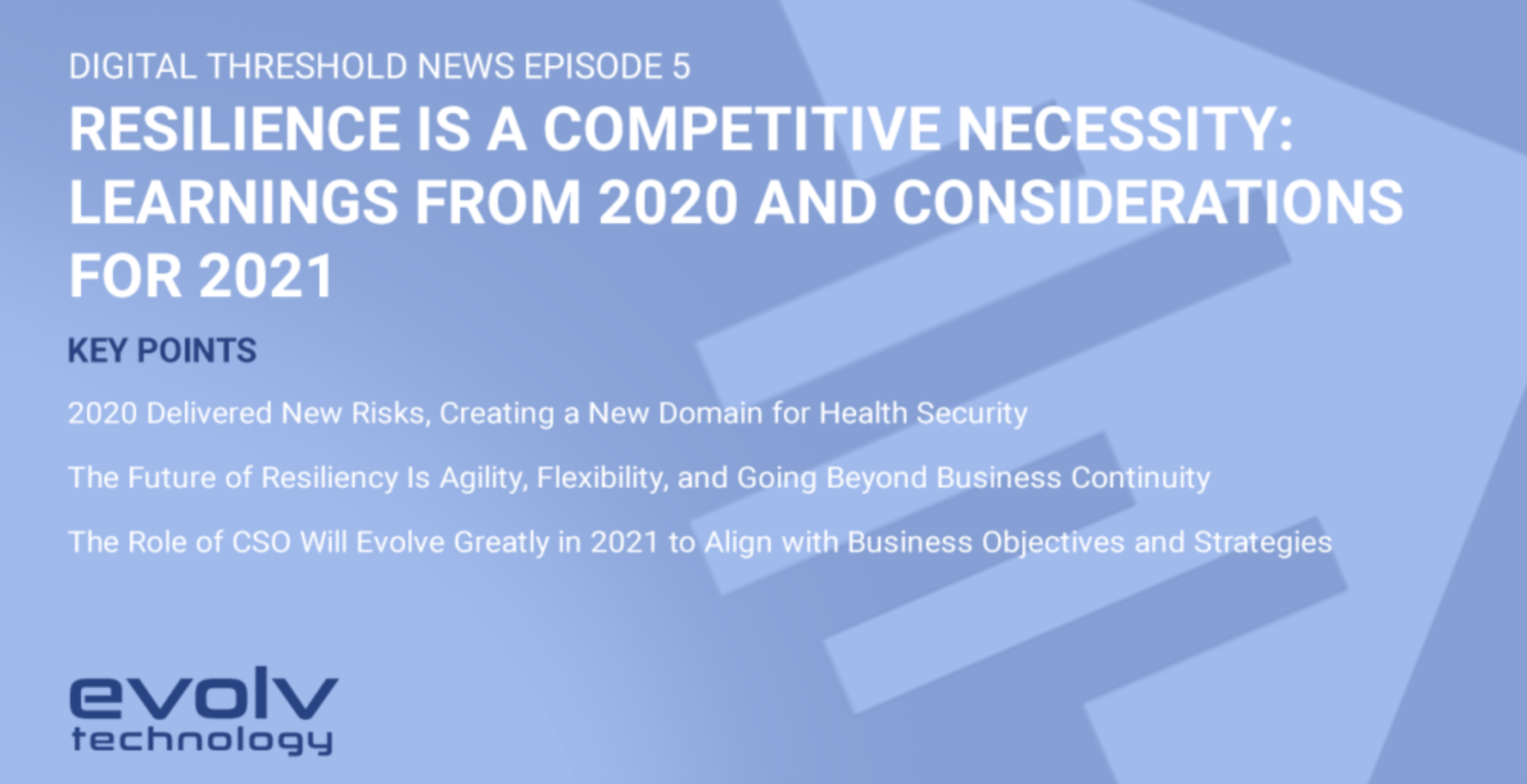
Digital Threshold News: Episode 5 – Resilience is a Competitive Necessity: Learnings from 2020 and Considerations for 2021

2020 was a year of learning for security and risk practitioners, in fact, the blueprints they started the year with quickly became obsolete. At the end of the year, it’s time to look back on what the industry learned and what 2021 will bring with the final episode of the year of Digital Threshold Live.

Host Anil Chitkara, Evolv Technology Co-founder and Head of Corporate Development, welcomed two guests from Teneo, a global CEO consulting and advisory firm, Courtney Adante, President and Security Risk Advisor, and Jonathan Wackrow, Managing Director and Global Head of Security. Adante and Wackrow shared what they learned during this unexpected year and how that will shape risk and security postures in 2021. 

2020: New and Emerging Risk Required Agility and Creative Solutions

No matter what industry, size, or level of success, most organizations were not prepared for a pandemic. Even when more information about COVID-19 became available, and there were shifts in work, Adante commented, “We were building solutions on the fly. This mode of operating will likely continue into 2021.”

Wackrow agreed, “Everyone has a plan until they’re punched in the face, and everyone got punched in the face. Those that have been successful, identified threats with the virus and pivoted quickly with a model of resilience and flexibility.”

COVID-19 wasn’t the only risk in 2020. Civil unrest around social and criminal justice reform, a faltering economy, rising crime rates, mental health issues, cyber-attacks, and natural disasters also commanded attention in 2020. Those same challenges will carry into 2021. 

How Do Organizations Move Forward with Risk Management?

Adante and Wackrow discussed risk monitoring and intelligence, and their importance. They are leveraging data analysis and expert critiques to add context while concurrently teaching their clients how to do this.  

Wackrow said, “In thinking about threat domains and how they impact your organization, it’s not only about consequences and severity, but how are you going to respond? You don’t want to be in a reactive model.”

A New Domain for Security: Health Security

In the realm of security, prior to a pandemic, the branches were physical and cyber. Now companies realize that health security also has to be part of that conversation. It becomes a new pillar requiring subject matter expertise, and is not something traditionally part of the security component. “We’re seeing hiring of chief medical officers outside of healthcare, in airlines and real estate developers. Businesses are now prioritizing this expertise,” Adante added. 

This new part of security is changing the role of the Chief Security Officer (CSO).

The New CSO

Traditionally, a CSO has been about gates, guards, and guns. 2020 has disrupted this idea, and the role will never be the same. The CSO has three areas now: physical, cyber, and health. The CSO isn’t necessarily the expert on all these things, so that’s causing three shifts.

First, CSOs will have to think about risk management and strategy, along with its alignment with business operations and strategy. 

Second, they’ll need to form collaborative relationships with leaders in HR, information security, and operations. 

Third, there are now new issues on the plate, with physical locations mostly being empty. “New issues in security are now part of the story with the ‘work-from-home’ model. Those aren’t going away and may become bigger,” Adante said. 

Resiliency: What Does That Mean in 2021?

The last question for security and risk leaders is to think about what resiliency means in 2021. It’s not about business continuity. Most businesses had those before the pandemic. They were very IT-focused. Companies need to integrate the three pillars of security — physical, cyber, and health to create a more sustainable version of resiliency. 

You can view the OnDemand version of the webcast by clicking on the video below.

On January 14, 2021, we’ll host the sixth episode Post-CES Retrospective: Breaking it Down – The Hits, the Misses and the Seminal Moments with Bilal Zuber, Partner at Lux Capital and Evolv Investor, register here. We hope to “see” you there. In the meantime, consider us as a security resource, click here to contact us.

To view our OnDemand version of Episode 5 or register for future episodes of Digital Threshold Live, click here.

Don’t have time to watch? Click here to listen to the podcast.

Digital Threshold Live Episode 4 Blog – Why Technology Convergence in the Digital Threshold Matters

The continued acceleration of the digital transformation has unleashed seemingly limitless possibilities for technological applications, from the widespread global standpoint all the way down to the personal level. The emergence of artificial intelligence (AI) presents incredible opportunities in many arenas, including the practical application of physical security.

Anil Chitkara, Evolv Technology Co-founder and host of Digital Threshold Live, was joined by Mahesh Saptharishi during episode No. 4 to discuss the technological possibilities at the intersection of sensors and AI. Saptharishi is the CTO of Motorola Solutions and leads innovation of mission-critical communications, as well as video and command center software.

Saptharishi provided a detailed and thorough perspective on the synergies of machine learning, AI, big data and analytics and how each plays a necessary part in the digital threshold and the creation of state-of-the-art physical security systems.

“Machine learning are the core algorithmic capabilities that power AI,” Saptharishi said. With regards to physical security, “when cameras, or when systems, see things, detect objects or respond to what the objects are doing in the scene, that is artificial intelligence, but that ability to detect and the ability for that system to adapt to the environment is powered by machine learning algorithms.”

Episode 4 Highlights and Provides Insights on the Security Threshold

Saptharishi explained that AI has come a long way in the past 10 years as computing power and speed have taken major strides – in large part due to the evolution of gaming GPUs. 

“I think storage becoming cheaper, network bandwidth becoming cheaper, the ability to collect data becoming more practical – that acted as a fuel that powered all these algorithms to develop further and actually reach their performance potential and become practical through the processor technology that has come out,“ Saptharishi said.

This has been instrumental in AI development. One such real world application is AI understanding audio and speech patterns, as well as analyzing video. Utilizing improved GPU technology, these computations can now be done in real time. What once was done with multiple computers can now be done from your phone.

Chitkara asked about the human impacts of AI and whether this technology is replacing people or helping them.

To a degree, AI can replace or augment existing jobs done by humans. 

“But, that said, humans are not static entities in terms of how we apply our intelligence,” Saptharishi said. When AI replaces certain tasks, people can focus on other areas where AI does not apply presently or perhaps cannot perform in the same way a human would. 

For example, AI can assist law enforcement by helping search for people on video or by calling the attention of the officer to a particular situation that would require human judgement on whether or not intervention is applicable.

Saptharishi also explained the process of developing AI for particular applications. It starts by identifying the human factor opportunities. By shadowing individuals as they progress through their normal tasks, the development team can determine tasks that can be automated or assisted through technology. 

This can greatly increase the productivity of the individual. With the automation of sensory actions, people can do things earlier, faster and also allow for more response time to particular situations, as technology has assisted in collecting information in an expedited manner.

In terms of security and technology, Saptharishi noted some key trends that have emerged.  One trend is the combination of sensing modalities to create more powerful solutions. Other trends are the increased utilization of cloud connectivity and the integration of public safety, private security and enterprise security.

Chitkara and Saptharishi also discussed the security threshold and the factors that make AI successful for this application.

“Along with this notion that you need a high throughput solution, the threshold cannot become a bottleneck,” Saptharishi said. 

The technology threshold needs to be as seamless as possible and not become an overwhelming burden to the flow of people. Secondly, the threshold needs to identify a person along with the right context. Is this person permitted to enter? Along with that identity permission, is this person bringing along something that is not permitted, such as a weapon or an illness?

“The days of somebody sitting in front of a security operations center, watching a video wall, hoping that they can detect something that is potentially suspicious or requires attention – I think those days are starting to reduce,” Saptharishi said.

You can view the OnDemand version of the webcast by clicking on the video below.

On October 17, 2020, we’ll host the fifth episode, Resilience is a Competitive Necessity: Learnings from 2020, Considerations for 2021 with Courtney Adante, President of Security Risk Advisor, and Jonathan Wackrow, Managing Director & Global Head of Security at Teneo; register here. We hope to “see” you there. In the meantime, consider us as a security resource, click here to contact us.

To view our OnDemand version of Episode 4 or register for future episodes of Digital Threshold Live, click here.

Don’t have time to watch? Click here to listen to the podcast.

The Role of AI in the Future of Experiences and Security

The potential of machine learning and artificial intelligence in helping organizations and spaces reconsider their entry experience is vast – but it’s important to dive into exactly how those innovative solutions fit into the process of design and into real, actionable technology ready to make good on that promise.

On this episode of Digital Threshold Live, Dr. Mahesh Saptharishi, CTO, Motorola Solutions, joined host and Evolv Technology Co-founder Anil Chitkara to explore how AI is set to transform the future of experience and security.

First, it’s helpful to define some terms. As Saptharishi put it, machine learning encompasses the core, algorithmic capabilities that power AI, with AI being the resulting execution. “Big data” can be thought of as the volume, velocity, and variety of data that hits an AI system, while analytics is the outcome of that data and its use to answer some fundamental questions.

In terms of entrance control and security, AI can excel in the same capacity it does across many applications – in doing mechanical tasks in a more efficient manner.

“What AI today is very good at is taking mechanical tasks that are perhaps complex in and of themselves, but really mechanical in nature, and being able to do it in a way that is more efficient than humans would be able to do,” Saptharishi said. “Think of it as counting the number of people who enter a building. It used to be that someone at the door stood with a clicker and kept clicking, counting the number of people who came in. That is something that’s perhaps done more effectively by a sensor plus an AI solution of some sort.”

In optimizing the use of AI, humans can be freed up to accomplish more innovative and creative tasks, all while processes and operations become more efficient. It begins, Saptharishi, with “what-if” questions.

“Identify the bottlenecks, identify the inefficiencies in what is done today, take that customer journey, and optimize the job to be done through the course of design,” he said. “And, through the course of design, ask a set of what-if problems.”

About Evolv Technology

Founded in 2013, Evolv Technology is the leader in human security solving the security screening problems of today with the most innovative technology and thinking. Evolv makes it possible for venues of all kinds to keep visitors and employees safe from concealed weapons, pandemic health threats and intruders.

Digital transformation is unlocking efficiency and value everywhere as organizations reimagine archaic processes and technology, better equipping themselves with interoperable and flexible capabilities. Within the Digital Threshold vision, venues and facilities can intelligently use data to create a frictionless experience for guests and employees. The result is an entry process that enhances the overall experience instead of diminishing it as it so often does today. Making weapons screening faster and more precise is part of the Digital Threshold vision, but it’s just the beginning.

The Role of AI in the Future of Experiences and Security

The potential of machine learning and artificial intelligence in helping organizations and spaces reconsider their entry experience is vast – but it’s important to dive into exactly how those innovative solutions fit into the process of design and into real, actionable technology ready to make good on that promise.

>>

Evolv Technology Lauded by Frost & Sullivan for its AI-powered Touchless Threat Detection Technology, Evolv Express®

In addition to detecting weapons, Evolv Express®‘ ability to detect body temperature makes it an ideal tool to optimize safety measures and ensure minimum person-to-person interaction

SANTA CLARA, Calif. — December 9, 2020 — Based on its recent analysis of the North American AI-based touchless security screening solution market, Frost & Sullivan recognizes Evolv Technology with the 2020 North American Technology Innovation Leadership Award for Evolv Express®. As the only touchless security screening system in the world, it is a viable alternative to existing metal detector arches and handheld wands due to its ability to identify concealed weapons with high sensitivity and accuracy.

“Evolv Express® comprises a low-frequency electromagnetic sensor and AI feature that can detect, locate, and automatically categorize concealed explosives and firearms on visitors or employees in real-time while ignoring other harmless personal items such as smartphones, keys, coins, and belts. There is no need for visitors to stop, empty their pockets, and open their bags for physical/invasive security screening,” said Varun Babu Industry Analyst. “Significantly, it is 10x faster than traditional metal detectors and can screen more than 3,600 individuals per hour, wherein individuals can walk at a normal pace one at a time, or in groups via multi-lane entrances. This reduces manpower costs and the need for additional security guards at multi-lane security screening checkpoints.”

Evolv is primarily deployed at large workplaces, ticketed venues, and schools. To date, it has screened more than 50 million individuals and prevented visitors from carrying over 5,000 weapons into facilities and events. The solution is also highly adaptable to address COVID-19-related challenges. With workers now slowly returning to the workplace, the company has modified the solution to help assess health risks. The Evolv Express Thermal Imaging Package comprises a thermal sensor and the Evolv TempCheck™ software application that aids companies in screening their employees and visitors for elevated temperatures.

Meanwhile, STANLEY Security, the world’s second-largest electronic security company and global integrator of comprehensive security solutions, has strategically collaborated and invested in Evolv Technology. It also has global distribution agreements with Johnson Controls and many other regional distributors worldwide. This business model empowers the company to achieve a wide global presence with extended support from resellers and channel partners.

“Evolv’s recent addition of the thermal sensor and the Evolv TempCheck software application in Evolv Express is aiding its expansion efforts in Europe and Asia-Pacific,” noted Babu. “With more than 100 patents filed related to its automatic threat detection technology with real-time analysis and modular imaging system, Evolv’s technology is unique and not easily duplicated anywhere in the world.”

Each year, Frost & Sullivan presents this award to the company that has demonstrated uniqueness in developing and leveraging new technologies that deliver significant customer value.

Frost & Sullivan Best Practices awards recognize companies in a variety of regional and global markets for demonstrating outstanding achievement and superior performance in areas such as leadership, technological innovation, customer service, and strategic product development. Industry analysts compare market participants and measure performance through in-depth interviews, analysis, and extensive secondary research to identify best practices in the industry.

About Frost & Sullivan

For six decades, Frost & Sullivan has been world-renowned for its role in helping investors, corporate leaders and governments navigate economic changes and identify disruptive technologies, Mega Trends, new business models and companies to action, resulting in a continuous flow of growth opportunities to drive future success. Contact us: Start the discussion. Contact us: Start the discussion.

Contact:

Harley Gadomski
P: 1 210 477 8469
E: harley.gadomski@frost.com


About Evolv Technology

Evolv Technology provides touchless security screening systems that ensure safety without sacrificing the visitor experience. The company’s latest product, coupled with a thermal imaging package, spots concealed weapons and potential virus infection threats using advanced digital sensors and artificial intelligence that is incredibly accurate, discreet and delivers significantly more throughput than older technologies. Evolv Express has earned industry accolades such as the 2020 Edison Awards™, two Campus Safety 2020 BEST Awards, and Campus Security & Life Safety magazine’s Secure Campus 2020 Awards. Evolv’s customers include hundreds of outdoor entertainment venues, stadiums, large-scale events, cultural landmarks, corporations and warehouses, schools and hospitals around the globe. Led by a team of security industry thought leaders with a track record for delivering first-to-market products, the company holds more than 100 patents. Evolv’s investors include Bill Gates, Florida Governor Jeb Bush’s firm, Finback Investment Partners, DCVC (Data Collective), General Catalyst Partners, Lux Capital, SineWave Ventures and STANLEY Ventures. The company’s partners include STANLEY Security and Johnson Controls. For more information, visit https://evolvtechnology.com.

###


Evolv PR Contacts:

Evolv Technology
Jeff Whatcott
media@evolvtechnology.com
(617) 209-9926

CHEN PR for Evolv
Jennifer Torode
jtorode@chenpr.com
(781) 672-3119