The Active Shooter Epidemic: Prevention is Possible

As I was traveling last week, two magazine covers caught my attention. They describe the epidemic that is taking lives, traumatizing families, and devastating communities across this country. In August alone, 53 people died in mass shootings; many more lives were forever changed. In the days after each event, news coverage follows a familiar arc: understand the event and the shooter, report heart wrenching stories about the victims, then engage in discussion about preventing this type of event from happening again. Inevitably, whether due to politics, disagreement on the right course of action, availability of funding, or some other reason, weeks will pass, and we will revert to the status quo. Another event will occur, and the cycle will begin anew, with more lives senselessly lost and many others permanently altered. 

Despite this paralysis at the federal level, there is real, measurable action happening at the local level. My own children have been doing ALICE drills in their elementary, middle and high schools to prepare for active shooters for as long as I can remember. Think about that: reading, writing, arithmetic, and active shooter training. Bullet proof backpack sales have soared this summer. Sensors have been placed throughout buildings to detect shots fired and locate the source to help police respond. In the past twelve months, more than 500,000 people have been trained in bleeding control techniques and more than 14,000 stop-the-bleed kits have been sold. These are all important measures that help in the response after the shooting has started. 

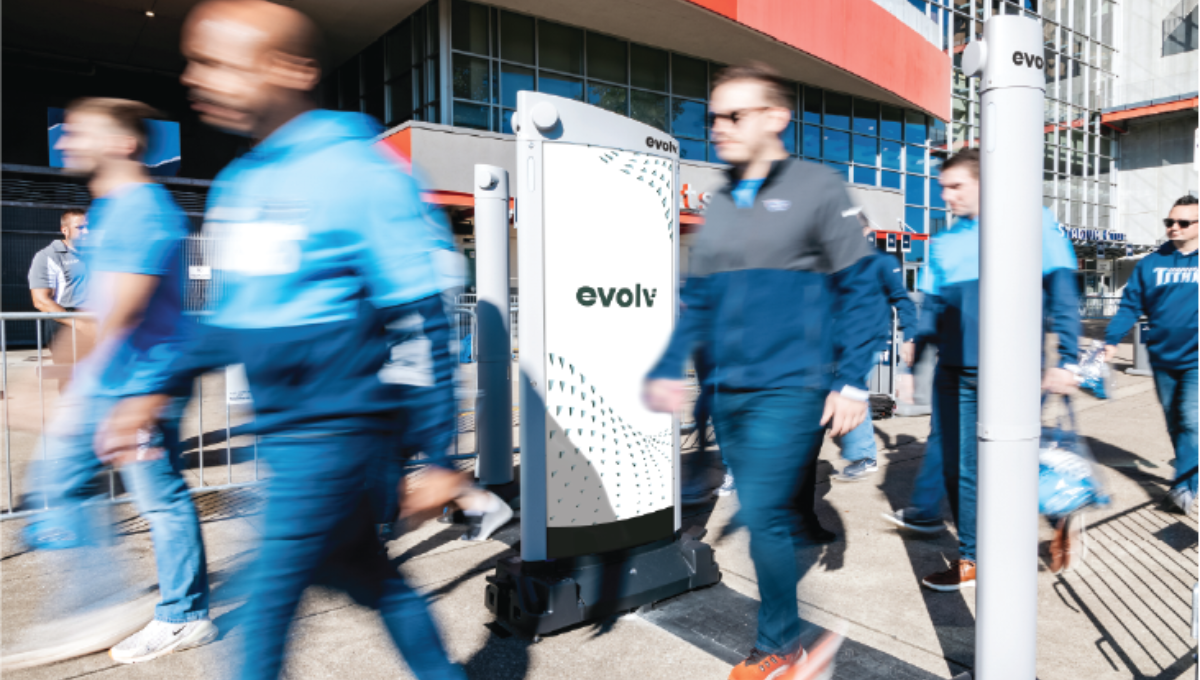
Mike Ellenbogen and I have spent the last eight years searching for different technologies that would detect an active shooter before he or she enters a facility. We have developed technology that is designed specifically to recognize that while most people entering a venue pose no threat, there may be a few individuals who require closer evaluation. Advances in technology finally make it possible. We use the best sensors and machine learning algorithms packaged in a welcoming design, allowing thousands of people to pass through while automatically detecting those few who may be of concern. Virtually everyone walks through with a cell phone in their pocket. The technology instantly differentiates that phone from a weapon, alerting guards to those few visitors who require a closer look. Thousands of weapons have been detected with numerous examples of deterrence when people saw the system and decided not to enter. Our newest product is launching this month. 

Our mission is to prevent active shooter incidents. Regardless of the outcome of mental health and gun safety initiatives, something can be done today. Our technology is preventing weapons from entering facilities. We are saving lives. We work closely with the broader community of security professionals and technology companies to keep people safe. It takes people, process and technology to address this problem. Our technology is a foundational piece that we hope may reduce these senseless tragedies.

Something can be done today to curtail this epidemic.  

Airport Security: When it Comes to Employees, Metal Detectors Are the Problem

The aviation security community has always been proactive and innovative with the introduction of new security technologies, policies and strategies. Whether its revamping screening processes for carry-on bags or drones for perimeter security, adoption rates for new technology aimed at thwarting threats has always been a consistent focus the aviation community. Yet there is one area of airport security that remains unsolved – insider employee threats.

While the vast majority of airport employees are not threats, out of the estimated 1million employees working in airports nationwide, it’s hard to overstate the importance of the need to protect against the insider threat. Especially with the steady uptick in insider threat incidents in recent years,A few examples include a baggage handler for Hartsfield-Jackson that was sentenced for gun smuggling, nine Dallas airport employees that admitted they plotted to smuggle drugs, weapons and plastic explosives, and a Horizon Air workerwho stole and flew commercial aircraft over the Seattle area.

Employees and Passengers Are Not the Same 

Unfortunately, the solution is not as simple as applying the passenger screening process to employees. While passengers plan to arrive hours before their flight to account for the expected airport security lines, it is unfair to expect the same scenario out of employees.

When shift changes occur, hundreds and in some cases, thousands of airport workers enter the airport at once. Forcing those individuals to undergo the slow-moving and single-file screening process that is required of passengers would inevitably prevent employees from getting to their posts at their scheduled start time, thus causing flight delays, which can negatively impact passenger satisfaction and airline finances.

MetalDetectors Are Part of the Problem 

Thesedifferences in screening scenarios shine light on the severelimitations of using metal detectors in the screening process.  

The technology in metal detectors is designed to detect only metal and is unable to differentiate between other everyday metallic items, such as cell phones or belt buckles. Because of this, individuals are asked to stop and divest of personal belongings, which inevitably creates delays and long lines. Further,when guards repeatedly find that the detectors’ alarms are due to those everyday items and not weapons, they become desensitized and inadvertently less effective in the screening process.

Despite this being the norm for passenger screening, this process cannot keep up with the demands of employee screening.  

Revamping the Employee Screening Process

With these significant limitations and challenges in mind, consider looking to replace antiquated screening solutions with more advanced technologies that leverage Artificial Intelligence (AI), and utilize advanced scanners, or even biometric capabilities.

If you do choose to onboard new technologies, ensure they meet the following capabilities to best protect against insider threats and improve the employee screening process:

  • Speed 

    Because airport shift changes can include up to thousands of employees at once, it’s important that your next screening solution quickly and efficiently move individuals through without sacrificing security.

    To do this, look for screening solutions that don’t require individuals to pause, pose, or divest of personal items. Technology that allows individuals to walk through with ease will best prevent bottlenecks, and ensure employees get to their stations on time.

  • Accuracy 

    Today’s threats extend far beyond the limits of metal, with bombs and other non-metallic weapons increasing in popularity every day.

    To ensure modern threats do not go unnoticed, your next screening solution should be able to identify several types of weapons, as well as differentiate between a gun, toy, or cell phone. With advanced intelligent detection capabilities, security guards are better-informed of potential threats and can take quicker and more precise action to deter an attack to stay “left of bang.”

  • Flexibility

    Implementing a rigid and predictable screening process can unfortunately create opportunities for people to use it against the venue that’s trying to stay protected.

    The ability to deploy screening solutions anywhere at any time creates an element of surprise and significantly limits the insider threat. Airports should look for flexible solutions that are self-contained and easy to move so that security checkpoints can be deployed on a whim. 

We can expect to see the insider threat problem proliferate across U.S. airports and beyond. To get ahead of this growing problem, consider reevaluating your employee screening process, educating yourself on the problem and identifying innovative solutions to address the ever-growing insider threat. An added benefit? Creating a no-hassle screening process for your employees can significantly impact job satisfaction and ultimately help with retaining employees.

Oakland Airport deploys new screening tech to fight internal threats

The following is an excerpt from an article by Travel Weekly’s Robert Silk. You can read the full article here.

A new-generation screening machine is aiding in Oakland Airport’s quest to fend off insider threats from employees and airline staff.

Waltham, Mass.-based Evolv Technology piloted its Evolv Edge® screening system in late 2017 before introducing it in Oakland last May. 

Unlike the security screeners that passengers are accustomed to at TSA checkpoints, the Edge system is able to detect bomb materials in addition to metal objects. Algorithm-powered artificial intelligence also enables the system to recognize ordinary objects that airport employees would be expected to be carrying, such as cellphones, wallets and keys. Another plus is that subjects can be scanned as they are walking. 

Subjects who set off an alert are quickly flagged red on digital graphic displays visible to security workers. The graphic also indicates the portion of the body where the suspicious item has been located. When a subject doesn’t set off an alert, the machine displays a green graphic. 

“The Evolv machine has really transformed our employee screening,” said Doug Mansel, Oakland Airport’s head of security. The system, he said, has functionality to allow for employees to walk through with purses and bags, but Oakland chooses to inspect those anyway, primarily to avoid false alerts that would slow down the screening process. However, employees can walk through the system with their phones and wallets. 

Mansel said the system is popular with employees because it removes the need for pat-downs.

“They’ve really helped us find this balance between security and throughput,” Mansel said of Evolv Technology. 

The full article is available here

Improving event security and the guest experience: Perspectives on screening from the executive protection industry

AS Solution and Mike Ellenbogen zoom in on the executive protection industry’s perspective on security screening for events. The goal is effective security for the principal and others – without compromising the guest experience. 

Executive protection practitioners have a wholly unique perspective that differs from many others who use screening devices, including security providers at airports, sports arenas, and other facilities open to the general public. 

Since they protect individuals, most often corporate leaders or high net worth individuals, the focus of private sector executive protection companies is naturally narrower than those who provide security for an entire stadium or office building. And when providing risk mitigation services for events large and small, as AS Solution also does, corporate clients expect security services to positively reflect brand values and contribute to a positive guest experience – not become a hassle for participants or a potential embarrassment for the corporate hosts. 

Knowing when to blend in and when to stand out: It’s different in the private sector

It’s no secret that no one (and no thing) gets near the president of the United States without effective security screening. Entire sections of major cities are shut down to safeguard the presidential motorcade when he’s in town. We’re accustomed to seeing a variety of men in black near POTUS when he is out and about. When World Cup host Russia’s Vladimir Putin gifted President Donald Trump with a soccer ball during a 2018 press conference, it, too, was screened as routine. 

But even though many outside the executive protection industry associate close protection with the president’s Secret Service coverage or celebrities surrounded by burly bodyguards, the protective reality in the corporate and high net worth segments is different. 

Here, clients place a premium on customized protective services that are in harmony with the principal’s personal preferences and corporate culture – not only best protective practices. Clients want protection, of course, but they often want it to be as unobtrusive as possible. Unlike the high-profile people they protect, executive protection practitioners are normally quite happy that no one notices them at all: they need to know when to blend in (usually) and when to stand out (only as necessary). 

They feel the same way about screening devices at events. Few corporate or high net worth clients are interested in forcing guests to line-up single file, empty their pockets, take off their belts, dump their cell phones, and walk through metal detectors – just to join a party, a product launch, or a press conference. While magnetometers and handheld wands can have their place in some circumstances, more discreet alternatives are welcome and even desirable. 

Private sector executive protection contexts that call for discreet screening 

At open-to-the-public events where a corporate or high net worth principal is present, his or her security is paramount from the executive protection perspective. But minimizing disruption and treating guests with utmost respect are also key. Similarly, at corporate events in which the principal participates, there could be dozens or hundreds of other company employees present, including venue staff, caterers, press, and more. 

Corporate colleagues and vendors don’t want to feel as if they are under suspicion – and they are not. But in the U.S., for example, the intentional or accidental presence of firearms at such events nonetheless represents a potential risk situation. While the probability of an incident in these contexts might be low, their impact on the principal and others, if something went wrong, could be very high. 

Another situation that calls for discreet screening is celebrity protection. AS Solution has also done protection for musicians on tour, which can be considered a multi-city string of events. Access to the backstage and celebrities is limited and tightly controlled, of course, but not completely restricted. Many people are involved, some better known than others. A star’s private “entourage” and guests can number dozens of people and vary from city to city. These guests of the stars don’t want to feel as if they are under suspicion, and nor do the principals or event hosts want to send such signals. But firearms are not a welcome part of any party scene.

AS Solution welcomes Evolv Edge as suitable technology for high-end executive protection

When AS Solution does Risk, Threat and Vulnerability Analyses (RTVAs) for events, the threat of a mass shooter has emerged as one of the more worrisome. Completely eliminating such threats is unfortunately not achievable, but it is possible to mitigate them. Security screening plays an important role here.

The challenge of using traditional security screening such as handheld wands and magnetometers in the kind of executive protection that AS Solution conducts is that it creates a negative guest experience. As a result, clients will often choose to opt out – even if the RTVA indicates that screening is necessary – rather than subject guests to the inconveniences and implied suspicion with which such tools are often associated. While this is an acceptable tradeoff in some circumstances, in others it is not.

Evolv Edge enables AS Solution to mitigate the risk of firearms and explosives at events with far less impact on the guest experience; AS Solution expects corporate and high net worth clients to be more amenable to such mitigation than previously available alternatives. The Evolv Edge provides a superior walk-through experience with multi-sensor technology that detects both metallic and non-metallic threats while eliminating the hassle of divesting every-day items and a need to “stop and pose.” 

With enhanced security and a vastly improved guest experience, AS Solution is excited to partner with Evolv Technology to deliver high-end executive protection and event security.

This blog was cowritten by Mike Ellenbogen of Evolv Technology and Christian West of AS Solution, and also appears on https://assolution.com/blog/improving-event-security-and-the-guest-experience-perspectives-on-screening-from-the-executive-protection-industry/
Beyond Bodyguards: Awards Season’s Security Challenges

With Sunday’s 91 Academy Awards now in the rearview mirror, water cooler talk around the countryturns to awards season takeaways. The majority of these conversations may focus on big winners, surprise snubs, and jaw-dropping fashion, but at Evolv, physical security is the main topic of discussion.

Hollywood’s awards season, held annually between October and February, culminates in a series of televised award shows. Each year, millions of people across the globe settle in to watch the year’s leadingactors, writers, musicians, and artists gather to be recognized for outstanding contributions to their industries. Venues hosting the biggest industry shows may change year-to-year but regardless of location, awards season has always been a time for Hollywood to put its most glamorous side on display — from onstage presenters and performers, to celebrity-packed audiences, red carpets, and after parties.

The polished and glamorous Hollywood environment displayed during these award shows may appear perfect, but that’s hardly reality. Any large event held at a public venue generates potential security threats. Despite the glitz and glamour, events like the Emmys or Oscars have similar physical security concerns to those of concert halls, sports stadiums, and airports around the globe.

Threats don’t discriminate

While celebrities and those in the entertainment industry can sometimes seem “untouchable,” they are not immune from the fact that any popular venue can be a potential target for active shooters and terrorists. Threats today don’t discriminate based on popularity, wealth, appearance, or talent. For venues, physical security concerns are universal, regardless of whether celebrities or the general public will be in attendance.

Modern security systems should protect all people regardless of the type of venue or event. Evolv’s customers include entertainment venues, airports, stadiums, corporations, hospitals, large scale events, and landmarks worldwide. For example, the Kravis Center, a performing arts venue in West Palm Beach, uses the Evolv Edge to ensure its audiences, artists, and staff members remain safe, while providing patrons with the best customer experience possible.

Security fit for the red carpet

Traditional security systems often detract from the aesthetic of the environments in which they’re used. The use of metal detectors, for example, requires guests to line up single file, dump out the contents of pockets and bags, and walk through the dated technology, only to be patted down later by a security guard. While it may be amusing to consider someone like Lady Gaga being patted down by security guards on the red carpet and forced to empty personal items from her clutch, this scenario accurately depicts the problem with using outdated security systems for red carpet events.

Fortunately, Evolv solutions use the latest AI and machine learning technology to enable frictionless, seamless, and effective security that can be modified to blend into all types of environments, including the red carpet. 

Be on the lookout

Many celebrities are faced with people who have the ability to do them harm, such as known stalkers, over-exuberant fans, or pesky paparazzi. The manual screening methods that traditionally have been used to identify such people require guards to memorize tens, if not hundreds of faces prior to the event, and have proven to be inconsistent and ineffective.

Facial recognition technology has significantly improved the ability of security teams to identify unwanted persons at large-scale events such as award shows. Because facial recognition technology, like Evolv’s Pinpoint, enables an event or venue to input images of people to “be on the lookout for,” guards are able to identify potentially dangerous guests almost immediately.

While this technology is ideal for diffusing threats before they occur, it provides other potential benefits too. Evolv Pinpoint’s ability to input images of people can be utilized for expected guests as well, enabling red carpet staffers to appropriately greet their A-list guests upon arrival. Facial recognition tech can ensure everyone feels like an award winner.   

Everyone, whether a celebrity at the Golden Globes or a family attending a major league baseball game, has the right to be safe. By deploying the most advanced screening capabilities, public venues can address a variety of threats, scenarios, and potential targets, so that no matter the event, guests and the overall guest experience are protected.

Whitepaper: Using Innovative Technology To Protect Against Insider Threats At Airports

Summary

Airports have moved quickly and decisively to adopt new technologies to increase security and thwart attacks. From drones for perimeter screening to advanced facial recognition programs to new scanning technologies that make it possible to rapidly detect explosives, firearms and other weapons hidden on a person, these are just a few of the tools being used to fortify airports. While adoption rates for new technology aimed at bolstering security to address insider threats have been growing steadily, there’s been little innovation as it relates to employee screening or for the public areas of the airport.

Download Now

Fill out the form to download this whitepaper to learn how Evolv Technology’s Edge® System provides the best Risk Based Security (RBS) solution to detect metallic and non-metallic threats that cause mass casualties.

Biometrics To Improve Terminal Side Security And Employee Screening

Innovations at airports have historically focused on one or both of the following primary factors: improving the customer experience, and securing passengers from ‘terminal to the plane.’

For example, the ‘Automated Screening Lane,’ originally proven to be successful in many European airports, have been widely adopted by U.S. airports in the past two years. In addition, new scanning technologies are making it possible to rapidly detect explosives, firearms and other weapons hidden on a person, without requiring them to remove layers.

On the customer experience front, more than 15 airports started testing and using biometrics to dramatically improve the customer experience. Airports are using advanced facial recognition to make it much easier for travelers to check-in at self-service kiosks, drop their luggage off at counters, and board planes – all without showing passports, IDs or other credentials.

While many airports are still in trial phases for these technologies, early results of reduced wait times and improved service levels are encouraging.

Despite these advancements, there has been little innovation in two critical areas: terminal-side security and employee screening to protect against the insider threat. Though some airports actively identify new technologies to improve these areas, many play a game of ‘wait and see’ to find out what the TSA will support or mandate.

Based on my experience, the airports that are proactive with their technology are the ones that set the future trends. When projects are successful, the TSA embraces those airports as models.

Security has traditionally been separate from the customer experience, but based on the early success of biometrics, we’ll see a big shift on this front in 2019. Airports will increasingly leverage successful customer technologies to improve their security apparatuses as well. This will set the trend for what airport security will look like for terminal side and employee screening in 2019 and beyond.

Here are two big ways we expect to see the combination of biometrics and security deployed this year.

Battling the Insider Threat – Improving Employee Screening

According to a recent economic impact study conducted for Airports Council International – North America, about 1.2 million people work at 485 commercial airports in the U.S.

In a risk-based security model, airport employees don’t require the same level of scrutiny as passengers, but they still need to be screened. Because there are no TSA mandates of physical screening for employees, many airports  deploy new security programs only after several noteworthy incidents have occurred, including the Horizon Air worker who stole and flew a commercial aircraft over the Seattle area, and the multiple smuggling-case/PN2GK4BkeWZ1AZZShFaTsL/’>arrests for various smuggling charges.

These incidents have put many aviation security veterans, including myself, on high alert and increased the possibility of a mass casualty act conducted by a disgruntled or radicalized employee. While many airports have added physical screening procedures for employees, the use of biometrics for employee screening for employee screening will start to explode in 2019.

Here’s why. Security and customer convenience are constantly at odds in traditional airports. Adding additional physical security procedures for employees can be cumbersome and cause delays for travelers because the employees are held-up at security checkpoints. This is why biometrics, combined with the power of new physical threat detection systems like Evolv Edge®, will become the defacto standard for employee screening.

The early success of biometrics from a customer satisfaction standpoint will crossover to the security side as more airports employ biometrics at security checkpoints for another layer of security for passenger identification.

In fact, the TSA recently announced their roadmap for expanding the use of biometrics to improve passenger identify verification. This will be a departure from the current process of examining physical documents and processing biographical information on every traveler.

But, by adding biometrics scanners at security points like TSA Pre-Check, U.S. Customs and Border Protection points, and more, the TSA and the airports will be able to improve the customer experience, while strengthening their ability to verify each passenger.

These advances in technology will allow airports to treat security and the customer experience in the same way, while improving both at the same time. The combination of biometric identification, along with the ability to rapidly scan travelers for weapons and explosive materials without requiring them to take off layers of clothes, shoes, belts and more, will result in more secure, more convenient travel.

Why I Started Evolv: A Q+A with Co-Founder and CEO, Mike Ellenbogen

I recently sat down with Mike Ellenbogen, our CEO and co-founder. We discussed his career path, what’s to come in the security industry in 2019 and Mike’s advice for aspiring entrepreneurs. See what Mike had to say.

Melissa Cohen: Mike, you have a lot of experience launching new companies and building something from the ground up based on a new idea. You did this with both Evolv and your previous company. Can you tell us about an accomplishment that shaped your career?

Mike Ellenbogen: Absolutely. I love building things and always have. I had a eureka moment that triggered the inception of my first company, Reveal Imaging. After new legislative requirements for airport security screening were put in place following September 11, I realized it made sense to employ smaller, less expensive systems and connect them together via a network of PCs. We rethought the way checked baggage was screened in the U.S., considering the total cost of the systems as opposed to just the cost of the technology. Ultimately, Reveal Imaging was acquired by Science Applications International Corporation (SAIC) in August 2010. I’m immensely proud of the work that team did and grateful for the experience – it’s really helped shape who I am today and is what motivated me to keep going and start Evolv.

MC: Based on your extensive experience in the security business, what do you think makes a good CEO in the industry?

ME: There needs to be an inclination to push beyond the conservative approach that is so common in the security industry. There are plenty of businesses out there with the “same old” security technology that’s been around for decades. I like to push the envelop and ensure that my company is offering something that solves a problem while also surprising and delighting. I think it’s important that a security industry CEO sees the world that can be rather than replicating what’s already out there or being happy with the status quo.

MC: What’s the biggest challenge you’ve faced in building either of these businesses and how did you overcome it?

ME: The core technology at both companies was/is really complicated – millimeter wave imaging is a challenging field, so is Artificial Intelligence (AI). Of course, you have to have technology that works in order to have repeatable and reliable customers that you can pursue. Leading an emerging technology company and inventing fundamentally new technology, there’s inherently a lot of pieces you have to glue together. It’s daunting and the success of the company is reliant on a deep understanding of the physics of the real world and how to appropriately push the boundaries of electronics and processing.

With any new technology or applications, there is also a steep learning curve among your teams. An engineer may be familiar with the technology, but not with the application. On that note, another challenge is finding the kind of people that can help move the physical security technology industry forward. We look for people with credibility, who have energy and creativity, and can also help move the needle.

MC: What are some of the biggest trends and themes you’ll be watching for in the security industry in 2019?

ME: We’ll definitely see further integration of AI and facial recognition into more security technologies and applications. Disparate AI capabilities will need to be packaged in a way that is more useful for customers in 2019. We’ll also see an increase in compute power at the edge, for example, more compute power within security cameras rather than via a central/integrated service. And, I know people have been saying this outside of the security industry for years, but we’re going to see expanded use of the cloud and Software as a Service (SaaS) within security technologies. While this has already started, some major shifts in this space are coming.

MC: Let’s do some rapid-fire, fun questions. How would you describe your leadership style?

ME: I like to think I present a vision of what could be to get people behind that vision – you need people to believe in the vision to engage them in getting there. Considering I’m focused on solving problems in a new way, I also recognize that it’s important for me to surround myself with people who are optimistic but real.

MC: What is your top productivity hack?

ME: I live my life multi-threaded, which I think is just another way of saying that I’m always trying to be efficient. I do a lot of different things in parallel. For example, I turn the coffee pot on before I get ready for work so that it’s ready when I leave. I take pride in maximizing my time like this.

MC: What piece of advice would you give your younger self?

ME: I always wanted to run a company and invent something – this desire was within me from a very young age. I would tell myself you need time to see the opportunities in the market, so find an industry you really love, make it your own, and word incredibly hard at it.

MC: What motivates you?

ME: Every day I’m motivated by the vision that the technology we’re working on is important and helping to save lives. As I mentioned before, I also love building new things and, in doing so, helping to bring success to the people around me.

MC: What best practices can you share for future leaders who are looking to start a business?

ME: It’s all about the people. Whatever your path, you’ll be spending a lot of time in the trenches with them, so you better like them. And of course, expect the unexpected!

International Security Expo 2018: The Changing Demographics of the Security Industry

For years, going to the United Kingdom Security Expo in London has felt like going to a get-together with members of a fairly tight-knit club. Everyone was involved in the business of selling, buying and deploying high-powered security screening gear for airports, government buildings and other hardened locations.

This year, the vibe was noticeably different, with many new faces, from different industries, and with different priorities—emphasis on the word “many.” With the awful increase in mass casualty attacks on soft-targets such as schools, corporate offices and houses of worship, registrations for the show rose 38 percent from the previous year. This includes corporate security managers, hoteliers, government regulators and municipal law enforcement officials from around the world.

The show organizers clearly saw this change coming. Besides renaming the show—as of this year, it’s the International Security Expo–they set off a sizeable part of the show floor for the dozens of drone (and counter-drone!) security products on the market. The centerpiece exhibit was the football field-sized “Protecting Urban Spaces Demonstrator,” where visitors could get a sense of the user experience of various futuristic products in a simulated city, right down to a smart man-hole cover that looks out for wanted criminals while it also monitors the water and gas levels around it.

We definitely saw the broadening demographics of the security business at the Evolv booth. We had visits from multiple soccer clubs and other professional sports teams, all looking for ways to lower the odds of an attack in their stadium without taking any fun out of a night at the game. We spoke with police departments, who wanted to boost security at police stations and potentially at crime scenes. Large event planning companies kicked the tires, as well.

As a rule, these people had little interest in speeds and feeds, and most probably couldn’t tell you the meaning of the acronym AVSec (Answer: Aviation Security). They wanted to talk more about use cases, and how to create fluid, non-aggravating screening processes that wouldn’t feel like lining up in an airport security queue. Rather than create impenetrable perimeters to find every last pen-knife, many wanted the ability to quickly stand-up a “pop-up” checkpoint—say, for the night when a dignitary comes to a restaurant or if a municipal alert goes out about a violent criminal on the loose.

I suppose it’s no surprise that many of these newcomers to the show found their way to our booth. Evolv set out in 2013 to create solutions for the growing soft-target threat. More than 200 of our Evolv Edge® systems are already deployed, in everything from corporate headquarters to concert halls. We’re not the only company targeting these applications, but I’d have no problem betting that we have the most experience helping customers in real-world applications.

In terms of the amount of real business that got done at the show, it no doubt took place at the booths and suites of those aviation security companies. With the European Commission mandating a shift from traditional X-ray-based technology to systems based on CT-scanners, there’s a lot of money to be made or lost in that huge market.

But I took the stream of new faces at our booth and the show as a solid leading indicator of expanding demand for a new generation of security screening equipment. It’s an unfortunate statement on the level of violence in our society today that schools, businesses and sports teams need to think about the safety of their visitors. But it’s also a positive sign that these companies and institutions are thinking about responding rather than accepting it as the new normal.

Check out Six Ways to Prevent Soft Targets from Terrorist Attacks to learn more about options to combating today’s security threats.

Evolv Edge Wins R&D 100 Award

As we near the end of 2018, here at Evolv we’ve been reflecting on recent accomplishments and challenges – and resolving to find more ways to keep people safe in 2019. Momentum around Evolv Edge® continues to grow, and the positive feedback from the industry and our peers is propelling our team forward into the New Year.

Most recently, Evolv Edge was named a winner in the R&D 100 awards. This prestigious award recognizes the top 100 revolutionary technologies of the past year across five categories and we are honored to be named a winner in the Safety & Security category.

Since 1963, the R&D 100 Awards have been considered the most globally prestigious recognition of invention and innovation. Past winners include sophisticated testing equipment, innovative new materials, disruptive chemistry breakthroughs, and new consumer products and technologies spanning industry, academia and government.

After spending three years developing the Evolv Edge and testing it in the field with users and government testing labs, it is rewarding to see the system receiving various awards and industry designations. In addition to the R&D 100 award, Evolv Edge was recently recognized as a Gold Winner in the metal/weapons detection category of the 2018 ‘ASTORS’ Homeland Security Awards from American Security Today. Evolv Edge also achieved the U.S. Department of Homeland Security (DHS) SAFETY Act Designation and completed operational testing and evaluation by Safe Skies.

We are committed to designing a system that takes the hassle out of people screening. Whether our system is scanning guests and employees at a sports stadium, a performing art venues or an international airport, it consistently scans everyone for bombs, weapons and persons of interest without the need to stop and empty their pockets. The end result is a superior security and visitor experience that is designed to fit into an organization’s personalized security plan.

Our systems have screened millions of people globally and that number is growing every day. As we set our sights on 2019, we look forward to new opportunities that will enable us to continue putting safety first at a time when the threat landscape is ever changing.