Last week, a group of aviation leaders met in Silicon Valley in a forum orchestrated by AAAE to chart a course for the innovation and improvement of airports. I had the honor of joining leaders from Google X, Lyft, and Google Tango on a panel discussion in front of an audience of innovative Airport Directors, CIOs, and government leaders. We talked about strategies for harnessing artificial intelligence to improve the airport today. If you want more background on what modern artificial intelligence means, read this piece by The Economist.
As an airport operator, why should I care about artificial intelligence?
When your plane lands, a human alone does not decide which gate it should go to, just like it’s not a human that sets the price of your ticket. AI is already in the airport — but why does it matter to you as a professional? How does it help with your shrinking budget, and how will it enable you to confront the new threats and opportunities you will face in 2017 and beyond? How can it drive more intelligent utilization of your limited human resources and your infrastructure?
Here are my 3 takeaways from this unique “meeting of the minds” between airport leaders and technologists about where AI can take us in the near future:

1. It’s about man AND machine, not man vs. machine.
In complex, real world environments such as airports, AI can’t do it alone. Today there is often a meaningful gap between what you need AI to do and what it can deliver. How can you tell when AI is falling short? If you are getting false alarms or seeing meaningless answers, you’re in gap territory. For example, try asking Siri a complex question. “Sorry, I didn’t get that.” Or try relying on video analytics to generate meaningful alerts in an airport environment. In both examples, AI is well equipped for about 80–95% of the task, and the remaining 5–20% ends up being your headache. What AI leaders at Google, Amazon, and the like have figured out is that when it comes to mission critical applications, you need a combination of AI and human judgment (“IQ”) in order to close the gap and get you across the goal line. For examples above:
- Google Maps was built by using Google’s AI to find the streets and intersections in imagery but with Google’s “Team Ground Truth” (human IQ)to fill in the gap on tricky one-way streets and construction zones.
- When you “smart scan” your receipts for creating an expense report using Expensify, AI can handle the crisp, clean ones, but human IQ is needed for those crumpled up ones that have been sitting in your pocket for hours at the conference.
- Amazon embraces the AI + IQ formula so much that they created an entire platform for it called Mechanical Turk (which now has over 500,000 “Turkers” who earn a living on it doing “Human Intelligence Tasks” or HITs). Your product recommendations come to you courtesy of a system that is part human and part machine.
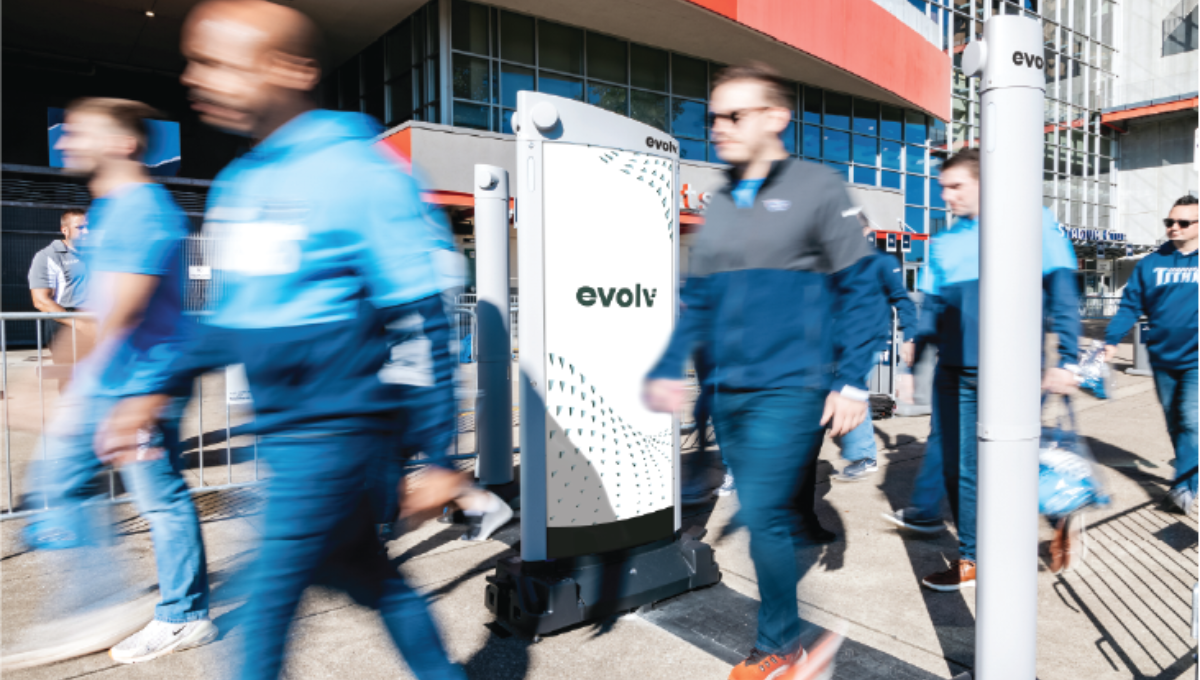
- Evolv Technology is now leading an effort to bring this powerful AI + IQ formula to the physical security domain at airports and other facilities across the world.
So when it comes to AI systems for your complex environment, think about utilizing systems where human judgment gets you the last mile, so that your operators on the front lines don’t have to deal with the false alarms or brittleness of AI-only systems.
2. AI can be used to layer on additional insights, or it can be put to work to get rid of the noise. Start with the latter.
We as humans are tool users, but our layering on of technological tools over decades has caused us to become inundated with noise. We weren’t always flooded with information: From the earliest days of aviation through WW2 and until around 1980, we introduced technological advancements and managed to keep the noise level low. That changed in the 1980s, and now in 2016 we may be at “peak noise,” owing to the fact that we added technologies in an accretive way and caused the noise level rise and rise. If you added up all of the alerts your team receives from all of its tools, it would likely number in the hundreds per person per day. And all but a small sliver of them would be noise.
So what could the near future look like?
- More black screen than multi-screen. Today’s “nerve centers” (e.g., the Security Operations Center) don’t do much for conservation of attention. How do you transition to a less noisy environment? Start by tallying up the noise your team receives today, and then put it into buckets based on the source and possible cause. That analysis will help guide your search for triage tools, as you can then look for AI that is able to tackle that category of false alarm.
- The impact of one human staff member increases as the labor force becomes augmented and distributed. We heard a story about an airport in Leesburg, Virginia a couple of weeks ago that was doing a proof of concept for remotely provided air traffic control services. Imagine how powerful a distributed workforce that has AI triage tools at their disposal would be.
3. Embrace agile infrastructure and operations to be ready for the near future.
A challenge with which everyone in aviation is familiar: You do your best to pre-plan infrastructure to last 30+ years and then something happens that invalidates your plans. Fuel prices change and now your fleet of regional jets is no longer economical. A terrorist attack happens and now your checkpoint design is outdated. Uber and Lyft happen and now your parking plans seem uncertain. When you use brick and mortar decisions to drive outcomes, there’s little you can do to respond when you’ve poured your last footer on Christmas Eve and circumstances change. The aviation world has experienced many instances of short-term volatility, but these historical examples may be no match for the breakneck pace of change that will come in 2017 and beyond.
We’re entering into an area of exponential change, a term which means that advances are getting bigger and bigger and happening more and more quickly. It’s a hockey stick curve and it suggests some pretty intense things about our future. The kinds of unpredictable changes that made pre-planning tough before will become constant. So how do you deal with that?
- Evaluate the use of subscription services for software (SaaS) as well as hardware (HaaS). Rent the technology and encourage the manufacturer to keep the updates coming continually, rather than buying a solution today waiting 5 years to purchase an upgrade to technology that became obsolete 4 years ago.
- Seek out agile tools that work with your existing infrastructure and can be deployed and upgraded as your infrastructure is being upgraded. For hardware, this means portability and ease of installation. For software, this means compatibility with your existing systems.
The practical AI strategy for the airport of the near future
AI runs the consumer world, and in 2017 and beyond, it will have significant impact on the way you utilize your limited human resources and the effectiveness of your infrastructure and operations. The depth and intensity of the discussion at the AAAE Airport Innovation Forum highlighted the fact that the community is taking a proactive and pragmatic stance on bringing technology breakthroughs into the airport. Use these 3 key principles to launch your own world class, innovative strategy:
1. It’s about man AND machine, not man vs. machine.
2. AI can be used to layer on additional insights, or it can be put to work to get rid of the noise. Start with the latter.
3. Embrace agile infrastructure and operations to be ready for the near future.