Evolv Technology Recognizes Milestone Year in Company’s History

Over 500 customers across the US partnering with Evolv as part of a layered approach to security

WALTHAM, Mass. – (March 16, 2023) – Evolv Technology (NASDAQ: EVLV), the leader in AI-based weapons detection security screening, is now partnering with venues in 45 U.S. states as well as Puerto Rico, as security professionals from sports stadiums and theme parks to schools and hospitals integrate advanced weapons screening technology into their layers of safety planning. The Company more than doubled its customer base in 2022, working towards its mission of making the world a safer place for people to live, learn, work and play. 

“We have now screened over a half a billion visitors, reflecting our rapidly expanding customer base in healthcare, education and industrial workplaces,” said Peter George, CEO of Evolv Technology. “We are committed to provide innovative solutions for our customers, and to serve as partners in their safety operations.  And, we are driven to continue to improve.”   

Evolv is helping to make a fundamental difference in venue safety as part of a layered approach to security. To that end, Evolv customers used the Evolv Express® system to tag over 176,000 weapons in 2022 – including 93,000 guns and 83,000 knives carried by visitors entering venues (not including those tagged by customers as law enforcement). In the fourth quarter of 2022 alone, Evolv customers tagged nearly 70,000 weapons – including 36,000 guns and 33,000 knives. That’s an average of about 400 guns every single day being stopped from entering venues where weapons are prohibited at the end of last year.   

Through a combination of powerful sensor technology, proven AI, and comprehensive analytics, Evolv Express scans for concealed weapons without imposing the negative, inconvenient, or anxiety-inducing procedures that can accompany metal detectors. Evolv Express uses AI to instantly distinguish threats from most everyday objects, such as keys and cellphones, as people walk through at the pace of life. Unlike metal detectors and their newer upgrades, Evolv Express flags the precise location of a potential threat so that guards can respond in a more efficient manner towards incident resolution rather than requiring invasive and time-consuming procedures such as wanding, body searches and “yo-yo’ing” an individual through a system until the issue is resolved.  

“For those who set off an alarm, the secondary screening check is immensely easier and creates much less friction than it did before with the metal detectors. We know exactly where the alert is located on the body by seeing it pinpointed on the Evolv Express tablet, so verification and remediation of the threat is much faster and less invasive,” said Brandon Covert, Haslam Sports Group VP of IT, operator of FirstEnergy Stadium, home of the Cleveland Browns.   

 “Conducting manual security checks was taking up to an hour of time each morning, and it wasn’t a particularly pleasant experience for our students or faculty,” said Mark Laurrie, Niagara Falls City School District Superintendent, adding “Evolv is the best that is out there for schools.”   

“I spent a significant amount of time speaking with Evolv customers and dove into how the technology works,” said Otto Benedict, SVP of Facility and Campus Operations at SoFi Stadium and Hollywood Park, one of the dozens of stadiums using Evolv. “We also looked at some other non-metal-detector alternatives. We really did our homework. There was a sense of being overwhelmed with the metal detectors. That is no longer the case with Evolv.” 


About Evolv Technology 

Evolv Technology (NASDAQ: EVLV) is transforming human security to make a safer, faster, and better experience for the world’s most iconic venues and companies as well as schools, hospitals, and public spaces, using industry leading artificial intelligence (AI)-powered weapons detection and analytics. Its mission is to transform security to create a safer world to work, learn, and play. Evolv has digitally transformed the gateways in places where people gather by enabling seamless integration combined with powerful analytics and insights. Evolv’s advanced systems have scanned more than 500 million people, second only to the Department of Homeland Security’s Transportation Security Administration (TSA) in the United States. Evolv has been awarded the U.S. Department of Homeland Security (DHS) SAFETY Act Designation as a Qualified Anti-Terrorism Technology (QATT) as well as the Security Industry Association (SIA) New Products and Solutions (NPS) Award in the Law Enforcement/Public Safety/Guarding Systems category. Evolv Technology®, Evolv Express®, Evolv Insights®, and Evolv Cortex AI® are registered trademarks of Evolv Technologies, Inc. in the United States and other jurisdictions. For more information, visit https://evolvtechnology.com

Forward-looking Statements 

Certain statements in this press release may constitute “forward-looking” statements and information, within the meaning of Section 27A of the Securities Act of 1933, Section 21E of the Securities Exchange Act of 1934, and the safe harbor provisions of the U.S. Private Securities Litigation Reform Act of 1995 that relate to our current expectations and views of future events. In some cases, these forward-looking statements can be identified by words or phrases such as “may,” “will,” “expect,” “anticipate,” “aim,” “estimate,” “intend,” “plan,” “believe,” “potential,” “continue,” “is/are likely to” or other similar expressions. These forward-looking statements are subject to risks, uncertainties and assumptions, some of which are beyond our control. In addition, these forward-looking statements reflect our current views with respect to future events or our Company’s performance and are not a guarantee of future performance. Actual outcomes may differ materially from the information contained in the forward-looking statements as a result of a number of factors, including, without limitation, the risk factors set forth in our Annual Report on Form 10-K for the year ended on December 31, 2021, that was filed with the SEC on March 28, 2022, as may be updated in other filings we make with the SEC, including our Quarterly Report on Form 10-Q for the quarter ended on September 30, 2022 that was filed with the SEC on November 9, 2022. These statements reflect management’s current expectations regarding future events and operating performance and speak only as of the date of this press release. You should not put undue reliance on any forward-looking statements. Although we believe that the expectations reflected in the forward-looking statements are reasonable, we cannot guarantee that future results, levels of activity, performance and events and circumstances reflected in the forward-looking statements will be achieved or will occur. Except as required by law, we undertake no obligation to update or revise publicly any forward-looking statements, whether as a result of new information, future events or otherwise, after the date on which the statements are made or to reflect the occurrence of unanticipated events.   


Media Contact: 
Alexandra Smith Ozerkis 
aozerkis@evolvtechnology.com 

Investor Contact: 
Brian Norris 
bnorris@evolvtechnology.com 

Evolv Technology Named A 2023 Best Place to Work By Built In

Evolv was also Recognized with the Award in 2022

WALTHAM, Mass. (January 13, 2023) — Built In announced that Evolv Technology (NASDAQ: EVLV) has been honored in its 2023 Best Places To Work Awards. Specifically, Evolv, the leader in AI-based weapons detection security screening, earned a spot on the Best Midsize Places to Work in Boston list. The annual awards program includes companies of all sizes, from startups to those in the enterprise, and honors both remote-first employers as well as companies in large tech markets across the U.S.

“Our prioritization of our people is what sets us apart and qualifies us for this recognition,” said Liza Knapp, head of people at Evolv. “Our people-first approach is demonstrated by our investment in human capital including our leadership development and shadowing and our ‘Women at Evolv’ group. We’re proud to have created a culture where all employees feel empowered and enabled to work towards our goal of making the world a safer place for people to gather.”

Built In determines the winners of Best Places to Work based on an algorithm, using company data about compensation and benefits. To reflect the benefits candidates are searching for more frequently on Built In, the program also weighs criteria like remote and flexible work opportunities, programs for DEI and other people-first cultural offerings.

“It’s my honor to congratulate this year’s Best Places to Work winners,” says Sheridan Orr, Chief Marketing Officer, Built In. “These exemplary companies understand their people are their most valuable asset, and they’ve stepped up to meet the modern professional’s new expectations, including the desire to work for companies that deliver purpose, growth and inclusion. These winners set the stage for a human-centered future of work, and we can’t wait to see that future unfold.”

The accolade comes on the heels of another year of tremendous growth and success for Evolv. In November, the company announced it had screened more than 425 million people and stopped in excess of 100,000 weapons from entering venues since the start of the year. In the third quarter of 2022 alone, it added a record 92 new customers. Evolv is set to release its 2022 Q4 financial results on March 1.

To learn more about Evolv, including more than two dozen open full-time positions and internships across sales, logistics, technical support and other fields, visit its Careers page.

About Built In

Built In is creating the largest platform for technology professionals globally. Monthly, millions of the industry’s most in-demand professionals visit the site from across the world. They rely on our platform to stay ahead of tech trends and news, learn skills to accelerate their careers and find opportunities at companies whose values they share. Built In also serves 2,000 customers, innovative companies ranging from startups to those in the Fortune 500. By putting their stories in front of our uniquely engaged audience, we help them hire otherwise hard-to-reach tech professionals. www.builtin.com

About Built In’s Best Places to Work

Built In’s esteemed Best Places to Work Awards, now in its fifth year, honor companies across numerous categories: 100 Best Places to Work, 50 Best Startup Places to Work, 100 Best Midsize Places to Work, 100 Best Large Places to Work and Editor’s Choice: 100 Best Hybrid Places to Work. The program honors companies – remote, hybrid and in-office – with the best total rewards packages across the U.S. and in the following tech hubs: Atlanta, Austin, Boston, Chicago, Colorado, Dallas, Houston, Los Angeles, Miami, New York, San Diego, San Francisco, Seattle and Washington DC.

About Evolv Technology

Evolv Technology (NASDAQ: EVLV) is transforming human security to make a safer, faster, and better experience for the world’s most iconic venues and companies as well as schools, hospitals, and public spaces, using industry leading artificial intelligence (AI)-powered weapons detection and analytics. Its mission is to transform security to create a safer world to work, learn, and play. Evolv has digitally transformed the gateways in places where people gather by enabling seamless integration combined with powerful analytics and insights. Evolv’s advanced systems have scanned more than 425 million people, second only to the Department of Homeland Security’s Transportation Security Administration (TSA) in the United States. Evolv has been awarded the U.S. Department of Homeland Security (DHS) SAFETY Act Designation as a Qualified Anti-Terrorism Technology (QATT) as well as the Security Industry Association (SIA) New Products and Solutions (NPS) Award in the Law Enforcement/Public Safety/Guarding Systems category. Evolv Technology®, Evolv Express®, Evolv Insights®, and Evolv Cortex AI® are registered trademarks of Evolv Technologies, Inc. in the United States and other jurisdictions. For more information, visit https://evolvtechnology.com.

Forward-looking Statements

Certain statements in this press release may constitute “forward-looking” statements and information, within the meaning of Section 27A of the Securities Act of 1933, Section 21E of the Securities Exchange Act of 1934, and the safe harbor provisions of the U.S. Private Securities Litigation Reform Act of 1995 that relate to our current expectations and views of future events. In some cases, these forward-looking statements can be identified by words or phrases such as “may,” “will,” “expect,” “anticipate,” “aim,” “estimate,” “intend,” “plan,” “believe,” “potential,” “continue,” “is/are likely to” or other similar expressions. These forward-looking statements are subject to risks, uncertainties and assumptions, some of which are beyond our control. In addition, these forward-looking statements reflect our current views with respect to future events or our Company’s performance and are not a guarantee of future performance. Actual outcomes may differ materially from the information contained in the forward-looking statements as a result of a number of factors, including, without limitation, the risk factors set forth in our Annual Report on Form 10-K for the year ended on December 31, 2021, that was filed with the SEC on March 28, 2022, as may be updated in other filings we make with the SEC, including our Quarterly Report on Form 10-Q for the quarter ended on September 30, 2022 that was filed with the SEC on November 9, 2022. These statements reflect management’s current expectations regarding future events and operating performance and speak only as of the date of this press release. You should not put undue reliance on any forward-looking statements. Although we believe that the expectations reflected in the forward-looking statements are reasonable, we cannot guarantee that future results, levels of activity, performance and events and circumstances reflected in the forward-looking statements will be achieved or will occur. Except as required by law, we undertake no obligation to update or revise publicly any forward-looking statements, whether as a result of new information, future events or otherwise, after the date on which the statements are made or to reflect the occurrence of unanticipated events.

Media Contact: Alexandra Smith Ozerkis aozerkis@evolvtechnology.com

Investor Contact: Brian Norris bnorris@evolvtechnology.com

How the Threat of Gun Violence Will Change in 2023: Experts Share Their Predictions

If it seems like every time you turn on the news there’s another story about a mass shooting, that’s because it continues to happen. It comes as no surprise that gun-related deaths have been on the rise in recent years. The U.S. experienced more than 600 mass shootings in 2022, nearly double the number recorded four years ago when there were 335, according to the Gun Violence Archive

The victims are our children, colleagues, friends and neighbors. They are randomly killed while grocery shopping, working, and attending parades. Others are the targets of hate crimes against historically marginalized communities. Nobody is immune from the gun violence epidemic.

As 2023 gets underway with more than thoughts and prayers for the millions of people affected by gun violence, we asked industry experts to share their recommendations for a better, safer future – one where we can gather publicly without fear and anxiety that our time may be cut short due to a senseless act of gun violence.

Our expert panel consists of:

  • Jill Lemond, director of education at Evolv
  • John Pistole, former United States Deputy Director of the Federal Bureau of Investigation (FBI)
  • Bilal Zuberi, general partner at Lux Capital

We know it is difficult to explore this topic, but the gun violence epidemic cannot be ignored. We came away from our conversations with more than hope – our experts offer specific insights and actions we can all take to stem the violence. We welcome additional thoughts from the community and encourage you to reach out with your ideas.  

Prediction #1: Schools and communities will work more closely together to improve school safety, and public safety as a whole, using a holistic approach that integrates people, processes and technology.

The rise in school shootings will result in schools and communities working more closely together on school safety planning. According to Jill Lemond, “Parents are getting more involved, there are greater efforts to incorporate the mental health needs of students, and there are fantastic technology solutions to help address the mental health and the physical security needs of schools. We’ll continue to see schools and communities working more closely together along with a continued demand by parents to install weapons detection systems in schools.”

As schools and communities work more closely together, John Pistole offers this advice on ways to help prevent school shootings.

“There are three actions school administrators and school boards can take. First is recognizing that there is a gun violence issue in this country. Second is to mitigate the risk of a school shooting. This may include increasing the presence of physical security with off duty police officers or school resource officers, combined with more advanced locks and access control systems. The third part is taking action. For example, there are still some COVID-19 relief funds available that are designed for public health. With their fairly broad limitations, those funds can be used as part of the actions to increase school safety.”

According to security expert Juliette Kayyem, schools will always be vulnerable and new perspectives are needed. “In that regard, there must be more focus on the duty of parents [and caregivers] in terms of practicing responsible gun ownership and I think we’ll see more of that in the future. I can also imagine changes to the guiding principle of ‘run, hide, fight’ when it comes to security and mass shootings.

Running is preferred; hiding if it is the only response possible; fighting if there is no other choice. Since no active shooter situation is the same, this isn’t a hard-and-fast rule. If we are to be guided by facts, and consider our safety training based on the available evidence, then we need to further assess whether, in an age when so much damage can be done so quickly by guns that should not be on the street, “Run, hide, fight” is still the correct public messaging. With killers having the capacity to end the lives of so many people so fast, neither running nor hiding may be the best first option. I’m now asking myself whether we in the U.S. have been too dismissive about fighting back. I’m not ready to say I want my young kids to fight if, God forbid, they encounter a mass shooter. But I’m willing to admit that maybe I want someone present to fight for them.”

Zuberi anticipates more investments in physical security being reviewed by non-security executives. He said, “More business leaders, board members and other stakeholders are getting involved in selecting physical security systems and this will continue throughout 2023. The change happened as security was dealing with staff turnover and outdated metal detectors, and business leaders and other stakeholders outside of security wanted to improve the customer experience.”

“There are two axes to consider when it comes to security. The first is the number of people exposed to a potential threat and the economic impact of an incident. For example, think about where most people congregate; it’s festivals, fairs, concerts, etc. We’ll see more security investments around those venues.

The other axis is the economic impact of a death or shooting incident. For example, the impact of a targeted shooting in a nightclub is horrible, but the economic impact is relatively low compared to a random shooting at work or a supermarket. Those incidents lead to more widespread fear and terror that rips through society, therefore having a greater economic impact.”

“Because of these factors, we’re starting to see companies, hospitals and large buildings with lots of activity and people invest more in security. We’ll continue to see schools invest in security technology.”

Prediction #2: We will see improvements to some, but not all, of the biggest threats to public safety.

We asked the experts about the biggest threats to public safety and what they believe can and should be done to address those vulnerabilities. The biggest areas of vulnerability are schools and select public venues.

Schools

According to Lemond, “The biggest threat facing school administrators is having to do more with less. A big part of an administrator’s role requires finding qualified professional staff to serve the needs of the school and the community while keeping students safe in school. Right now, it feels like they’re tasked with the impossible as mental health issues are on the rise and fewer teachers and administrators enter the profession. I predict we’ll see some improvements when it comes to addressing the needs of administrators, especially as hiring gaps become even greater, having a ripple effect on students and ultimately school safety.” 

In terms of the rise of swatting, Lemond believes, “Swatting will continue until there is a unified approach to the consequences. However, more states are enacting stricter laws around it and this is resulting in fewer hoaxes. Once other students see that false alarms are resulting in felony prosecutions, the swatting calls will decrease.”

Public venues that support progressive or diverse communities

“As we look at the rise in gun violence, one area of great concern are public places and events that support progressive or diverse communities. In particular, LGBTQ+ events and clubs. Equally at risk are synagogues due to the rise in antisemitism that’s being nurtured and amplified on social media platforms that neglect content moderation. While antisemitism is largely shamed, there seems to be a willingness in our society to explore the justifications for shootings in the LGBTQ+ community. We all need to be more cognizant of what is happening around us and continue to enforce the law to protect our most vulnerable populations,” said Kayyem.

From Zuberi’s perspective, “In 2023, expect more businesses to respond to the transition in physical security as it goes from being a services business to a technology business. Right now, there’s an existential crisis that is fundamentally changing how business owners view security in their establishments. They’re realizing that it’s not enough to install just any type of security system. They also know their businesses may not exist if a tragedy such as a shooting were to happen onsite as potential customers feel unsafe and stop coming and potential employees don’t want to work there. We’ve seen this play out in other parts of the world as suicide bombers and rioters attack public venues. They’re more likely to attack American chain hotels and restaurants and we know that after an attack, customers are less likely to go to those places.

In 2023, I expect investments in security technology will increase. Specifically, in-network connected, distributed sensors that are used by best-on-class leaders to allow us to more quickly and cost effectively detect threats to human security and intervene. Much like cybersecurity has become part of our everyday lives, so will physical security.” 

Prediction #3: Unfortunately, we will see a greater number of tragedies become more complex due to cyber threats and ineffective incident response.

“I think we are unfortunately going to see more shootings and one of my biggest concerns is that we’ll see a physical attack combined with a cyberattack,” said Pistole.

“A recipe for disaster is brewing due to a lack of consistent enforcement of red flag laws and suspicions about the actions law enforcement took in Uvalde. No matter how much you regulate and write new laws to protect people, they need to be enforced. One of my biggest concerns is that parents will hear about an active shooter incident, whether it’s real or a hoax, and run into the schools because they don’t trust law enforcement,” said Kayyem.

From Zuberi’s point of view, “While there will likely be more incidents, what is changing is that physical security and safety is becoming more part of our everyday life and more personal. We saw this change with the COVID-19 pandemic as people realized that their physical safety was in danger depending on where they went.

“For so long, when we went to stadiums or concerts, we thought someone else was taking care of security. While this is true, we are still seeing incidents like in Las Vegas where a bad actor got through. Along with security shifting from a service to technology, what’s also changing is that people are doing more to protect their own physical safety. Just like Moms Demand Action started the day after the Sandy Hook tragedy, we see more people using their voice to influence change.”

“I have a request that I hope becomes a reality in the future. It’s that the media stop publicizing the names of school shooters and giving attention to the crisis. If school shooters didn’t get so much attention in the news, shootings may not happen as much. Instead of focusing on the shooting, the media should focus on how families and communities can heal. After a school shooting, so many people ask how they can help. There are many ways the public can help such as donating to resiliency centers that are set up in the cities and towns where mass shootings have occurred. The media can play a better role in highlighting what the public can do and bring greater awareness to the mental health resources that are available,” said Lemond.


Evolv Technology Stops Over 30,000 Guns From Entering Venues In The First Six Months Of 2022

Evolv Scans Over 350 Million People, Continues to Support and Enforce Weapons-Free Zones

WALTHAM, MA (August 11, 2022) Evolv Technology (NASDAQ: EVLV), the leader in AI-based weapons detection security screening, today announced that it has further extended weapons-free zones, solidifying its market and technology leadership as measured by significant growth in new customer adoption, weapons detection, and visitor screening.

Evolv is committed to creating weapons-free zones across the world. The Evolv Express® system, which uses a powerful combination of artificial intelligence, advanced sensors, and comprehensive analytics, screens nearly 750 thousand people each day– and as many as 1.25 million a day on weekends. Since January 2022, Evolv has detected and stopped over 30 thousand guns and 27 thousand knives, excluding law enforcement, from entering its customers’ venues, including schools, performing arts centers, casinos, stadiums, arenas, hospitals and other workplaces. These numbers represent approximately a third of customers who are currently tagging the threats by utilizing Evolv’s analytics platform, called Evolv Insights.

Partnering with customers, Evolv Express® systems have stopped potential mass casualties in areas that are intended to be weapons-free. In the past few months alone, two incidents have taken place where the Evolv Express® systems prevented a loaded gun from entering a hospital and a school where, in each case, it was believed there was intent to do harm and law enforcement was engaged.

In the six months ended June 30, 2022, the Company has added nearly 100 new customers, including Gillette Stadium, Hard Rock International, AO Arena, Distrito T-Mobile, Dollywood Theme Park and Champaign Unit 4 School District. Further, Evolv has now screened over 350 million people, second only to the U.S. Department of Homeland Security’s Transportation Security Administration (TSA). Evolv has deployed over 1,100 of its Express systems in iconic venues throughout North America and the United Kingdom as well as in schools, hospitals, and public spaces, securing its position as the leading provider of AI-based concealed weapons screening technology in use today.

“At Evolv, we believe that safety is a basic human right,” said Peter George, CEO of Evolv Technology. “Over 350 million people is an important step in our quest to keep people safe where they gather, as is stopping over 50 thousand weapons from entering the places where they work, learn, play and live. We partner with our customers to create weapons-free zones and, we believe, provide peace of mind to visitors and staff as well as to the community at large. If we can prevent or deter one potential loss of life, we are doing our job.”

The Company achieved year over year growth in the following measures during the six months ended June 30, 2022:

  • 152% year-over-year increase in new customers
  • 366% year-over-year increase in total people screened
  • 193% year-over-year increase in Evolv Express units deployed

About Evolv Technology

Evolv Technology (NASDAQ: EVLV) is transforming human security to make a safer, faster, and better experience for the world’s most iconic venues and companies as well as schools, hospitals, and public spaces, using industry leading artificial intelligence (AI)-powered weapons detection and analytics. Its mission is to transform security to create a safer world to live, work, learn, and play. Evolv has digitally transformed the gateways in places where people gather by enabling seamless integration combined with powerful analytics and insights. Evolv’s advanced systems have scanned more than 350 million people, second only to the Department of Homeland Security’s Transportation Security Administration (TSA) in the United States. Evolv has been awarded the U.S. Department of Homeland Security (DHS) SAFETY Act Designation as a Qualified Anti-Terrorism Technology (QATT) as well as the Security Industry Association (SIA) New Products and Solutions (NPS) Award in the Law Enforcement/Public Safety/Guarding Systems category. Evolv Technology, Evolv Express®, Evolv Insights™, and Evolv Cortex AI® are registered trademarks or trademarks of Evolv Technologies, Inc. in the United States and other jurisdictions. For more information, visit https://evolvtechnology.com.

Forward-looking Statements

Certain statements in this press release may constitute “forward-looking” statements and information, within the meaning of Section 27A of the Securities Act of 1933, Section 21E of the Securities Exchange Act of 1934, and the safe harbor provisions of the U.S. Private Securities Litigation Reform Act of 1995 that relate to our current expectations and views of future events. In some cases, these forward-looking statements can be identified by words or phrases such as “may,” “will,” “expect,” “anticipate,” “aim,” “estimate,” “intend,” “plan,” “believe,” “potential,” “continue,” “is/are likely to” or other similar expressions. These forward-looking statements are subject to risks, uncertainties and assumptions, some of which are beyond our control. In addition, these forward-looking statements reflect our current views with respect to future events or our Company’s performance and are not a guarantee of future performance. Actual outcomes may differ materially from the information contained in the forward-looking statements as a result of a number of factors, including, without limitation, the risk factors set forth in our Annual Report on Form 10-K for the year ended on December 31, 2021, that was filed with the SEC on March 28, 2022, as may be updated in other filings we make with the SEC . These statements reflect management’s current expectations regarding future events and operating performance and speak only as of the date of this press release. You should not put undue reliance on any forward-looking statements. Although we believe that the expectations reflected in the forward-looking statements are reasonable, we cannot guarantee that future results, levels of activity, performance and events and circumstances reflected in the forward-looking statements will be achieved or will occur. Except as required by law, we undertake no obligation to update or revise publicly any forward-looking statements, whether as a result of new information, future events or otherwise, after the date on which the statements are made or to reflect the occurrence of unanticipated events.

Media Contact:
Alexandra Smith Ozerkis
aozerkis@evolvtechnology.com

Investor Contact:
Brian Norris
bnorris@evolvtechnology.com

Evolv Technology Works To Set Standards for Sensitive Information in the Physical Security Industry

Leading security experts agree that too much transparency compromises the public’s safety

WALTHAM, MA (August 10, 2022)Evolv Technology (NASDAQ: EVLV, “Evolv”), the global leader in AI-based weapons detection security screening, recently surveyed security professionals at Evolv’s customers’ organizations on the topic of transparency and sensitive security information and reports that 96% of the two dozen respondents believe that such information should not be made available to the general public.

The need to provide transparency without helping potential attackers is a fundamental paradox of the security industry. While aviation security has clear specifications classified by the Transportation Security Administration in the US and European Civil Aviation Conference in the EU, other venues for which advanced security screening is being used have not yet formalized set standards around transparency. 

Evolv is working to set that standard. The company discloses sensitive information only to trusted security partners to prevent the exposure of potential vulnerabilities and compromising customers’ security plans. The Company recently underwent NCS⁴’s operational exercise with its Evolv Express® system and earned an overall composite score of 2.84 out of 3 and chose not to make the full report public as part of the Evolv transparency statement. It is a position agreed to by leading security experts as methods of advanced screening continue to be used in more venues around the world. 

“The less that is shared with the general public the better chance we all have at someone not finding a weak point in any security posture,” said one of the survey respondents.

“People who say that absolute transparency is best simply don’t understand the security business,” said John Pistole, former administrator of the United States TSA and a former deputy director of the Federal Bureau of Investigation. “They apparently don’t have an informed perspective or insight into just how determined bad actors are in their efforts to harm individuals, countries, and companies.”

“Security professionals do not want anyone to release information that helps attackers defeat their systems,” said Randy Smith, western region director, Security Detection. “Fans, students, concertgoers, and healthcare workers have a right to their safety. To release sensitive security information is irresponsible and potentially life threatening.”

“Similar to cybersecurity and counterterrorism, protecting the methods and means, and sharing them only with trusted security partners is critical to preventing the exposure of potential vulnerabilities. All systems have weaknesses. In aviation, it’s illegal for the people who know all the details to share them publicly,” said Mike Ellenbogen, cofounder and chief innovation officer at Evolv. “Established security experts understand the basic requirement to keep detailed sensitive information away from anybody who might use the information to exploit or attempt to penetrate a physical security system, and that includes the general public. Those who are saying otherwise truly do not understand the industry and are putting the public at risk. Evolv’s mission is to make everywhere safer. Public disclosure of sensitive security information objectively makes people less safe.”

Evolv is committed to working with customers, partners, and other trusted security professionals to develop best practices on sharing sensitive security information to the general public. Keeping the public safe requires an important balance of sharing sensitive information with trusted security partners while also keeping it out of the hands of adversaries in an ever-changing threat landscape. 

For security professionals interested in joining the conversation to develop standards across AI-based weapons detection security screening, please contact transparency@evolvtechnology.com.

Evolv surveyed its customer base of security professionals on the topic of transparency of sensitive information in July 2022. Respondents represent – and are responsible for the physical security at – schools, sports stadiums, performing arts centers, tourist locations, museums, and theme parks around the US.


About Evolv Technology

Evolv Technology (NASDAQ: EVLV) is transforming human security to make a safer, faster, and better experience for the world’s most iconic venues and companies as well as schools, hospitals, and public spaces, using industry leading artificial intelligence (AI)-powered weapons detection and analytics. Its mission is to transform security to create a safer world to work, learn, and play. Evolv has digitally transformed the gateways in places where people gather by enabling seamless integration combined with powerful analytics and insights. Evolv’s advanced systems have scanned more than 250 million people, second only to the Department of Homeland Security’s Transportation Security Administration (TSA) in the United States. Evolv has been awarded the U.S. Department of Homeland Security (DHS) SAFETY Act Designation as a Qualified Anti-Terrorism Technology (QATT) as well as the Security Industry Association (SIA) New Products and Solutions (NPS) Award in the Law Enforcement/Public Safety/Guarding Systems category. Evolv Technology, Evolv Express®, Evolv Insights™, and Evolv Cortex AI™ are registered trademarks or trademarks of Evolv Technologies, Inc. in the United States and other jurisdictions. For more information, visit https://evolvtechnology.com.


Forward-looking Statements

Certain statements in this press release may constitute “forward-looking” statements and information, within the meaning of Section 27A of the Securities Act of 1933, Section 21E of the Securities Exchange Act of 1934, and the safe harbor provisions of the U.S. Private Securities Litigation Reform Act of 1995 that relate to our current expectations and views of future events. In some cases, these forward-looking statements can be identified by words or phrases such as “may,” “will,” “expect,” “anticipate,” “aim,” “estimate,” “intend,” “plan,” “believe,” “potential,” “continue,” “is/are likely to” or other similar expressions. These forward-looking statements are subject to risks, uncertainties and assumptions, some of which are beyond our control. In addition, these forward-looking statements reflect our current views with respect to future events or our Company’s performance and are not a guarantee of future performance. Actual outcomes may differ materially from the information contained in the forward-looking statements as a result of a number of factors, including, without limitation, the risk factors set forth in our Annual Report on Form 10-K for the year ended on December 31, 2021, that was filed with the SEC on March 28, 2022, and other documents filed with or furnished to the SEC. These statements reflect management’s current expectations regarding future events and operating performance and speak only as of the date of this press release. You should not put undue reliance on any forward-looking statements. Although we believe that the expectations reflected in the forward-looking statements are reasonable, we cannot guarantee that future results, levels of activity, performance and events and circumstances reflected in the forward-looking statements will be achieved or will occur. Except as required by law, we undertake no obligation to update or revise publicly any forward-looking statements, whether as a result of new information, future events or otherwise, after the date on which the statements are made or to reflect the occurrence of unanticipated events.


Media Contact: 
Alexandra Smith Ozerkis 
aozerkis@evolvtechnology.com

Investor Contact: 
Brian Norris 
bnorris@evolvtechnology.com

With Evolv Technology, Nasdaq MarketSite Experience for Clients and Guests Becomes More Efficient

The guest experience at MarketSite is critical, but the safety and security of guests are just as vital. Managing these two often juxtaposed requirements is not an easy undertaking. Ken Kuhn, the head of Operational Security at Nasdaq knows this challenge well. “We have CEOs from some of the biggest companies in the world coming to MarketSite,” he notes. “It was not a good look to push them through the magnetometer and x-ray machine, followed by having them turn their pockets inside out and remove all of their items from their bags. We aspire to ensure that our guests’ first experience at a Nasdaq facility is a positive one.” Kuhn goes on to say “When the Evolv Express® system came out, it did exactly what we wanted” and through implementing the Express they were able to:

  • Create a great security ingress experience for employees, clients, and client guests
  • Eliminate security queues for entry into MarketSite
  • Avoid adding security staff while scaling the business

Read the case study to learn how you can start your journey to a more secure and guest-friendly security screening solution today.

Download NowLearn More

View more of our case studies on our resources page here.

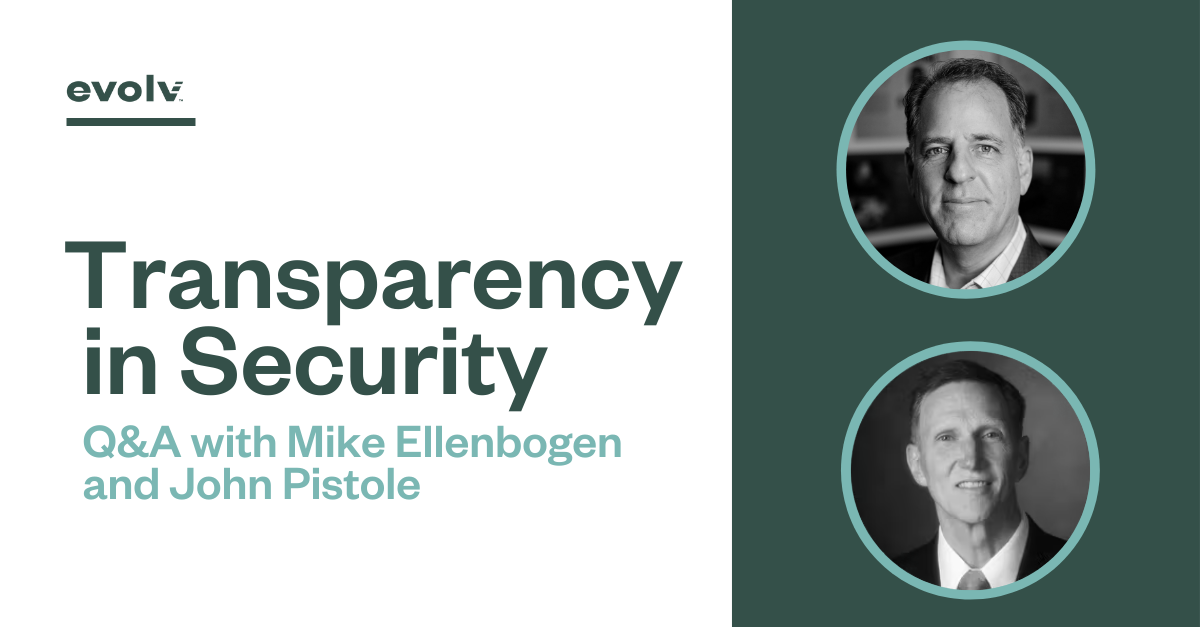
Transparency in Physical Security: Q&A with John Pistole and Mike Ellenbogen

The need to provide transparency without helping potential attackers is a fundamental paradox of the security industry. In their long and distinguished careers, former TSA Administrator John Pistole and Evolv founder Mike Ellenbogen have spent decades thinking about these issues and successfully finding the right balance.  That’s why we consulted with John, Mike, and other advisors to develop the Evolv Transparency Statement. The following Q&A is excerpted from recent conversations with John and Mike to provide additional insight into how we approach transparency. 

How has transparency featured in your career? 

John Pistole 

In 31 years in the government, mainly in the FBI and as the TSA Administrator, I found that transparency is one of those key issues that help define the trust and reputation of agencies, of the U.S. government overall, and of companies that provide security technologies. Each company or agency must be as transparent as possible while maintaining the core mission of keeping the public safe. 

 Mike Ellenbogen 

I grew up in aviation security technology where there is a very well-recognized and understood policy around transparency. In essence, at least regarding public release of technical details, there is no transparency. The specifications are classified by the TSA in the US and the ECAC in the EU. That specific information is called sensitive security information, and it’s very closely-held for what I believe are all the right reasons. 

The systems are tested by security professionals who have a legitimate need to know and hold the appropriate security clearances. These are independent professionals with a great deal of experience and resources to test in ways that most people cannot. These professionals have great credibility in the industry, so certification from a group like TSA is universally recognized as an indicator that the technology is fit for purpose.  

In aviation the people who know all the details don’t share them publicly. In fact, it’s illegal for them to do that, and that is well understood within that community. Outside of the aviation community, there are more questions because the standards aren’t as clearly defined. But it doesn’t change the basic requirement to keep detailed sensitive security information away from anybody who might use the information to exploit or attempt to penetrate a physical security system. That’s the goal at the end of the day. 

What kinds of information about weapons screening systems is most sensitive? 

Mike Ellenbogen 

I think it’s about granular specificity. The specific type and configuration of threats that are tested, the performance against those threats, and the specific weaknesses associated with those tests are the most sensitive. That information should be closely held. For example, it doesn’t make people safer if you publicly share that an attacker can defeat weapons screening by disassembling a particular handgun and placing one piece in their shoe and another piece under their hat. Sharing that kind of information only helps the bad guys. 

I do think that we can talk broadly about different categories of capabilities in a way that doesn’t disclose specific weaknesses that could be exploited by a bad actor. However, giving untrusted people a specific report that identifies known weaknesses just makes it more attractive for the bad guys to attempt to penetrate the facility and makes it easier for them to succeed. 

Are bad actors actively looking for sensitive information? 

John Pistole 

We saw this in the real world on Christmas day 2009, when Al-Qaeda in the Arabian Peninsula sent Umar Farouk Abdulmutallab from Brussels to Detroit with a non-metallic IED hidden in his underwear. They knew in advance that there was no detection for non-metallic bombs in most airport security protocols and regimens in use at the time. We know that they discovered this vulnerability through extensive online research. We also know that they conducted multiple scouting missions to probe and test for vulnerabilities at specific facilities using specific screening methods. It was a sophisticated intelligence gathering operation.  

Mike Ellenbogen 

I think bad actors are always looking for ways to circumvent the security processes in place. We see it in loss prevention all the time: people know that if you have a foil-lined bag, you can walk out with stolen goods without being detected by loss prevention technology. So that information has gotten out and it is being exploited on a regular basis. It’s a constant game of cat and mouse. 

What are the tradeoffs between transparency and security? 

John Pistole 

There’s a dynamic tension between how much information can be disclosed to the public and information that provides a roadmap to the bad guys. When I was at TSA, some original equipment manufacturers were disclosing information about their detection capabilities that, given my FBI background, I did not want to have out there. We had some good discussions with the manufacturers, and they agreed that on future iterations of their products they would not publish as much information publicly. Of course, they also agreed that they would provide that detailed information to us in a closed setting, which is necessary to know that their equipment can detect capably. 

How do government Inspector General Offices provide appropriate transparency without undermining security? 

John Pistole 

It’s usually a conversation between the Office of the Inspector General and the agency. Of course, the attorneys get involved to make sure that they are doing their job. There’s usually the unclassified document and then a classified annex that is not available to the public. But members of Congress and others can view the classified annex to have a better assurance of what the findings were and then what steps the agency is taking to address any issues. This helps provide appropriate accountability and oversight without compromising the safety of the public. 

Who needs access to sensitive security information about the capabilities and limitations of weapons detection technology? 

John Pistole 

The people who need to know are those who have been determined to be trustworthy to have that information. The more people who know, the greater likelihood that something will be shared inappropriately and/or inadvertently. In the US government the people with a need to know are people who have a security clearance at the secret or top-secret level, and then compartment segments after that, depending on how sensitive the information is. In the private sector, there may not be such a formal classification system in place, but it’s still compartmented information. Not everybody in the company needs to know everything about the businesses.  

Mike Ellenbogen 

In the private sector, the people with the most significant need to know are usually the security professionals who are responsible for protecting the organization from threats. They need to understand what the capabilities of the technologies that they’re deploying are, and where the potential limitations might be so that they can mitigate them. These professionals usually think in terms of layered defense, so they need to know what every individual component or layer is capable of. Those individuals need to know what specific technologies can and cannot do. 

It’s also important to realize that bad actors are looking at the people and processes just as much as they are looking at the technology. We talk about security systems as a combination of people, processes, and technology. Security professionals are rightfully concerned about the actions of any individual that creates an opening for a threat. It could be giving up passwords. It could be employees allowing unauthorized people to piggyback through turnstiles or secured doors. Bad actors know that well-intentioned people will hold a door open. They’re taking advantage of known weaknesses that originate with people and processes. 

Some people say that the most secure approach is full public disclosure for everybody. What’s your view? 

John Pistole 

I disagree with that view strongly. People who say that absolute transparency is best simply don’t understand the security business. They apparently don’t have an informed perspective or insight into just how determined the terrorists, spies, competitors, and other bad actors are in their efforts to harm individuals, countries, and companies. I get that “give full disclosure for everybody and let everybody make informed decisions” sounds great, but when you provide that carte blanche to everybody, that necessarily includes people with bad motives who are out to cause you harm. If there was no TSA security in the past 21 years, I can’t imagine we would have been able to avoid having more 9/11-type attacks. It just begs the imagination to think full transparency is the best outcome. 

Conclusion 

As John and Mike noted, providing appropriate transparency without assisting adversaries is an ongoing challenge faced by security vendors and practitioners alike. The Evolv Transparency Statement is our attempt to describe the principles that guide our approach to transparency. We will continue to consult with our customers, partners, advisors, and industry professionals to update our approach over time. As always, our mission to keep people safe will be our primary guide. 

About John Pistole 

John Pistole is the former administrator of the United States Transportation Security Administration (TSA) and a former deputy director of the Federal Bureau of Investigation. He is currently the president of Anderson University. In his role as Administrator of the TSA starting in 2010, Pistole led a 60,000-strong workforce, the security operations of more than 450 airports throughout the United States, the Federal Air Marshal Service, and shared security for highways, railroads, ports, mass transit systems and pipelines. Under his leadership, the TSA worked to transform as a risk-based, intelligence-driven counterterrorism agency dedicated to protecting the nation’s transportation systems. Prior to his leadership with the TSA, Pistole served as a 26-year veteran of the FBI with extensive national security and counterterrorism experience. After the attacks of September 11, 2001, John was placed in charge of the FBI’s counterterrorism program, eventually becoming the FBI’s Executive Assistant Director for national security. In 2004, Pistole was named Deputy Director for the FBI and contributed to the formation of terrorism policies during both the Bush and Obama administrations. John earned his bachelor’s degree from Anderson University in 1978. He went on to earn a juris doctorate from Indiana University Robert H. McKinney School of Law. 

About Mike Ellenbogen 

Mike is Founder and Head of Advanced Technology at Evolv Technology. Mike has spent more than 20 years shaping the explosives detection industry including as co-founder and CEO/President of Reveal Imaging Technologies, Inc., as Vice President of Product and Business Development of PerkinElmer Detection Systems where he was responsible for Research and Development, Engineering and Marketing, and as Director of Marketing of Vivid Technologies, where he was instrumental in the transition following Vivid’s acquisition by PerkinElmer. At both Vivid and PerkinElmer, Mike was responsible for market research, definition and development of new products and product enhancements. He has been issued 16 patents in the field of X-ray inspection and automated detection technology and has been broadly published within the security industry. Mike holds a Physics degree from Colgate University. 

Whitepaper: World’s First AI-enabled Integrated Weapons Detection and Screening System for Healthcare Organizations

Challenges

Healthcare organizations experience workplace violence more than any other industry. Hospital and other healthcare-related settings experience elevated stress levels for patients, their families, and friends, which is exacerbated by issues such as substance abuse, mental health disorders, homelessness, and violent crimes and traumatic incidents tied to sexual abuse, domestic violence, gang activity, gunshots, and stabbings.

“The Percentage of registered nurses who experienced on-the-job violence spiked 55% in six months in 2021”

Failings of Traditional Weapons Detection and Screening Approaches

Putting aside poor adoption rates, these walk-through metal detectors and handheld wands are intrusive and fraught with inefficiencies. They are based on decades-old technologies that require significant time and resources to manage, deliver poor experiences for patients, visitors, and staff, and create security risks.

Healthcare weapons screening solutions must balance the need to protect patients, staff, visitors, and assets against providing a welcoming environment and ensuring rapid delivery of quality medical care.

Fill out the form to download this whitepaper and learn about the Evolv weapons detection solution enables healthcare organizations to accelerate physical security screening while maintaining the highest degree of weapons detection accuracy.

Urban Hospital Turns to Evolv Technology to Address Threats to ER Staff and Patient Safety

Facing an uptick in workplace violence and a hospital staff fearful for their own safety, an urban hospital in a large U.S. city hired a new Director of Public Safety who was given the charter to improve safety for hospital staff, patients, and visitors. At the time, the hospital had basic security systems and processes in place. “We were very short-staffed and had a lot of open positions,” the Director of Public Safety says. The Director also went on to say that they’ve “been waiting years for someone to invent a technology where you can just freely walk through the concealed weapons detector without needing to empty out your pockets and take everything out of your bags as part of the screening process”. The hospital landed on the Evolv Express® for weapons detection, and through implementing us was able to:

  • Detect 7 handguns and 9 knives in less than 40 days
  • Achieve rapid deployment window while training all hospital security staff (30-plus officers) to manage it
  • Enable ER nurses and doctors—and hospital staff in general—to feel relieved and able to focus on patient care versus concern over their safety

Read the case study to learn how you can start your journey to a more secure and guest-friendly security screening solution in healthcare today.

Download NowLearn More

View more of our case studies on our resources page here.

New Standards in Physical Security

Many of the security screening standards in use today were put in place decades ago. They addressed the threats at the time and employed the security screening equipment that was available. The threat landscape has changed, and the breadth of vulnerable venues has expanded, yet the predominant security screening technologies in use today are still the ones developed decades ago. Evolv Technology co-founders Mike Ellenbogen and Anil Chitkara virtually sit down with our guest speaker Chuck Marino, CEO of National Security Export and Consultant Sentinel Security Solutions, LLC to discuss this new landscape, and ultimately what new security technology is needed to address this shift.