Why I Started Evolv: A Q+A with Co-Founder and CEO, Mike Ellenbogen

I recently sat down with Mike Ellenbogen, our CEO and co-founder. We discussed his career path, what’s to come in the security industry in 2019 and Mike’s advice for aspiring entrepreneurs. See what Mike had to say.

Melissa Cohen: Mike, you have a lot of experience launching new companies and building something from the ground up based on a new idea. You did this with both Evolv and your previous company. Can you tell us about an accomplishment that shaped your career?

Mike Ellenbogen: Absolutely. I love building things and always have. I had a eureka moment that triggered the inception of my first company, Reveal Imaging. After new legislative requirements for airport security screening were put in place following September 11, I realized it made sense to employ smaller, less expensive systems and connect them together via a network of PCs. We rethought the way checked baggage was screened in the U.S., considering the total cost of the systems as opposed to just the cost of the technology. Ultimately, Reveal Imaging was acquired by Science Applications International Corporation (SAIC) in August 2010. I’m immensely proud of the work that team did and grateful for the experience – it’s really helped shape who I am today and is what motivated me to keep going and start Evolv.

MC: Based on your extensive experience in the security business, what do you think makes a good CEO in the industry?

ME: There needs to be an inclination to push beyond the conservative approach that is so common in the security industry. There are plenty of businesses out there with the “same old” security technology that’s been around for decades. I like to push the envelop and ensure that my company is offering something that solves a problem while also surprising and delighting. I think it’s important that a security industry CEO sees the world that can be rather than replicating what’s already out there or being happy with the status quo.

MC: What’s the biggest challenge you’ve faced in building either of these businesses and how did you overcome it?

ME: The core technology at both companies was/is really complicated – millimeter wave imaging is a challenging field, so is Artificial Intelligence (AI). Of course, you have to have technology that works in order to have repeatable and reliable customers that you can pursue. Leading an emerging technology company and inventing fundamentally new technology, there’s inherently a lot of pieces you have to glue together. It’s daunting and the success of the company is reliant on a deep understanding of the physics of the real world and how to appropriately push the boundaries of electronics and processing.

With any new technology or applications, there is also a steep learning curve among your teams. An engineer may be familiar with the technology, but not with the application. On that note, another challenge is finding the kind of people that can help move the physical security technology industry forward. We look for people with credibility, who have energy and creativity, and can also help move the needle.

MC: What are some of the biggest trends and themes you’ll be watching for in the security industry in 2019?

ME: We’ll definitely see further integration of AI and facial recognition into more security technologies and applications. Disparate AI capabilities will need to be packaged in a way that is more useful for customers in 2019. We’ll also see an increase in compute power at the edge, for example, more compute power within security cameras rather than via a central/integrated service. And, I know people have been saying this outside of the security industry for years, but we’re going to see expanded use of the cloud and Software as a Service (SaaS) within security technologies. While this has already started, some major shifts in this space are coming.

MC: Let’s do some rapid-fire, fun questions. How would you describe your leadership style?

ME: I like to think I present a vision of what could be to get people behind that vision – you need people to believe in the vision to engage them in getting there. Considering I’m focused on solving problems in a new way, I also recognize that it’s important for me to surround myself with people who are optimistic but real.

MC: What is your top productivity hack?

ME: I live my life multi-threaded, which I think is just another way of saying that I’m always trying to be efficient. I do a lot of different things in parallel. For example, I turn the coffee pot on before I get ready for work so that it’s ready when I leave. I take pride in maximizing my time like this.

MC: What piece of advice would you give your younger self?

ME: I always wanted to run a company and invent something – this desire was within me from a very young age. I would tell myself you need time to see the opportunities in the market, so find an industry you really love, make it your own, and word incredibly hard at it.

MC: What motivates you?

ME: Every day I’m motivated by the vision that the technology we’re working on is important and helping to save lives. As I mentioned before, I also love building new things and, in doing so, helping to bring success to the people around me.

MC: What best practices can you share for future leaders who are looking to start a business?

ME: It’s all about the people. Whatever your path, you’ll be spending a lot of time in the trenches with them, so you better like them. And of course, expect the unexpected!

Three Trends Impacting Entertainment Security

In past blog posts, we’ve discussed the need for weapons screening and how to improve security at performing arts venues. In taking a look at the broader entertainment industry as a whole, the conversation around security looks different.

At large concert venues and sports arenas, we often find that security is already a defined and established practice. These venues typically have a dedicated security team, led by a veteran security chief and supported by a series of technologies and procedures. In contrast, we find that many performing arts venues – primarily those that are not located in big cities – are usually at the beginning of their security journey.

While security and the practice of people screening is not new to the entertainment industry, there have been significant developments in the past five years that have impacted how security directors approach securing these venues. As patron experience, speed and increased detection continue to remain paramount in screening, security directors at these venues are starting to ask themselves what they can be doing better.

With that, let’s explore three ways entertainment security has changed and how these venues are looking beyond traditional security processes and procedures to improve security screening and create a more welcoming visitor experience.

Access to Artists Draws Attention to Stalkers

Weeks after wrapping her worldwide Reputation tour, it was revealed that Taylor Swift’s team was using facial recognition technology to scan for potential stalkers at her shows. Unbeknownst to her concert goers who stopped at kiosks to get a behind-the-scenes glimpse of her rehearsals, the system was secretly recording their faces and immediately sending the data to a “command post” in Nashville that attempted to match hundreds of images to a database of her known stalkers. While Swift has started to receive some backlash over the use of the technology, it represents a growing trend in entertainment security: the need to control stalkers.

To-date, the majority of entertainment venues have taken the same standard approach to security – screening the entire general fan population via a manual bag search and metal detectors. However, as celebrities, athletes and artists provide more access to their fans – think paying $200 extra for a meet-and-greet ahead of the show – security directors are beginning to look beyond traditional screening methods to prevent known assailants from getting close to talent. While Swift’s team is one of the first to come out and acknowledge the use of facial recognition technology to spot and identify stalkers, they are not the first and will certainly not be the last. In the coming years, I expect we will see facial recognition technology leveraged more frequently to identify stalkers. In addition, the use of advanced sensors such as millimeter wave technology will be used to identify any concealed weapons, particularly non-metallic ones, that fans might be attempting to bring in.

Monetizing the Security Experience

Two headlines from earlier this year that really caught my eye when thinking about entertainment security, at sports venues in particular: “Nobody’s Going to Sports in Person Anymore. And No One Seems to Care,” and “College football attendance sees second-largest decline in history.” As ticket prices rise, and as temperatures continue to drop in some regions, a noticeable trend in sports and entertainment is that people simply aren’t going to as many games as they used to. Instead, they are choosing to watch the games from the comfort of their own homes from one of their many devices, often via streaming services.

Because of this shift, heads of these facilities are beginning to explore how they can create more value for the fan experience. Think about what Disney was able to achieve with the introduction of the FASTPASS – pay extra on top of a standard ticket price to spend less time waiting in lines for popular attractions. What if this same concept could be applied to security at concerts and sports games? An improved security experience, whether it be less invasive or a faster process, is one way venues are working to get fans back into seats – and they’re looking at how technology can help them do this.

Protecting Against Insider Threats

Unlike employees who work at airports or office buildings, many of the employees who work at entertainment venues are subcontractors who only work during games or when events are happening. There is a level of employee screening that is happening; however, it varies from venue to venue. For example, if a venue is home to a national sports league team – such as the Boston Bruins – the venue itself needs to meet the NHL standards for security. Employee screening is a component of meeting this standard. Because these venues already have standards in place for games, they tend to follow these standards for all events. However, venues that are not the “home” for a national team do not have a standard set of security practices in place for screening employees that they follow all the time.

The recent shifts in the entertainment landscape means that everyone from C-level executives to security directors at entertainment venues are tackling new security challenges every day. Whether they are hosting the AFC East Championship Game or night two of an artist’s summer tour – fan experience, detection capabilities and the overall speed of security will continue to dictate security processes throughout the entertainment industry. As the industry itself has shifted, we will start to see more of these facilities leveraging new, innovative technologies such biometrics and facial recognition technologies to combat today’s threats.

To learn more about what is ahead for physical security in 2019, check out our recent blog post.

Photo Credit: Jeff Egnaczyk

International Security Expo 2018: The Changing Demographics of the Security Industry

For years, going to the United Kingdom Security Expo in London has felt like going to a get-together with members of a fairly tight-knit club. Everyone was involved in the business of selling, buying and deploying high-powered security screening gear for airports, government buildings and other hardened locations.

This year, the vibe was noticeably different, with many new faces, from different industries, and with different priorities—emphasis on the word “many.” With the awful increase in mass casualty attacks on soft-targets such as schools, corporate offices and houses of worship, registrations for the show rose 38 percent from the previous year. This includes corporate security managers, hoteliers, government regulators and municipal law enforcement officials from around the world.

The show organizers clearly saw this change coming. Besides renaming the show—as of this year, it’s the International Security Expo–they set off a sizeable part of the show floor for the dozens of drone (and counter-drone!) security products on the market. The centerpiece exhibit was the football field-sized “Protecting Urban Spaces Demonstrator,” where visitors could get a sense of the user experience of various futuristic products in a simulated city, right down to a smart man-hole cover that looks out for wanted criminals while it also monitors the water and gas levels around it.

We definitely saw the broadening demographics of the security business at the Evolv booth. We had visits from multiple soccer clubs and other professional sports teams, all looking for ways to lower the odds of an attack in their stadium without taking any fun out of a night at the game. We spoke with police departments, who wanted to boost security at police stations and potentially at crime scenes. Large event planning companies kicked the tires, as well.

As a rule, these people had little interest in speeds and feeds, and most probably couldn’t tell you the meaning of the acronym AVSec (Answer: Aviation Security). They wanted to talk more about use cases, and how to create fluid, non-aggravating screening processes that wouldn’t feel like lining up in an airport security queue. Rather than create impenetrable perimeters to find every last pen-knife, many wanted the ability to quickly stand-up a “pop-up” checkpoint—say, for the night when a dignitary comes to a restaurant or if a municipal alert goes out about a violent criminal on the loose.

I suppose it’s no surprise that many of these newcomers to the show found their way to our booth. Evolv set out in 2013 to create solutions for the growing soft-target threat. More than 200 of our Evolv Edge® systems are already deployed, in everything from corporate headquarters to concert halls. We’re not the only company targeting these applications, but I’d have no problem betting that we have the most experience helping customers in real-world applications.

In terms of the amount of real business that got done at the show, it no doubt took place at the booths and suites of those aviation security companies. With the European Commission mandating a shift from traditional X-ray-based technology to systems based on CT-scanners, there’s a lot of money to be made or lost in that huge market.

But I took the stream of new faces at our booth and the show as a solid leading indicator of expanding demand for a new generation of security screening equipment. It’s an unfortunate statement on the level of violence in our society today that schools, businesses and sports teams need to think about the safety of their visitors. But it’s also a positive sign that these companies and institutions are thinking about responding rather than accepting it as the new normal.

Check out Six Ways to Prevent Soft Targets from Terrorist Attacks to learn more about options to combating today’s security threats.

Physical Security in 2019: What Can We Expect?

With 2018 coming to close, Evolv is intently focused on the year ahead and how we can bring a truly unique product that keeps venues, events and people safe. This year alone we saw more than 300 mass shooting incidents that targeted venues across the United States. 2018 also brought the first publicly available downloads for printing 3-D weapons in the U.S.; in the first four days, more than 1,000 people downloaded plans for 3-D printed AR-15 rifles. Attacks with improvised explosive devices (IEDs) continued around the globe, with deadly threats occurring in Ghazni, Kabul and the Gercüş district of the Batman Province in Turkey. Security teams at commercial venues and transportation hubs continued to deploy technology to keep their facilities and people safe.

As we look to 2019, we see a number of developments in the physical security industry.

Increased use of multi-layered security plans

Organizations are using more layers of security as part of their overall security plan. This includes overt measures such as visible guards, police details, closed circuit tv (CCTV), turnstiles, bollards and personnel screening equipment, and less obvious measures such as increased use of intelligence, coordination with local, state and federal law enforcement, and social media analysis to identify local threats. The TSA has long used this multi-layer approach, which has influenced other organizations to follow suit. These plans will create layers of security that address and protect along four different capabilities: people, technology, intelligence, and process/protocols.

Technology as a force multiplier for guards

Security guards are the backbone of most physical security plans; however, it can get expensive as the guard force grows. Turnover among security guards is high and many new guards have a basic level of training and limited experience. Technology can be used to augment the guard force and provide them with tools that can increase their effectiveness. Instead of providing guards with more sophisticated training on how to operate equipment, there is a move to make equipment more ‘red light / green light’ to let guards know when they need to look more closely. Today, solutions also provide them with more specific, directive guidance to help them resolve an issue or alert that comes in. This augments guard capability and allows them to be more effective in what they do and more focused on areas of potential concern.

Value of deterrence more widely recognized

There are many examples where visible security served as a deterrence, shifting an attack to a different location. The Pulse Nightclub was Omar Mateen’s third stop that night, after there was a visible security presence at the previous two locations.  Countless security directors attest to the cache of knives found outside designated security checkpoints, and of people diverting before entering a screening point to lock their firearm elsewhere. Visible security and screening are effective both in the weapons they detect and in those that never coming through in the first place.

Increased reliance on third-party validation

With the infusion of innovation comes a surge of new devices, solutions, and systems. As more technologies and solutions are released onto the market, security teams will increasingly rely on third party validation as proof to identify which solutions are operationally sound. These third-party validations can come from industry peers or official designations such as the U.S. Department of Homeland SAFETY Act Designation and third-party testing organizations such as Safe Skies.

AI and biometrics go mainstream

Artificial intelligence (AI) seems to be all the rage. It shows up on product material, at trade shows and in your vendor’s sales pitches. We see the effective use of AI in specific products or solutions for specific industry applications. For example, using AI to review and learn from scores of medical radiology images to identify potentially cancerous anomalies that may be less visible to the human eye.  In 2019, vendors will find more practical applications for AI and deep learning models that add value.

Biometrics applications will also move into the mainstream and will expand beyond traditional applications. Not only will the application of biometrics expand beyond airports or highly secure facilities, it will also start to be used for non-security applications, such as customer service.  For example, the use of facial recognition technology to verify VIP guests at a sports stadium, ultimately improving the overall security screening experience for guests.

Interoperability to improve security effectiveness

As additional security layers are deployed, organizations are seeking to make them operate together as an integrated security infrastructure. This will allow the security team to quickly have a more complete picture of a security issue to execute its response. Additionally, it will allow more effective use of all equipment. For example, connecting security screening equipment with CCTV for monitoring and access control equipment will allow the team to see if a person of interest enters the facility, where they are, and if they are acting in a suspicious manner.

Increased blend of the cyber and physical security domains

The cyber and physical security domains are coming closer and closer together. In many organizations the responsibility to understand and mitigate these risks come under different groups. The Chief Information Security Officer (CISO) and Chief Security Officer (CSO) are now called on to work more closely together to keep the entire organization safe from a range of ever-changing threats.

Benefits of security technology expands beyond cost and risk mitigation

When it comes to physical security, one thing has become clear: there is a balance between a fully locked down, highly secure environment and an open and inviting space. Security directors and management teams are broadening how they look at the benefits of new security technologies and procedures by considering the impact on their physical space, visitor experience and overall mission. Traditionally, cost and risk mitigation have served as the primary factors when deciding which solutions to invest in, and while these are still paramount, we will start to see other factors driving decisions as organizations continue to deploy tailored approaches in 2019.

2018 was an important year for the physical security industry that demonstrated the significant role technology plays in addressing the evolving threat landscape. As we transition our thoughts to the year ahead, we will take the lessons we’ve learned and apply them as we continue to work towards creating solutions that keep people safe.

Read more from our Advisor, Mark Sullivan, former U.S. secret service director, on security screening in the 21st century.

Evolv Edge Wins R&D 100 Award

As we near the end of 2018, here at Evolv we’ve been reflecting on recent accomplishments and challenges – and resolving to find more ways to keep people safe in 2019. Momentum around Evolv Edge® continues to grow, and the positive feedback from the industry and our peers is propelling our team forward into the New Year.

Most recently, Evolv Edge was named a winner in the R&D 100 awards. This prestigious award recognizes the top 100 revolutionary technologies of the past year across five categories and we are honored to be named a winner in the Safety & Security category.

Since 1963, the R&D 100 Awards have been considered the most globally prestigious recognition of invention and innovation. Past winners include sophisticated testing equipment, innovative new materials, disruptive chemistry breakthroughs, and new consumer products and technologies spanning industry, academia and government.

After spending three years developing the Evolv Edge and testing it in the field with users and government testing labs, it is rewarding to see the system receiving various awards and industry designations. In addition to the R&D 100 award, Evolv Edge was recently recognized as a Gold Winner in the metal/weapons detection category of the 2018 ‘ASTORS’ Homeland Security Awards from American Security Today. Evolv Edge also achieved the U.S. Department of Homeland Security (DHS) SAFETY Act Designation and completed operational testing and evaluation by Safe Skies.

We are committed to designing a system that takes the hassle out of people screening. Whether our system is scanning guests and employees at a sports stadium, a performing art venues or an international airport, it consistently scans everyone for bombs, weapons and persons of interest without the need to stop and empty their pockets. The end result is a superior security and visitor experience that is designed to fit into an organization’s personalized security plan.

Our systems have screened millions of people globally and that number is growing every day. As we set our sights on 2019, we look forward to new opportunities that will enable us to continue putting safety first at a time when the threat landscape is ever changing.

The SAFETY Act Designation – Why It Matters to You

Today, we’re extremely proud to share that we have been awarded a SAFETY Act Designation as a Qualified Anti-Terrorism Technology (QATT) from the Department of Homeland Security for our Evolv Edge® system. The SAFETY Act (Support Anti-Terrorism by Fostering Effective Technologies Act), enacted in 2002, was designed to encourage the development and utilization of anti-terrorism technologies in the U.S. Without the protections the SAFETY Act provides, companies like Evolv, both large and small, would not be shielded from potential liability claims, and might therefore be unwilling to assume the risk of developing and deploying new, cutting edge anti-terrorism technologies. The SAFETY Act encourages continued innovation in the fight against terrorism, and those products recognized under this program have been put through a rigorous evaluation process.

Those who are considering and evaluating physical security systems can be assured that products that have achieved this Designation have been thoroughly vetted and validated to perform as designed to prevent terrorist acts. And for those who are already customers, a SAFETY Act Designation is just further proof that you made the right decision.

But assurance of product performance is only one benefit. The SAFETY Act not only shields sellers from civil liability if there is an act of terrorism but also shields the buyers who are using SAFETY Act Designated products.

That’s right – the SAFETY Act states, “The SAFETY Act created liability limitations for claims resulting from an act of terrorism where Qualified Anti-Terrorism Technologies (QATTs) have been deployed. The Act applies to a broad range of technologies, including products, services, and software, or combinations thereof. Parties covered under the SAFETY Act are referred to as “Sellers” and can include any person, firm, or other entity that provides a QATT to customer(s) and to whom a Designation has been issued. The Act applies to claims against the Seller of a QATT that are filed in United States courts. Similar claims may not be brought against the buyers, buyers’ contractors, or downstream users of the QATT.”

The SAFETY Act doesn’t only apply to technology. You can also apply to get a SAFETY Act Designation for your facility and organization. Countless shopping mall properties, corporations, stadiums, and sporting leagues have applied for and achieved the Designation. Deploying detection and prevention systems, like the Evolv Edge, is one component that will help you on your path to achieve the SAFETY Act Designation when combined with a comprehensive plan.

I know first-hand just how important this distinction is as this is the second time I’ve received the SAFETY Act Designation. The first was for the Reveal CT-80, a product I created when I started Reveal Imaging Technologies. It was the first explosive detection system (EDS) to be certified as an approved product for Homeland Security under the SAFETY Act.

1: So just how rigorous is it to obtain a SAFETY Act Designation? Here’s some of the criteria:

2: Prior United States Government use or demonstrated substantial utility and effectiveness

3: Availability of the technology for immediate deployment in public and private settings

4: Magnitude of risk exposure to the public if the technology is not deployed

5: Evaluation of scientific studies that can be feasibly conducted to assess the capability of the technology to substantially reduce risks of harm

6: Effectiveness of the technology in facilitating the defense against acts of terrorism

The SAFETY Act benefits everyone – it allows companies to create products that protect the public. It allows businesses to deploy the products that protect the public. And, most importantly, it allows the public to be safer when using facilities that have SAFETY Act Designated products in place.

For more information on Evolv’s SAFETY Act Designation, please read the press release.

Another Troubling Twist in Terrorism

The security of our country, our workplaces, and our people has taken a significant turn for the worse over the past 48 hours. The unpredictable course of terrorism has changed yet again, with an expansion of the target set, modification of the means, and synchronization of multiple acts. These most recent course changes should cause us alarm.

Soft Targets Expanded from Locations to People

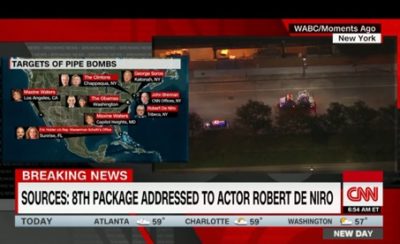
The 2012 Aurora, Colorado movie theater attack, the 2015 San Bernardino, California office building attack, and the 2016 Seaside Park, New Jersey bomb signaled a shift in targets from airplanes and iconic settings to seemingly innocuous locations in small towns and cities throughout the U.S. Earlier this week, pipe bombs were sent to a businessman, top current and former government officials, and an actor. Another pipe bomb was found yesterday at the CNN offices at the Time Warner Center in New York City.

Targets have expanded to include anybody, at anyplace, in anytown, USA.  Who’s next? Where will the target be? Will it be another pipe bomb, or something else designed to thwart our current capabilities?

Explosive Weapons Have Changed Yet Again

TV Screenshot

The “traditional” explosives once used have given way to homemade improvised explosive devices. This week is not the first-time homemade explosives were used.  The 2013 Boston Marathon pressure cooker bomb and the 2017 New York City explosive belt were constructed in an individual’s home. The pipe bombs sent this week were reportedly made of plastic PVC pipe and contained glass shrapnel.  These materials are of additional concern as they can be more difficult to detect with much of the security technology that exists today.

Pipe Mail BombPipe Bomb X Ray

The weapons being used by terrorists continue to expand, with new configurations of explosive devices, firearms such as 3D printed guns, and knives concealed in ever more ingenious ways. Detecting these threats as they are concealed on individuals has become increasingly difficult, as most security technologies have not evolved at the same pace as the targets they are designed to detect.

Large Number of Simultaneous Targets

The third troubling concern is that eight reported attacks have been launched over the past 48 hours.  The expansion of the target set obviously expands the potential impact of these devices, creates an enormous burden on our law enforcement and counter terrorism professionals, and elevates concern among the general public.

FBINew York Police

While these developments in terrorism are concerning, American counter terrorism, law enforcement, and security professionals are world class.  They continue to work diligently to identify suspicious packages, safely secure people, and remove these devices. They are also actively utilizing all available resources to identify the individual(s) responsible for these heinous acts. They will continue to work to keep us safe. They will continue to fulfill their mission with the utmost skill, professionalism, and effectiveness.

By providing these professionals with technology that helps them stay abreast of the latest terrorist evolutions, including technology that can detect the nonmetallic elements found in this week’s pipe bombs, companies like Evolv Technology can help level the playing field by keeping people safe. While new technology is being rolled out in many venues, more needs to be done. Our adversary will never stop innovating. Neither will we.

Evaluating the Need for Weapons Screening at Performing Arts Venues

Determining the need for a weapons policy and a threat detection solution at performing arts centers involves more than the security director to make purchasing and implementation decisions. From budget, policy and patron experience, the leadership team must work together to organize, evaluate, plan and implement and communicate such an important initiative.

This is entirely understandable. It’s one thing to work with a director of security and their technical staff, who are measured on their ability to keep employees, customers and other visitors safe. But involving the front-of-the-house team and human resources, who are responsible for creating the best customer and employee experience possible, is an even higher bar. A bad experience–say, delays or pat-down searches–can have a direct downward impact on sales. So if the front-of-the-house thinks a weapons screening technology is a bad idea, it probably won’t be seriously considered.

At least that’s how it has been. I’ve been focused on providing security solutions for over 15 years, but am now seeing the first meaningful shift in the relationship between security and the patron experience teams. Given the rise of senseless lone-shooter attacks in the U.S., many venues are coming to believe – or are at least are willing to entertain the possibility – that patrons will tolerate reasonable inconveniences for added security as long as it doesn’t degrade the overall experience too much. In fact, some of our customers believe their patrons want to make that trade-off. They want to know the people in charge of the facility they’re visiting understand the nagging “could it happen here” feeling they have on a night out.

This is especially true with performing arts venues, given the horrific attacks like those that took place in Manchester, England and Las Vegas, Nevada. In fact, executives at some of these venues are increasingly stretching their purview beyond the front door and into the street where people wait in line for popular events. Due to the increase in terror attacks using rented trucks and other vehicles, such as in Nice, France and Barcelona, Spain, venues are looking for ways to get people off the street as quickly as possible and into the safety of their facility.

The fact that patrons must already stop to hand over or scan a ticket creates a natural opportunity to do screening in a way that won’t cause delays. We did a time study at a Broadway theater earlier this year and found that the ticket-taking process typically takes around five to 10 seconds per person in a live environment. If we can help the venue screen the patron in that time or less, everybody wins.

Unlike many pro sports stadiums, which have had checkpoints and metal detectors for decades, many of these smaller, arts-related venues are adding physical security for the first time. Many don’t even have security chiefs. And yet performing arts is one of our fastest-growing segments.  If you work for a performing arts venue or any other type of company that is looking to create a security strategy as quickly and efficiently as possible, here are a few best practices:

Get out of the security silo, fast: In the old days, the trick to implementing physical security was to work with the head of security and let him or her try to overcome the natural resistance from other factors in their environment. But we’ve found it works best when representatives from the front-of-the-house, finance, facilities and human resources, were involved in the sales process, ideally from the initial conversation.  The security director provided a clear understanding to all the leadership team the consequences of an active shooter and suicide bomber in the facility and the solutions available to deter or prevent such a terrible event.

As security becomes a higher priority for a company, it makes sense to expand the number of seats at the table when considering new security solutions.  The most celebrated accomplishments in implementing security screening at Performing Arts Centers I have witnessed involved the inclusion of the entire leadership team from the beginning.   The CEO needs to bring their teams together and keep engaged throughout the process, clearly identifying their end-state goals and understanding of the tradeoffs.    In one very successful scenario we witnessed, the chief executive officer directly led the process which involved security, human resources, front-of-house, facilities and finance to drive towards the optimal solution.

The Show Must Go On: Three Ways Performing Arts Venues Can Improve Security Processes

Why did this happen? Why now?

Twenty years ago, we asked ourselves these questions after hearing news of senseless terrorist attacks at iconic locations in major world cities.

Today, we’re still asking questions, but now we’re concerned about where the next attack might happen. Shootings and bombings are no longer limited to iconic venues in iconic cities. They can happen anywhere – at an indoor concert in Manchester, England, an outdoor show in Las Vegas, Nevada, a nightclub in Orlando, Florida. Terrorism has proliferated into many different towns and cities, perpetuated by individuals inspired in their basements and armed with weapons from stores in their neighborhood.

The security professionals responsible for protecting different types of venues including entertainment and performing arts centers also ask these questions. While most use methods such as deployed guards and closed-circuit TV (CCTV) cameras as the cornerstones of their security strategy, there are limitations to these methods. In the U.S., for example, security guards earn an average annual wage of just over 0,000 and the annual turnover at guard companies is between 100% to 300%. On average, a security guard will remain in the same job for only three to 12 months! Technology can help mitigate these inconsistencies and is critical to enabling the more effective protection of these venues.

People going to see a movie, show, or concert are out to have an enjoyable experience. They have countless ways to spend their time and money, and organizations work hard to provide the best “entertainment” for their paying guests. They do not want to encumber their guests with long lines, slow security or burdensome processes. With improved technology, today it is possible for entertainment venues to offer a simple, unobtrusive experience to visitors entering while providing an enhanced level of security.

Performing arts venues pose a unique set of security challenges. Theaters, for example, tend to be high profile venues that play a prominent role in their cities. Live theater performances start promptly at a designated time, often with guests arriving from dinner or work just before showtime. Performers and patrons don’t want to be distracted by people filing in after the show commences, so doors are closed when the curtain goes up. As a result, security teams are under tremendous pressure to get people screened and seated quickly. Just before showtime is when the security process gets most chaotic.

Many performing arts venues are open and inviting by design. They were designed to encourage the public to come in and enjoy the art and architecture. This open environment runs directly counter to a secure building perimeter with checkpoints.

The “who” and the “what” are also unique elements for these organizations. The genre or artist can often dictate the type of crowd one might expect to see in attendance. The audience attending a chamber music recital is likely very different from the audience attending a rock concert. As entertainment venues broaden the types of performances they offer, security should be able to ”ramp up” or “ramp down” accordingly.

Lastly, guards are people and human behavior is inconsistent. Capability from guard to guard is different, and a specific guard’s security vigilance often wanes over the course of an evening. Very likely, the one hundredth person he or she screens is subject to a different level of scrutiny than the first. Experience, training, fatigue, and human error play a role in how thorough and effective a search is conducted.

  • Use security technology to improve upon the existing processes with more consistent and automated detection capability. Take the security approach to the next level by providing your guards with technology to augment their practices.
  • Offer the ability to consistently screen and to change the level of screening depending on when or where the event is or who the performer is.
  • Rather than using clunky metal detectors, use a blend of state-of-the-art technologies – high throughput technologies with sensors and artificial intelligence.

The threat landscape has shifted significantly in recent years. We could all use a night out to forget about the daily headlines. Performing arts organizations can help us enjoy our visits by adopting modern security methods that protect while keeping the user experience intact.    

To learn more about how to balance security and visitor experience, click here.

Five Factors to Improve Today’s Physical Security Screening Experience

Security screening technology is often measured by three factors – detection, alarm rates and throughput. At the macro level, these three metrics give a broad sense of whether or not a device will improve an overall security process. However, these three pieces don’t tell the whole story. Two other factors, closely tied to throughput, flesh out the overall security trade space. They are “touch rate” and “divestiture.”

  • The traditional factors – detection, alarm rates and throughput.
  • The five “must consider” factors – detection, alarm rates and throughput, along with touch rate and divestiture.

Only when the entire set of factors is considered as a whole, can the effectiveness and efficiency of the device be evaluated. In today’s world where physical security screening has become the “norm” in more and more of the places we gather, the latter two factors become increasingly important — to find a purpose-built device and the right process.

The age-old adage “there are two sides to every coin” speaks volumes. While “throughput” is important to security operators, it’s the combination of throughput, touch rate, and divestiture that matters to your customer.

With this is mind, when the U.S. Department of Homeland Security’s Transportation Security Administration (TSA) created the TSA Precheck Program, the focus was specifically on two things beyond detection: 1) touching people less and 2) letting them leave everyday items on or in their pockets and in bags. While “throughput” wasn’t the central tenant of the program, it was believed that doing the first two things for a growing population of travelers would ultimately speed up throughput for all travelers.

When the program was created its authors wondered whether these two things would be material enough to make a difference in the physical screening experience. More than half a decade later, there is a clear differentiation between the highly customer-focused TSA Precheck practice and “regular” screening, underscoring the point that customers place high value on an improved experience.

Customer experience matters.

Not all customer environments will be the same; each will have slightly different objectives. Some will be in high threat locations; others will not. Regardless of the customer or their venue, the following things will always ring true. First, your physical screening system must detect threats at a high level and with limited alarms. Second, your physical screening system must do this in a way that keeps people moving, minimizes physical touching and allows them to walk at their pace without losing control of their belongings. Finally, in a world of limited or shrinking budgets, your system must be able to deliver efficiencies – either in terms of hard budget savings or repurposed security resources.

If you’re reading this blog, it’s possible that you’re implementing a comprehensive security screening solution for the first time. Or, perhaps, you’ve already implemented something in response to growing threats over the past decade. In either case, I encourage you not to start at square one. Why not learn from the organization that has been the face of post 9-11 security for almost two decades? Certainly, the TSA has made mistakes. And, thankfully, they have also made significant advances. You can learn from both, and you don’t have to spend a decade to do it.

Consider the five factors discussed above and evaluate your overall security process through a customer lens. Is the technology in your current process, or the one you are considering, purpose built to meet today’s security concerns while also preserving the culture, look, and feel of your venue? If it isn’t, you have options. There will always be two sides to this coin, but there are ways to ensure that both shine for decades to come. Contact us to find out how.

Note: To underscore the importance of the customer experience, I highlighted the tangible changes to TSA Precheck screening. It’s important to acknowledge the foundation of the program is built on the concepts of trust and access, and the public’s willingness to share personal information for the benefit of this streamlined screening experience.