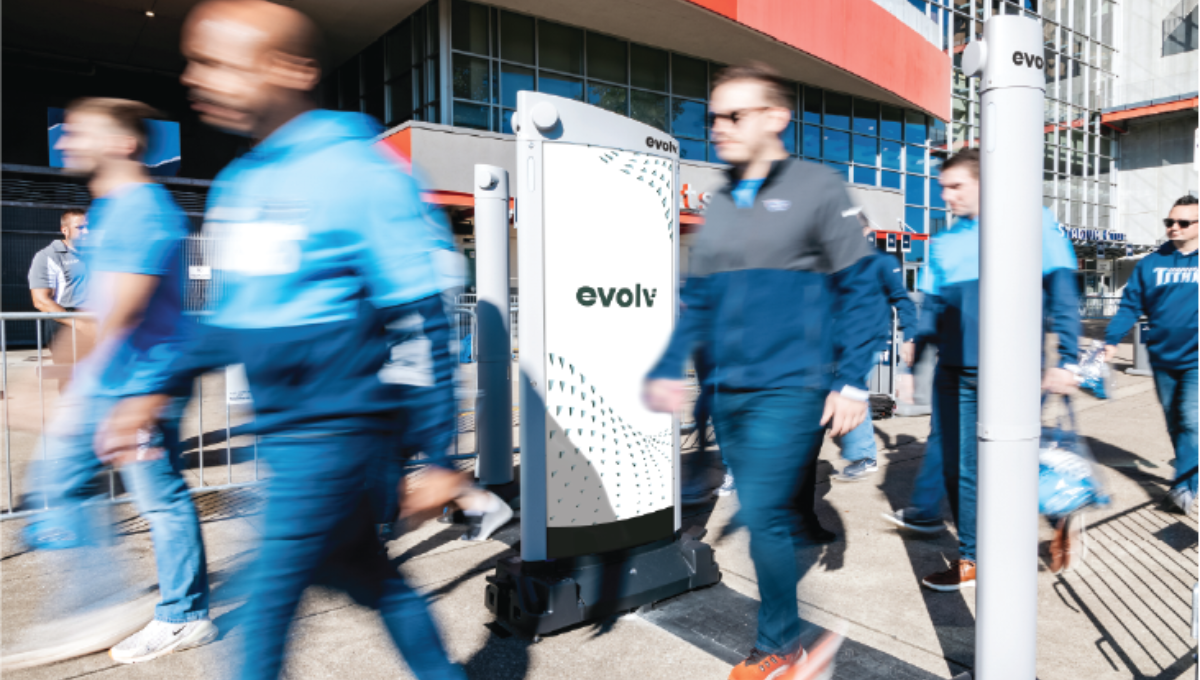
Shining a Spotlight on Better Event Security

Mass shootings like the one that occurred this past weekend at The Jacksonville Landing entertainment complex and last year at the Route 91 Harvest Music Festival in Las Vegas shake us to our core. They make us feel vulnerable in moments when we should instead feel excited. Large performance spaces have been cultural cornerstones for thousands of years because they uniquely bring together people regardless of race, creed or gender over a shared love for the arts. Attacks like these exploit one of the most powerful uniting forces in our society.

The challenge for security professionals is that these venues take a number of different forms. For example, in the Boston area you could see Moulin Rouge at the Emerson Colonial theatre, the Eagles at TD Garden arena and Cirque du Soleil’s LUZIA under a big top at the grounds of Suffolk Downs – all within the same month. As adversaries shift their focus to public places and become increasingly innovative in their strategies, we need a new approach to venue security.

A New Focus for Attackers

Since adversaries have moved on from hard targets such as airplanes, government facilities and military bases, there has been a significant shift to soft targets such as performing arts centers, sporting venues and arenas. While this is widely known – our CEO tells the story often of the anxious conversations he recently witnessed fellow parents having as he picked up his son’s friends to take them to an Imagine Dragons concert at a stadium – not enough is being done to address this new focus of keeping loved ones safe.

Further, the attack method and the perpetrator have changed. The rise of crowd-sourced terrorism has led to readily accessible means for an attack. Firearms, vehicles and home-made explosives are within reach as adversaries shift their focus from high-profile locations to anywhere people gather.

Raising the Current on New Security Technology

While attackers have focused in on specific venues, security screening technology has been largely unchanged. Today when you go to a see a show at a theatre, you’ll likely wait in line for sometimes 30-45 minutes before approaching a metal detector for which you have to empty your pockets or divest personal items before walking through. Many stadium and arena operators no longer even allow visitors to bring backpacks or other bags into their venues to improve the efficiency of screening.

Advancements in technology are changing this status quo, providing higher throughput and improved threat detection with less disruption. Some combine personnel and bag screening to help minimize removal of personal items and speed up the process. These technologies are using the latest sensors, software and user experience design principles to provide an improved level of security with a better visitor experience.

While technology is an important component to an effective security plan for a performing arts center, it’s just one piece of the puzzle. When building a security plan, facility managers should work to understand their threat vectors, vulnerabilities, and mitigation plans. They should incorporate the following components into a comprehensive security plan.

  • Intelligence: Understand and identify the threats to the area, building, and people in it. Work with various federal, state, and local enforcement agencies and leverage the facility team’s network of contacts. Threats are constantly changing; therefore, intelligence must be ongoing.
  • People and Training: Guards and officers serve as the frontline, they know the facility and the people in it. They should be trained on an ongoing basis in security protocols as well as identifying suspicious behavior.
  • Processes and Protocols: Facility managers can no longer use a “one-size-fits-all” approach to security. They need tailored systems and well thought out processes and protocols – like risk-based security – to ensure security layers are properly deployed throughout a venue.
  • Technology: As mentioned above, new technologies can provide threat prevention beyond the capabilities of guards to significantly improve screening operations. CCTV and access control expand the reach of the team on the ground. Further, facial recognition technology can be employed to recognize and authorize employees in an employee screening application or to adjust screening for VIPs.
  • Visitor Experience: With new technology and processes, it’s important that customer experience is not a secondary consideration – especially at a performing arts center. A security experience can maintain a level of calm and unobtrusiveness.

By employing a holistic approach, security guards and facility managers at performing arts centers can be armed with the information they need to quickly and confidently assure a safe environment for their visitors. With the right technology, they can effectively screen and adjust layers of security in response to changing threat levels without impacting visitors and their normal pace of life. In fact, when selecting new technologies, facility managers should look for solutions that provide a balance between improved security and a better visitor experience.

While related issues like the gun control debate may divide us, cultural experiences like seeing a show or going to a concert unite us. We can all agree that we deserve to feel safe in all the places we gather. At Evolv, we will continue to innovate to bring intelligence and security at the perimeter of soft targets to keep people safe – at performing arts centers and beyond.

Read more here about safeguarding against soft target attacks.

Bulletproof backpacks, #2 pencils and iPads – Preparing for Back-to-School Season in the Era of Active Shooters

The impending Labor Day celebration not only signifies the end of summer but also the start of the back-to-school season. Whether school buses are already making their daily routes through your neighborhood or you’re still chasing your kids to finish those final pages in their assigned summer reading, there is a dark cloud lingering above the back-to-school season: active shooter prevention and protection.

In past years, those of us who are parents have become accustomed to the run-of-the-mill back-to-school shopping list. However, as we enter the 2018-2019 school year, we are facing purchase decisions we never thought we would have to make. The list we’re armed with doesn’t feel quite as light in our hands.

Bulletproof backpacks, clear backpacks and TuffyPacks. These are now the items that fill back-to-school shopping carts.

The active shooter incidents that targeted schools last year created a ripple effect that was felt around the country. With reports of Parkland still ringing in our ears, school boards, superintendents and principals spent the summer brainstorming and hypothesizing about potential solutions. While parents have been tracking down bulletproof school supplies, teachers have been immersed in active shooter training programs while school districts are spending millions installing bulletproof windows.

Undeniably, this is an issue that needs to be solved particularly as soft targets and large places where individuals gather continue to be targets for attackers. Today, attackers are looking to inflict as much pain and damage as possible with one attack. What’s more, in the U.S. in particular, the access to guns has made it easy for anyone with a grievance to act on it in a way that can affect hundreds of lives.

As school districts, local officials, parents and students rally together to put forth a solution, it’s difficult to get a grasp on where to start or what even qualifies as a good solution. Some schools are already equipped with metal detectors – should others follow suit? Are metal detectors practical for a school environment? What about AI, facial recognition and other innovative technologies? When is it an invasion of privacy?

As the need for solutions to combat active shooters in schools continues to grow, the security industry is responding two-fold on both the consulting side and the technology side. Organizations of all sizes have been motivated to deliver technology that will help make school a safer place. As a result, the number of solutions and innovations available to us seem endless.

Technology can help us do incredible things. It can analyze thousands of data points in seconds. It can help you see things from miles away. It can identify an object as something specific based on pre-programmed characteristics. Leveraging technology – whether it be cameras or sensors – and applying it to physical security, particularly as it relates to schools, can significantly improve the safety of the environment without creating a prison-like atmosphere.

One technology that cannot be ignored when discussing this topic is face recognition. Today many schools require students to carry photo ID badges which allow them to get onto campus and also enter various buildings on school property. The face recognition most schools rely on today is based on staff using their eyes to detect someone or something that’s “just not right”.  This is inconsistent, inherently fallible, and biased.  Automated face recognition technology doesn’t blink – it’s always on, it’s consistent and objective, rather than relying on human memory and attention. Face recognition can be instrumental in helping to enhance a school’s security posture by automatically identifying individuals who shouldn’t be on the premises, or others that pose a potential threat based on input from local law enforcement, teachers or school administration.

Technology however, is just one piece of the puzzle. It’s more than just leveraging the technology available today to solve this problem – it’s about fostering a conversation. While it is promising to see school districts around the country spring into action ahead of the coming school year, there is a need for much closer, tighter coordination between all involved parties.

Only when we take an integrated, holistic approach – that marries technology and the broader discussion – will we find ourselves with a proactive plan to combat this problem. At Evolv, we look forward to continuing to cultivate those partnerships and foster those much-needed conversations as we work to identify a solution to this ever-pressing problem.

Corporate Offices Deserve More Than the Same Old Thing in Security

In April, Nasim Najafi Aghdam walked onto YouTube Inc.’s Silicon Valley headquarters and shot three employees before killing herself, because she was angry about company policies she felt limited views of her videos. A few days later, Jimmy Lam walked into a United Parcel Service office in San Francisco and killed three and wounded two more before killing himself. In June, Jarrod Ramos killed five staffers of the Capital Gazette newspaper in Annapolis over a long-running dispute with the newspaper.

These are just three tragic signs of the growing scourge of mass shootings in corporate offices. While horrific school shootings have understandably dominated the news in recent years, workplace attacks have been more common. According to the FBI, 43 percent of mass shootings in the U.S. between 2000 and 2016 (the most recent data available) occurred in workplaces and other commercial buildings, compared to 22 percent in schools and on campuses.

Given the wide availability of guns and little chance of meaningful gun control, it’s safe to assume the frequency of such tragedies will continue to increase. Yet the tools available to companies that want to take proactive action remain unchanged: invest in metal detectors, and in the security staffers to operate them. While better than nothing, this combination of investments will never deliver the effective, affordable and operationally viable security systems companies deserve. Having been in the weapons detection business for over twenty years, here’s why I say this:

Metal Detectors:  Before I tear it down, I want to give this 90-year-old technology its due. If you want to find a small Saturday night special or box cutter, even a middle-of-the-road metal detector will find it. And metal detectors definitely deliver an effective deterrent. If one would-be killer decides to scrap his plan after seeing the metal detector at the front door of your company, the investment was worth it.

Screening with metal detectors is slow and cumbersome, they don’t provide security designed for the pace of life.

That said, metal detectors on the market today were not designed for the modern corporation. Most remain optimized for detecting small bits of metal, even if it causes long delays as workers queue up to empty their purses, pockets, backpacks and briefcases to be screened. With increasingly mobile, fluid workforces that include a high percentage of contractors and part-time workers, companies cannot afford the level of acuity that is required at an airport or other “hardened” facilities.

We took a very different approach. Along with optimizing for detection, we optimized for throughput and operational efficiency – in other words, a better visitor experience. Systems need to focus on actual threats, not every coin or key—and do so without requiring people to empty their pockets and purses, take off their shoes or remove laptops from their briefcases.

For today’s offices, embracing a risk-based security approach that recognizes the difference between low risk items like pen knives and actual threats, along with deploying high throughput screening systems is necessary to create lasting and effective security.

Screening with metal detectors is labor intensive and the units themselves are uninviting.

Staffing Up: Having more people working at checkpoints doesn’t necessarily make your environment safer, but it will make your company somewhat poorer. Capital cost—the price tag for the metal detection systems—is not the problem. According to the Department of Justice, a middle-of-the-line metal detector will cost around ,500. The problem is that it typically takes at least three people to man each system — one to make sure individuals divested of anything metallic that might create a false alarm, another person to check the bags, and a third person to do secondary searches in the case of an alarm – legitimate or otherwise.

Venues, airports and office buildings need to consider technology that does the heavy lifting with fewer guards required. One that can differentiate between everyday objects and possible threats, where there’s no divestment required. A screening system that is powered by software results in more than an unspecified alarm. Instead, the location of the suspicious object is highlighted to facilitate faster, less guard intensive, and less intrusive alarm resolution.

Screening with metal detectors does not ready you for tomorrow’s threat.

And finally, there’s the question of future-proofing. I believe that any piece of equipment that operates as a stand-alone piece of hardware will have limited utility in the future. As of now, this describes nearly every metal detector on the market. Effective inspection systems today and in the future will need to be software-based, networked and have enough on-board computing power to watch out for a wider array of threats.

Read more here about six ways to prevent soft target attacks.

AI’s Role in the New-World Security Paradigm

It’s no secret that artificial intelligence (AI) is exerting its influence on society in profound ways. AI can be found pretty much everywhere – in applications ranging from self-driving cars to online assistants to game-playing computers to the prediction of judicial decisions. It’s solving problems, moving markets and changing lives.

AI is also weaving its way into the realm of physical security. While its uses are still evolving, AI is positioned to play a key role in the new-world security paradigm, where terrorist attacks and mass shootings have broadened the threat landscape and made it more unpredictable. Security responses are shifting from reactive to proactive, and vendors are integrating AI technologies into some of today’s security solutions. Here are three AI applications that can help organizations take a proactive security approach to prepare for future threats.

Determining what’s “normal”

Before you can declare that a situation is abnormal and worth attention, you need to be able to define “normal.” Using machine learning, an advanced form of AI, computers can be taught how to identify an object once certain characteristics are specified. Once the computer learns what a normal environment is, it can monitor for anomalies and alert security personnel when it identifies something out of the ordinary.

More specifically, computers can be taught what is allowed in a certain area at a certain time. For example, a system can be taught that figures moving around outside a public building are normal during the day but abnormal at night. When an environment changes from normal to abnormal, an alert can be automatically triggered.

Using AI, computers can do more of the work of monitoring environments, giving guards and operations personnel more bandwidth to focus on higher priority tasks, such as quickly responding to an actual threat. Automating monitoring of these environments also reduces human error.

So, now that AI is helping to define what’s “normal,” it can go to work determining what constitutes a “threat.” Machine learning can be taught to identify an object as something specific based on certain characteristics. This is referred to as “object recognition.” It can be used to identify outliers to the norm – which, in a security context, can be defined as threats.

For instance, in the situation above, security personnel want to be alerted at night if a specific type of figure enters the scene. People obviously qualify as potential threats. Perhaps some large animals or vehicles would be worthy of an alert. Small animals? Birds? Windblown trash? These would be picked up by some sensing systems, but they’re not actual threats. If a computer can be taught to recognize certain objects by their size, shape or specific actions, it can flag threats and filter out benign activity.

With the right sensors, when surveying a large crowd of people, guards can determine if a visitor’s bag might contain a threat object and then track that visitor or object. Should that person appear back on the screen without the bag, the computer can search the environment for the item, quickly sending security guards to that specific area and clearing the crowd.

In a security checkpoint scenario, this application drastically reduces the need for hand wanding or physical full-body pat downs as the technology itself can alert guards if someone is carrying an item of interest. Guards can then focus on a subset of people as opposed to screening thousands of visitors or travelers with the same level of rigor – which would improves the visitor experience for all involved.

Tracking a figure based on characteristics is advanced; re-identifying the figure without using facial recognition takes security to a whole new level. This technique, referred to as “object re-identification,” is used to track an individual through multiple fields of view from different cameras. With law enforcement teams often working from blurred and obscured images when identifying a suspect, this emerging capability is extremely promising despite its current limitations.

Being able to track someone or something by its shape, clothing or gait could best be described as a game-changer for security operators. Using AI, law enforcement could, in theory, track a known threat and detain a suspect before he commits an attack. However, performance improvements in faceless detection are still needed as false match rates continue to run high.

AI + IQ

While AI’s adoption is helping organizations and security professionals proactively prepare for future attacks, it can’t do this alone. It has the power to analyze data quickly and identify patterns, but it can’t necessarily determine if these patterns are relevant. AI needs help from the kind of real, grounded intelligence that only humans can provide. Using the combined power of AI and human intelligence, security teams can truly arm themselves to fend off emerging threats.

Read more here about how AI will impact the airport.

The Dangerous Dawn of the DIY Gun Industry

In the first episode of his new show “Who Is America,” comedian Sacha Baron Cohen did a surreal bit in which he persuaded three U.S. Congressmen and former Senator Trent Lott to support his character’s desire to train children as young as four years old to carry guns to help stop school shootings. “Kinder Guardians,” he called them.

Well, how’s this for surreal? On July 10, five days before the episode aired, it became legal for anyone in most parts of this country — convicted murderers, known terror suspects and, yes, even children — to easily and legally make a gun in their own basement. And not just any gun, mind you. An untraceable gun.

This development is the result of the U.S. State Department’s decision to settle a lawsuit brought by Austin, Texas-based Defense Distributed, which sued the government in 2015 for the right to publish plans to 3D print a handgun, along with other designs including milling instructions to program a desktop 3D CNC machine to create guns and gun parts. Today was the day Defense Distributed had planned to relaunch the company’s online repository of files, which is calls DefCad.

Fortunately, a Federal judge in Seattle issued a temporary restraining order yesterday in a case brought by eight states, preventing the distribution of the CAD files, pending the trial. While it turns out Defense Distributed had already started distributing the files, the website relaunch was sure to attract the attention of people who our society has decided should not have access to guns. As the blurb on Defense Distributed’s website (now turned upside down, in protest of the restraining order) proclaimed: “The age of the downloadable gun formally begins.” Rarely has the phrase “dodging a bullet” rung so true.

Defense Distributed’s vision is a big deal. While there’s been a DIY gun movement for years, you needed some expertise in metal-working and a hobbyist’s passion for guns, manufacturing or both. Not anymore. Defense Distributed has made making a real gun at home as easy as buying a home-brew kit to make your first batch of beer. Say you want to build your own AR-15 without the government having any knowledge. There are just four simple steps. First, put down a 50 deposit to get one of Defense Distributed’s Ghost Runner metal milling machines (while the full price isn’t listed on the website, this excellent article in Wired says the machine costs ,200.) Second, buy legally-available gun parts, such as the muzzle and the grip of an AR-15, as well as a slightly-unfinished “lower-receiver” from Defense Distributed or another gun supplies website. (The sale of finished “lowers” for all guns has been regulated until now, as the lower contains the trigger mechanism and therefore is the part that controls whether a gun is single-shot, semi-automatic or automatic). When the “80%” complete lower arrives in the mail, follow the instructions to set it properly in the Ghost Gunner. Fourth, download the file for the part you want to make from Defense Distributed’s website, and then drag and drop the file onto the icon for your Ghost Gunner on your PC. With the push of a button, the machine will complete the milling of the lower, so it can be combined with other AR-15 parts you’ve purchased legally.

Note that the news today is not just about plastic guns. Defense Distributed became well known back in 2013 when it unveiled designs for a handgun called the Liberator that could be printed with a 3D-printer. While a technical milestone of sorts, this and other plastic firearms are only capable of a limited number of shots before they self-destruct. The real threat is the ability to make your own high-quality, fully functional mil-spec semi-automatic weapon.

As an American citizen, I am concerned that the State Department’s decision nullifies the one thing that everyone from the NRA to Parkland student activist Emma Gonzalez could agree on: that people who are known to be dangerous to the public should not be able to get a gun capable of inflicting mass casualties. Suddenly, every Federal measure put in place to make life difficult for mass shooters—the disgruntled teenage boy tired of being bullied at school, the furious ex-husband with a jealous grudge, the radicalized religious zealot—is rendered ineffective. Unless there are state or local laws in place, would-be murderers will not need to submit to background checks, or take the chance that a sharp-eyed gun shop owner will notify authorities of suspicious behavior. They’ll also have an easier time skirting “Red Flag” laws, such as the one passed by Massachusetts on July 3, that gives family members and house-mates the right to request confiscation of guns from people they consider to be dangers to themselves or others.

No doubt, some state and local laws will provide legal checks on Defense Distributed’s “guns-on-tap” vision. On July 30, two days before it planned to relaunch distribution of its CAD files, the company agreed to block access to the site in Pennsylvania to avoid legal action by the state’s Attorney General. It’s also illegal to sell guns and gun parts made with a Ghost Gunner to others without a Federal Firearms License, and in some cases may be illegal to even let someone else use their Ghost Gunner, according to Defense Distributed’s website.

Regardless of what happens with the lawsuit filed by the eight states and the District of Columbia, some checks on Defense Distributed’s “guns-on-tap” vision will remain. The State Department’s decision to allow distribution of the CAD files did not lift Federal prohibitions on the use of DIY milling machines for commercial purposes, without a Federal Firearms License. The machines are supposed to be only for personal use. Defense Distributed warns would-be customers on its website that it may be illegal to even let someone else use your Ghost Gunner in some jurisdictions. Many states and municipalities also have laws regulating use of DIY gun technology–and that will no doubt rise now that the topic has become front-page news.

Contact your elected officials and ask them not to lower the bar.

Read more here about today’s threat vectors and tomorrow’s security threats.

5 Years Old, 3 Years of Development, 1+ Million Visitors Scanned

The Future of Risked Based Security and What’s Ahead For Evolv

This month marks our fifth-year anniversary as a company and the celebration of more than one million people screened with our Evolv Edge physical threat detection technology. We spent three years developing cutting edge technology, more than a year in the field working with users and government testing labs and have been actively screening visitors for just over a year. These milestones are both motivating and critical for our company as we fulfill a vision of a world where safety and security can be possible in all the places we expect to visit safely. Our vision for the industry has no boundaries and is a promise to put safety first at a time when the threat landscape is ever changing. The time to act is now and we are doing so by re-thinking technology that hasn’t been touched or advanced for decades.

When we started Evolv in 2013, Anil Chitkara, my co-founder and our company’s president, and I set out on a mission to preserve everyone’s fundamental right to be safe in all the places people gather. We engaged with industry contacts in different markets to uncover unique pain points, meeting with professors and PhD students to learn about the latest technologies being applied in a diverse range of industries, and exploring security issues with U.S. and international security and counter terrorism experts. We saw a need to rally our networks around the common cause of addressing urgent and evolving security gaps that threaten this fundamental right to safety.

On the heels of these milestones, we’d like to take this opportunity to share with you what we’ve been up to and what’s on the horizon for our company.

Today: Customer Experiences are Pushing Us Forward

Since our founding in 2013, we’ve expanded to 45 employees and have solidified several installations and engagements that have been instrumental to informing the continued evolution of our products. In addition to having scanned more than 1 million people, we completed pilots at 30 different customer locations in 2017, have sales distributors with demonstration units in 14 countries across the U.S., Europe, the Middle East and Asia, and have been tested at five different government labs.

Because of the nature of our business, we can’t always describe our customers’ specific deployments. A few highlights that we can publicly discuss include installations at Oakland International Airport (OAK) and The Raymond F. Kravis Center for the Performing Arts, along with installations at a number of venues in New York City, the most targeted city for terrorism outside of war zones. The Evolv Edge® was purpose-built to help proactively keep people and assets safe by detecting and preventing threats before they happen. For these use cases, Evolv Edge offers proactive protection against current and emerging threats, speeding the security process and reducing lines.

OAK is a great example of the Edge used for employee screening for metallic and non-metallic threats at the pace of life.

In the case of performing arts centers, Evolv’s suite of products are being applied as part of an overarching risk-based security approach. Edge and Pinpoint, our integrated face recognition technology, screen well known and unknown patrons at the entrances to individual theaters, while Pinpoint can be deployed backstage to properly clear known, employed individuals and their guests. This approach makes securing venues a seamless process for a security team, while ensuring visitors have the positive and safe experience they expect when going to see a show or performance.

As these different examples illustrate, “one size fits all” doesn’t work for physical security today. Evolv is laser-focused on helping organizations embrace a risk management strategy that recognizes lower risk, pre-screened or “known” audiences and enables them to pass quickly and unobtrusively into a venue so security can focus their most rigorous screening on the few unknown visitors. For us, embracing technology that takes the friction out of the physical screening process is as much about the guest experience as it is about improving the physical security posture for our customers.

Tomorrow: Evolving Security for the New-World Paradigm

Ultimately, there’s a need for security that didn’t exist a few years ago and yesterday’s tools were not designed to address new threats. The same handheld or walk-through metal detectors and X-ray imaging systems that were deployed more than 50 years ago are still the primary screening solution used today. Combining the power of AI, more specifically machine learning, with smarter sensors and human IQ provides a more intelligent, informed solution. As we look to the future and the need to be more nimble than our adversaries, we’ll see sensors, deep learning and biometrics increasingly leveraged to seamlessly detect threats while making it easier for the general public to “just walk through,” giving guards and security professionals the information they need to quickly and confidently assure a safe environment for their visitors.

Throughout our journey, we’ve had the benefit of a tremendous support network, including our investors, advisors, employees and, most importantly, our customers. We remain grateful for the guidance and never-ending energy from all our stakeholders. We hope to make a difference in this world, and our ever-expanding team is critically important to making that happen. We hope you’ll continue to join us on our journey, as we work to scan millions more and enable safety anywhere, at the pace of life.

Want to be a part of our journey? Check out our open positions.

Safeguarding Against Insider Threat, Oakland International Airport Enhances Employee Screening Program

Oakland International Airport is known for its commitment to advancing innovative solutions to complex security operations.  Recently, the Airport was selected as a TSA Innovation Task Force Site, a prestigious distinction that promotes improved efficiency and allows the Airport to try technologies to benefit its growing passenger base, to help the TSA apply lessons learned around the country.

We had an opportunity to talk with Dave Mansel, aviation security manager for the Airport about his decision to implement a new solution for threat detection and prevention. Oakland International installed an Evolv Edge system to enhance its employee screening program.

Q: What led you to seek a new threat detection solution to enhance your employee screening program?

A: Oakland International is the second busiest airport in northern California, and we’ve been growing on a consistent basis for four years. We had more than 13 million people travel through the airport in 2017, the most traffic we’ve ever seen. We expect that growth to continue. Obviously, we need more people working here to accommodate such growth, and we need innovation to make sure we provide a safe work environment and an efficient, non-disruptive screening experience for our employees.

Q: How is that threat detection screening experience different now that you’re using the Evolv Edge®?

A: Prior to Evolv Edge, employees were screened using a variety of techniques and equipment, including walk-through and handheld metal detectors, and full-body pat downs. Now, employees pass through the Evolv Edge at walking speed, without having to empty their pockets or submit to invasive search procedures.

Q: How did you learn about the Evolv Edge?

A: We knew that a few other airports in the US were using it for employee screening, so we agreed to meet with the Evolv team at the ACI-NA Public Safety and Security Conference last fall. We recognized immediately that it was a good fit. Evolv helped us quickly get a test unit in place, and it has performed well.

Q: What are the main reasons you decided to proceed from testing to deploy the system?

A: We like that employees like it more than other inspection methodologies.  For aviation workers, screening is part of the daily routine during shift check in. Traditional screening methods have been slow and invasive, including pat downs and physical examination of personal belongings. Simply stated, they are viewed as inconvenient.

Being able to speed up the screening process and make it less invasive is a big win. With Evolv Edge, employees “just walk through” – the system screens the employee and their belongings which provides for a fast, friction-free screening process. This is a welcome change compared to manual screening and traditional methods that were slow and required divestment and physical searches. These features are a plus for today’s employees and will support our growth.

The fact that the system is mobile is a plus. We can use it throughout the entire airport, to try it for different use cases. Safety and security is our number one priority, and Evolv Edge provides a good balance between comprehensive employee screening and a seamless experience. With this installation, we feel confident in our ability to protect against today’s threats while also minimizing inconvenience for our employees.

Q: Do you have plans to expand OAK’s use of the Evolv Edge platform?

A:  Yes, but this is a future step that will require additional planning.

Read more about examining today’s threats vectors to address tomorrow’s security threats here.

Click here to read the corresponding press release

Risk-Based Security Gets in the Game

If you’re coaching a soccer team in the World Cup this summer, you’re going to want to adapt your defensive strategies for each opponent. To stop an aggressive, high-scoring offense, you’ll keep your defenders back and play cautiously. To beat a cagey, clever foe, you’ll apply some pressure to try to force turnovers.

Successful strategists in the security arena face the same kind of tactical issues. The stakes are much higher, of course, but security pros need to deal with their own group of “attackers” who are skillful, resourceful, and motivated to succeed. Soccer coaches can’t deploy a “one-size-fits-all” strategy, and neither can today’s security strategists.

In security, this strategy has a name. It’s called “Risk-Based Security,” RBS for short. If this sounds like a simple, common-sense approach to a serious, complicated issue, it is – sort of. At its core, RBS defines a commitment to flexibility and adaptability to deal with ever-changing threats. It also values the use of “tailored” systems that are designed to mitigate risk, evoke a sense of safety for users, and not present an undue burden on the user population.

The traditional, one-size-fits-all approach to security is cumbersome. It usually involves having security officers physically inspect every person entering a facility, relying heavily on the limited capability of metal detection. This approach provides a service, deflecting obvious traditional threats. But it is costly and slow, and often ineffective without additional capabilities to screen more aggressively.

Security systems that implement a risk-based approach to screening, for example, tend to be more accepted by the public than those that don’t provide any differentiation. A good example of this practice is the TSA PreCheck program. TSA PreCheck leverages a preliminary vetting process that separates “low-risk” passengers from those who are unknown or may require additional screening. By extending the process beyond the airport, TSA has significantly increased the throughput of its PreCheck screening lanes for passengers while mitigating risks and reducing staffing and equipment costs.

A risk-based approach recognizes that while there are no perfect security solutions, those that strategically balance security, access, usability, and cost can ultimately provide the best long- term protection against an evolving adversary.

An effective RBS strategy considers changes in the environment over time, and changes in the risk profile of different groups of people – employees, visitors, and dignitaries – over time. It also puts equal emphasis on technology solutions and more people-focused factors like organizational, managerial, and operational capabilities.

It relies primarily on a short list of components: gauging threats; understanding vulnerabilities; vetting users; identifying users and attaching risk assessments to them and their belongings; routing high-, low- and unknown-risk users through the appropriate security channels; and using equipment to screen personnel and belongings.

A successful risk-based security strategy is reliant on an enterprise approach that not only provides excellent technology to perform physical screening but also ensures that the personnel performing the screening are using the technology appropriately, that people presenting themselves for screening have already been assessed, and those vetted to a higher standard are provided a screening process that is not unduly burdensome.

There is no “silver bullet” or “cookie cutter” enterprise approach. What might work particularly well in office buildings and places of worship, where it is possible to learn more about the regular user, will be different than in public venues where most people presenting themselves may be unknown, and this may present a different threat.

As attackers have expanded their focus, major sporting and public events have become more of a target. The challenge commercial entities have in implementing a risk-based program is two-fold. First, a “known patron” program must be established along with a quick way to validate membership in that program at the entry to the screening system of a facility. Second, a program must tailor the screening process to account for the different risk levels of those entering the venue.

The potential benefits to implementing a risk-based screening program are significant. This approach can create a better experience for known, repeat customers. A risk-based screening program can also improve overall brand perception of a venue by implementing “smart” security solutions. These risk-based solutions help make entering a venue easier while maintaining a level of safety, allowing faster throughput, and thereby mitigating the risk of long queues. Overall security costs can potentially be decreased since people can be screened at a faster rate, requiring less security staff.

Further, while people want the safety that screening systems provide, they do not want to lose the culture, openness, and sense of welcome that make their venue, stadium, or house of worship special. Implementing a risk-based security program provides the best option and allows an organization to tailor a program that fits their culture, so they do not have to sacrifice what they represent for safety.

“One-size-fits-all” security can work in specific, limited situations. But it’s no match for today’s attackers. Successful security strategists, like World Cup contending soccer coaches, make sure they’re prepared. They have their tools, their plans, and their training intact, and they’re ready to defend.

Learn more here about the value of balance, improved security and a better customer experience.

Six Ways to Prevent Soft Targets from Terrorist Attacks

We bet five years ago that soft-target attacks would become the favored tactic of terrorists, particularly if ISIS began to lose ground on the battlefield. Unfortunately, we were right.

Many stadium and arena operators no longer allow visitors to bring backpacks or other bags into their venues. Policies like these were instituted to ensure that the venue can balance the need for effective screening with the need to avoid miserably long security lines.

But there’s no getting around it: for anyone wanting to pack an extra sweater, a snack for the baby or raincoat just in case, this is a big deal–a serious degradation of the customer experience. Unfortunately, such are the compromises security professionals have had to make in this post-ISIS era. Soft-target attacks–everything from sophisticated assaults on iconic arenas to lethal “lone wolf” attacks on unsuspecting neighborhood nightclubs—are on the rise, forcing operators of public venues of all sizes to rethink their security strategies. All too often, venues have had to resort to the oldest, bluntest response: hire more security guards and request more police support and do more thorough physical searches.

We all know that’s not a sustainable response. Throwing labor at the problem is costly in the short-term and economically unsustainable in the long-term. It’s not sure to dissuade a determined terrorist, but may impact your brand. After all, your business is to provide a carefree, entertaining experience for your customer—not to turn a night out into what feels like a visit to a hardened military installation. And when customers complain, we all know who will bear the brunt of the pressure. You will.

Therefore, here are six ways that screening technology can protect soft targets from terrorist attacks:

1: Create an Enhanced Visitor Experience – Deliver security at the pace of life. Visitors are not asked to “pause and pose”. Because it uses high-speed millimeter imaging, the system can screen people at walking speed. Since we need to search for mass casualty weapons, there’s no need to empty one’s pockets and purses into “dog bowls”.

2: Don’t Treat All Threats Equal – Our industry responded impressively after 911, with powerful systems designed to find anything a highly trained terrorist could use to attempt a repeat of that infamous day. The unsophisticated lone wolves who carried out most of the more recent soft-target attacks needed powerful weapons and explosives to cause mass casualties. We’ll look for those—not screwdrivers, razor blades, or other everyday objects with minimal potential for terror.

3: Don’t Deploy Security That is All or Nothing. It’s Complicated.  – In the past, the main question for many organizations was whether to deploy screening technology. Like it or not, ISIS has changed that calculation. Now, almost any place where crowds gather can be a target. Look into technology that improves your defenses at all your facilities – whether it is adding another layer of protection to a sports stadium or introducing one to a previously unprotected nightclub or corporate office.

4: Know that Flow Matters – Living in a free society means accepting some risks. Security cannot come at the cost of freedom of movement, freedom from intrusive searches and freedom from inconvenience.

5: Understand that Customer Experience Matters – Minimizing the unpleasantness of screening is not a secondary consideration—not for your customers and visitors, and not for your boss. Our working assumption is that if our technology hurts your ability to retain and attract business, you won’t use it for long. You need to protect your customers and help your business.

6: Consider Future-Proofing Through Software – Powerful software platforms help you easily adjust as new threats emerge. This is crucial to keep you prepared for today’s sophisticated terrorist networks, who use social networks and other tools to quickly share instructions for building more lethal bombs or executing new types of attacks.

It’s time the security industry stepped up with solutions for the reality of today’s world. Our technology is specifically designed to expose the threats behind mass casualty attacks that have become all too common to help your front-line personnel take quick action without inconveniencing your customers.

To learn more, read the three questions security directors need to ask before the next soft target event here.

Security content kit for stadiums and arenas

Lessons Learned from Pulse Nightclub: Modern Threats Require Modern Security Technologies

Two years ago, Omar Mateen entered Pulse Nightclub in Orlando, Florida and started shooting. Today, we remember and honor the victims who lost their lives in this terrible act of violence. Here at Evolv, anniversaries such as this one serve as a constant reminder to why we are here and how critical it is to continue our mission to preserve everyone’s fundamental right to be safe in all the places people gather.

In reflecting on what has happened in the two years since Mateen entered Pulse Nightclub, it’s important to first understand the larger trend the physical security industry has been experiencing and how the incident in Orlando fits into that broader shift. We sat down with Evolv CEO and Co-founder, Mike Ellenbogen to discuss how the threat landscape has changed in the past two years and what the industry can learn from the shooting as we look to prevent
future attacks.

Q. Today marks the two-year anniversary of the active shooter incident at Pulse Nightclub. What have we learned?

A. Namely, there’s a need for active shooter security that did not exist 10-15 years ago here in the United States.

According to the FBI, since 2000 there have been 250 active shooter incidents in US with 2017 seeing 30 active shooter incidents – the highest in the past 18 years. The numbers don’t lie – and no matter how you break it down or what angle you look at it from, the fact of the matter is these incidents are not only becoming deadlier but also more frequent.

When Mateen opened fire on the evening of June 12, 2016, it went on record as being the deadliest single gunman mass shooting in United States history. That was until almost a year and a half later, when a gunman opened fire on a crowd of concertgoers at the Route 91 Harvest music festival in Las Vegas, leaving 58 people dead and 851 injured.

If we’ve learned anything in the past two years, it’s that the current security solutions and processes we have in place are not sufficient. Put simply, yesterday’s tools were not designed to address today’s threat landscape.

Q. Talk to me about the threat landscape that exists today.

A. Terrorist attacks and mass shootings have changed the threat landscape drastically. In the old-world paradigm, planes and government buildings were the target. However, in today’s new world paradigm, anything can be a target. We’ve increasingly noticed a shift in attacks that focus on public spaces – think concert venues, transportation hubs and open office campuses. The result is millions of people becoming vulnerable to attacks. The incident at Pulse Nightclub exemplifies this trend to a tee.

Q. What needs to change from a technology perspective to prevent incidents like the next Pulse Nightclub shooting from happening?

A. Despite the fact that attackers have expanded their focus beyond airplanes to include private facilities, public venues, and the transportation infrastructure, we often see the same legacy security technologies and procedures in place, or nothing at all since the old solutions just don’t work for so many locations. We are fighting modern day problems with legacy technologies and that needs to change. We need to fight modern day problems with modern technology and modern thinking.

The Millimeter Wave advanced imaging technology (AIT) systems we see at the airport and walk-through metal detectors serve their purpose in the environment they were built for; however, they were not designed to combat the threats we are encountering outside airports today. At a time when we should be focused on detecting explosives and firearms, old technology is still detecting pocket knives, car keys, and cell phones. We need to move our security response from reactive to proactive to enable an active shooter prevention system/process.

Today there are numerous technologies available at our fingertips that can do remarkable things – from AI to 3D printing. Harnessing these innovations, and applying them to the physical security space, will enable us to provide smarter physical threat detection. That means higher throughput technology, less disruption and expanding the security perimeter beyond the walls of a building.

Q. How can we go about leveraging technologies to combat this new world paradigm? What needs to change from an industry perspective?

A. We need to leverage technology that combines detection, identification and intelligence – not rely on one technology by itself. This functionality will enable night club owners, stadium operators and other professionals charged with keeping us safe to face these safety problems head on.

Machine learning – an advanced form of AI – is the underlying enabling technology to address today’s and tomorrow’s physical security needs in a way that’s reflective of how venues today operate. Machine learning helps the sensors in safety technology become smarter over time.

This enables us to screen more people, more quickly and makes facial recognition and anomaly detection increasingly more accurate. As a result, we can identify people of interest against a collection of millions of known threats. In the case of the Pulse Nightclub shooting, Mateen was known to authorities and his previous encounters with the law resulted in him being put on the terrorist watch list for a period of time. Had AI surveillance technologies been in place, there is a chance he could have been identified prior to entering the club. As the threat landscape continues to evolve, it is important society, and the industry, becomes more comfortable with the use of innovative identity data.

By combining the power of machine learning with smarter sensors and biometrics, we’re empowered to both identify and heighten security against adversaries in real-time. This proactive, technology-driven approach to security allows organizations to focus on what is most important, protecting people by providing security anywhere.

To learn more, read the three questions security directors need to ask before the next soft target event here.