Six Evolv Customers to Play on Wild Card Weekend 

In my last blog post, I introduced two themes that are worth revisiting on the eve of NFL Wild Card Weekend.  First is the notion – which I would humbly submit is really more of a fact – that “champions choose Evolv.”  Second is the reality that playoff games can pose special challenges for event operators.  This weekend, with six NFL Playoff games, really illustrates both of these themes. 

In terms of champions continuing to choose Evolv, I certainly won’t make any predictions, but in the any-given-Sunday NFL, our chances seem pretty good.  Six of Evolv’s 11 NFL team customers are in the playoffs this year.  That’s six of 14 total teams, and at least one Evolv customer is playing in five of the six Wild Card games.  We even have an “Evolv Bowl” of sorts, as the Cleveland Browns travel to the Houston Texans on Saturday afternoon. 

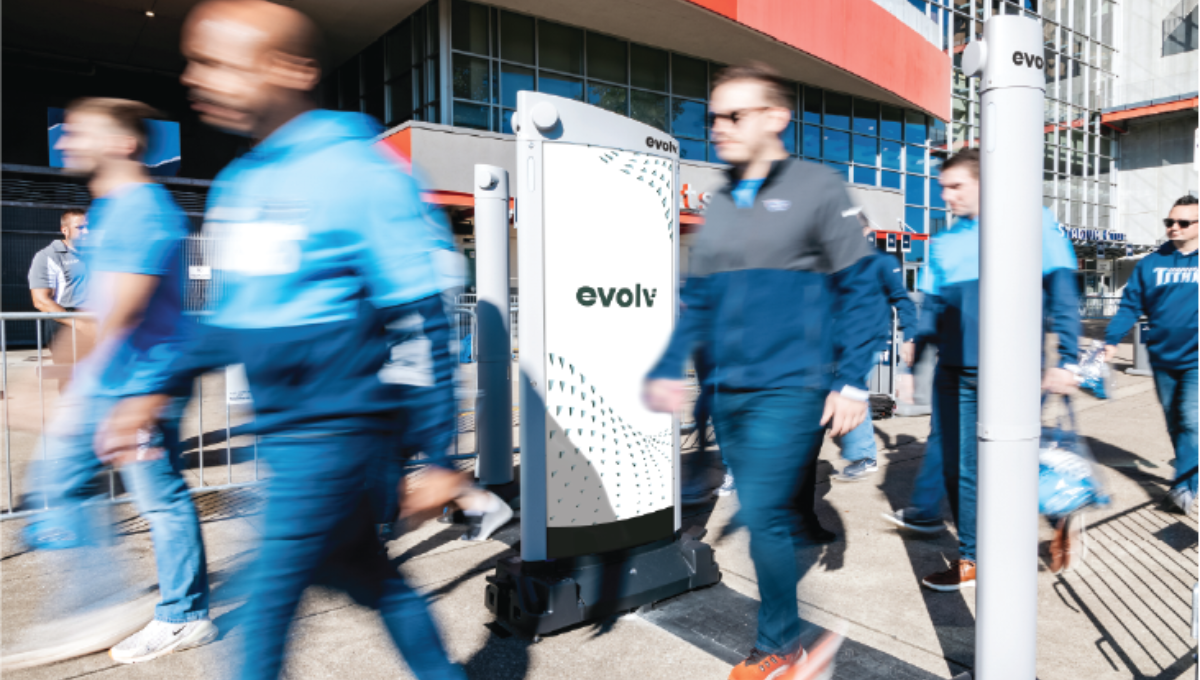
Speaking of the Texans and NRG Stadium, this is a great example of a primary Evolv Express® value proposition:  operational simplicity and peace of mind that a persistent problem is solved.  NRG Stadium hosted the College Football Playoff National Championship game on Monday night.  Five days later, the same building will host the Texans’ first home playoff game since 2020.  That’s a huge operational challenge, and ingress is always a concern in the post-season, with added numbers of VIPs and first-time attendees who are unfamiliar with the venue layout.  How nice, then, for the Texans and NRG Stadium staffs to know that ingress is one thing they don’t have to worry about in a very compressed work week. 

Best of luck to all 14 NFL teams competing to win Super Bowl LVIII.  My loyalties are clear, except in this weekend’s “Evolv Bowl” where I will be decidedly neutral.  And for the remaining 13 NFL teams that are not yet Evolv customers and already thinking about next season, just a friendly suggestion to add upgraded ingress screening to your planning mix.  We’d love to talk to you about the many reasons why champions choose Evolv. 


Champions Choose Evolv

Congratulations to the Columbus Crew, 2023 MLS Champions!  The Crew, one of Evolv’s earliest sports customers, beat LAFC by the score of 2-1 in the 2023 MLS Cup Final last Saturday.  This is the Crew’s third MLS championship (having won previously in 2008 and 2020), which is a testament to the quality and consistency of the organization on and off the pitch.

I think it’s also appropriate to note that, while perhaps not as exciting as the game action, Evolv did play an essential role in the 2023 MLS Cup Final fan experience.  Our Express platform has been a key part of every Crew home game at Lower.com Field, because the team relies on Express to securely and conveniently screen a large number of fans in a very short time through one main entrance.  Never was this more true than last Saturday, which saw that stadium set a record with 20,802 attendees.  As a sports industry veteran, I know that playoff games can be especially challenging for Ops staff because an atypically large percentage of attendees (VIPs, sponsors, celebrities, visiting team fans, and so forth) tend to be unfamiliar with the venue.  Add in the realities of a cool and damp December afternoon, which means more jackets and blankets, and you have all the makings for a difficult ingress.  But the Crew, the Lower.com Field staff, and Evolv Express handled the challenge without a hitch.

The Crew are not our only championship customer.  In fact, we’ve seen a flurry of recent championships from our client roster, including both major tenants at Ball Arena in Denver (Denver Nuggets, 2023 NBA Champions; Colorado Avalanche, 2022 NHL Champions), the Houston Astros/Minute Maid Park (2022 MLB World Series Champions), and the Los Angeles Rams/SoFi Stadium (2021 NFL Super Bowl Champions).

Winning a pro sports championship requires greatness from an entire organization, sport and business alike.  It’s no surprise, then, that the same teams that demand nothing but the best from and for themselves and their fans on the field have the same high standards and expectations off the field.  When that’s the goal, the choice for ingress screening becomes obvious … and that’s why champions choose Evolv.

Congratulations again to the Columbus Crew.  And with several of Evolv’s NFL customers well positioned for the upcoming playoffs, perhaps another champion will give us reason to send congratulations in about two months.  I can’t wait to find out.

In Praise of Solutions that Really Solve Something

Last Saturday, the Columbus Crew, one Evolv’s almost 40 sports clients, prevailed in their MLS Eastern Conference Semi-Final and will now face FC Cincinnati in the Conference Final this weekend. This battle for Ohio bragging rights and a trip to the MLS Cup Final will take place in Cincinnati rather than at Lower.com Field, but it still got me thinking about the role that we play today in MLS and sports in general.

By way of background, Evolv Express® has been a key part of the fan experience at Lower.com Field since it opened in July of 2021. The Crew wanted their new stadium to be modern in every respect, so old-school walk-through metal detectors just wouldn’t do. They also have a unique operational challenge: to accommodate their fans’ desired arrival patterns, they need to screen about 16,000 attendees at one entrance in 20 minutes!  Without compromising security effectiveness. With these requirements, Express was really the only option. In the two-plus years since, I’m proud to say that we’ve hit that spec more than 40 times.

We now have seven MLS clients. I take additional pride in this number, because I know it means that existing clients are referring us to new ones. And not just in MLS, but in MLB, NFL, and NHL too.

I think the main reason why one team recommends us to the next is because our “solution” really solves something … in our case, the entry line, which is a near-universal pain point for fans and operators alike. Columbus is an extreme example, but every team and venue has its own version of the challenge of safely admitting fans to the building without always making them incur long lines and inconveniences. When a venue deploys Express, we don’t just make this pain point better – we essentially eliminate it, even at peak times. And we can do this with fewer staff in less square footage. That can mean a much better outcome that actually costs less in total than the old way, which is a rare combo. 

It’s easy to see why this has become a popular solution. When a team or venue selects Evolv, they know they can check a big item totally off their to-do list … problem solved! How many venue technologies can offer that?

Good luck to the Crew, and all the other Evolv customers playing this weekend.    

A Proven Expert Weighs In: How to Make Schools Safer from Gun Violence

As a follow up to the post, “When Everybody’s an Expert on School Safety, Who Do You Trust?”  it would be irresponsible for us to point out the risks of implicitly trusting a self-proclaimed school safety expert without providing sound advice on ways to make schools safer from gun violence.  

Of course, there are many posts on this blog about making schools safer from gun violence, including a layered approach to school safety by Jill Lemond, former assistant superintendent of safety and school operations in Oxford, Michigan Community Schools. Before offering my advice, however, I think it’s important you know my credentials. While I’m typically reluctant to blatantly call attention to myself, in the age of “everybody’s an expert in gun violence,” I felt it important to provide my background to instill confidence in my recommendations. 

I am a former police officer. I have been trained in emergency response and tactical maneuvers. I have completed training with the Secret Service and FBI in Sniper School/Dignitary Protection and was a former member of the Special Weapons and Tactical Team (SWAT) team. I protected a former President of the United States. I was also a school teacher and principal for over 25 years and earned a doctorate in educational leadership and administration. I am highly skilled in lesson planning, educational technology, trauma-informed care and emergency response to critical situations in school environments. I currently advise schools on safety and weapons detection systems as part of a holistic approach to reducing the threat of gun violence. Based on more than 40 years working with students, parents, schools and communities on safety strategies and tactics, I offer the following three tangible recommendations for helping make schools safer from gun violence.   

1. Apply a multi-layered approach to school safety. I can’t stress this point enough; when it comes to school safety and security, every school needs to take a layered approach that spans people, processes and technology.  

From the people perspective, it begins with narratives from within the schools – voices from students, teachers, administrators, support staff, and parents to determine the steps needed to improve school safety. Taking this further, consider the benefits of initiating open dialog about the multiple measures of prevention that are available. We can reduce fear, anxiety and depression – leading factors in gun violence – through the introduction of trauma-informed care, restorative practices, professional learning communities, and transformational leadership workshops.  

For processes, I believe schools can take a collaborative approach in creating a mindset that introduces school safety in both a preventative and responsive manner. This isn’t about writing to-do lists or tips on how to react in critical situations that have already occurred. Rather, it’s about bringing educators, students, parents, and stakeholders together on the ways we can prevent an incident and what to do in the event of an incident.  

When it comes to technology, instead of debating the use of a weapons screening system, communities should see the discussion as an opportunity. It allows communities to come together and to create safer environments where technology is one of several approaches. 

I will share that after speaking with many students and teachers that have installed AI-based weapons detection systems in their schools, they say the use of these systems demonstrates that their districts are focusing on overall safety by starting with preventative measures first.  

They see the systems as part of the multi-layered approach that’s also helping to open dialog about safety from all aspects. In many schools, the systems create an additional opportunity for teachers and administrators to greet students as they enter schools each day. This helps set a positive tone where every student feels included and recognized and is yet another way we can make our schools and communities safer. 

2. Acknowledge that safety is an on-going priority and yes, it takes a village: Unfortunately, there is no magic wand or one single expert that can address all safety issues once and for all. It’s an ongoing process where school communities should focus on relationship building and de-escalation practices. This is where amazing experts and school safety experts can provide tremendous value in collaborating with educators on the multi-layered approach to school safety. This way, safety experts can do what they do best while educators and students focus on teaching and learning in safer environments. This doesn’t discount the narratives and insights from key stakeholders, but it does lessen the heavy burden of school safety that’s currently on the people at school to learn and teach. 

As you can see, there isn’t just one answer or one expert to reduce the threat of gun violence. It requires many, many people working together from a variety of perspectives in schools and the community. In fact, that is the only way we can make a difference – by working together in the interests of the greater good. 


3. Establish protocols before an incident occurs. Did you ever stop to think why schools are no longer one-room wooden houses and are now made of brick? Or why every school is required to have sprinklers, smoke detectors, fire alarms, call boxes, fire safety videos, and fire drills? According to the National Fire Protection Agency (NFPA), from 1937-1954, there were eight U.S. school fires in grades K-12 that resulted in 755 deaths.  

Today, while fires still occur in schools, there are far fewer, they are quickly contained and fatalities are rare. NFPA’s most recent data reports that in the years 2014-2018, fires caused annual averages of one civilian death, 39 civilian injuries, and $37 million in direct property damage. While every school tragedy is horrific, the actions that were put into place decades ago to reduce the risk of fires have also resulted in fewer fire-related deaths. We need to apply the same logic to reducing gun violence in schools. 

As gun violence continues to claim more lives, and the number of students and teachers killed in school continues to get higher, having systems in place to prevent weapons from entering should be part of safety protocols. Much like schools have alarms for fires, they should also have alarms for weapons to prevent them from entering the building. 

The good news is that more and more schools are adopting a multi-layered approach to safety that includes weapons detection screening. I believe the key to making this happen is by having a transformational leader that understands the layered approach to safety and leads a shared vision for safer schools. 

That vision is one where students perform at their best because they are less anxious and distracted by the thought of gun violence. Where teachers aren’t ready to leave the profession because of warranted fears and stress that their lives at risk. And where parents confidently send their children to school each morning knowing they will be able to tuck them in each night.   

When Everybody’s an Expert on School Safety, Who Do You Trust?


Open most U.S. newspapers or watch a news program today and you’re likely to see a story about a recent shooting or the impact of gun violence. Adding commentary to these stories and writing op/eds on ways to stop gun violence in schools are several self-proclaimed school safety and security experts. With armchair analysis and elementary advice, these “experts” capitalize on tragedies and fear while promoting their consulting services. Caveat emptor. 

 In our mission to make the world a safer place for people to gather, we believe it’s important to offer guidance when reading third party opinions on how to reduce the threat of gun violence in schools. We spoke with Kevin Eberle, EdD, retired school principal and Evolv advisor about how to evaluate a school security advisor and actionable ways that schools can reduce the threat of gun violence. 


Three Ways to Assess the Qualifications of a School Safety Expert 

When listening to a safety expert or reading their articles and reports, consider the following three criteria to fairly assess their qualifications. 

1. Qualify the source

Does the expert have a background in education, safety and security? While everybody has attended school, this doesn’t make everybody an expert in increasing school safety. Further, while many people have expertise in security, it’s a vast, fast-moving and growing area with many facets and technologies to learn and master. The veracity of an article or expert commentary should be based on the author’s or researcher’s experience in education, safety and security. 

I make this recommendation as a former police officer, teacher, and school principal with a doctorate in education. Additionally, I have been trained in emergency response and tactical maneuvers, completed training with the Secret Service and FBI in Sniper School/Dignitary Protection and was a former member of the Special Weapons and Tactical Team (SWAT) team.  

Based on my credentials, I can confidently say that when it comes to taking the advice of an “expert,” carefully consider how much knowledge and real world experience they have in school safety from a holistic point of view. Additionally, challenge the expert to provide specific examples of how they handled a lockdown, worked with local law enforcement, applied social/emotional learning to the development of students, de-escalated a fight in a classroom, and/or supported the parents and community after the unfortunate loss of students due to violence that happened outside of a school building. It’s one thing to talk about what you would or should do in an emergency and it’s quite another to share genuine examples of how crises were handled and averted.  

2. Assess the tone and merit of the advice.

Are the opinions and reports written as clickbait, with catchy headlines and obvious advice, or are they based on actual research. A lot of posts and listicles that focus on school safety highlight recent tragedies and provide elementary recommendations for improving safety.  

 For example, suggesting teachers strengthen relationships with students overly simplifies how to address the rise in gun violence in America. Also, advising educators, parents and communities work more closely together and practice safety drills is not an original idea. These actions have long been part of every school’s safety plan. When you read those articles, look for fresh advice that is actionable and realistic. 

 Lastly, be weary of “experts” who only seek to point out flaws to efforts schools are making to increase safety plans without offering viable, alternative solutions. Ask them: What is your suggested solution to this epidemic we are facing in schools?  

3. Question why the advice calls out a single technology solution instead of a holistic approach to safety, or uses the term “security theater“.

We all know that Americans, especially educators, are feeling increased anxiety about gun violence. Evolv’s recent survey on the topic found an increase in the number of Americans (36%) that believe they, or someone they love, are extremely likely to encounter an active shooter in their lifetime. When it comes to educators, that number jumps to 51%.  

Given the increased anxiety, you can understand why a term like “security theater” to describe weapons detection screening systems may upset parents and educators. The term may attract readers, but it’s counterproductive to school safety. Let’s unpack “security theater” and provide context for it with regard to weapons detection screening systems in schools. 

Security theater is a term that is bandied to argue that weapons detection screening systems offer a feeling of security, yet are ineffective in preventing weapons from entering areas where they should not be. Along with inciting fear, it’s also being used to provoke weapons screening technologies companies like Evolv to disclose trade secrets that, in the wrong hands, can put the public’s safety at risk. 

Having worked closely with Evolv and gaining a deep understanding of its patented technology, I can attest that the systems are not security theater. In fact, in 2022, Evolv detected and stopped over 176,000 weapons from entering places where people gather. The reality is no security system is 100%.  

 What’s also important to note is that every school has its own, distinct security needs and chooses the sensitivity setting that is right for their student body. Evolv works closely with key stakeholders to communicate all aspects of its systems, including limitations and capabilities, without publicly sharing a blueprint that a bad actor could use to do harm. Those responsible for keeping schools safe realize the importance of keeping this information confidential. It’s a common best practice in the security industry, notably the TSA, where sensitive information is carefully guarded to keep the public safe. 


Gun Violence in America: A Survey on Americans’ Anxiety

In November 2021, we launched our inaugural report to look at the impact gun violence has on Americans’ lives. We wanted to understand whether a shooting at a movie theater in Aurora, Colorado impacted someone on the other side of the country; to measure Americans’ collective anxiety around the pervasive gun violence; and to determine whether gun violence is on people’s minds when they perform everyday tasks, like going to the grocery store. While we expected a certain level of anxiety, the numbers that came back shocked us. But twelve months later, our second-annual report paints an even bleaker picture, one of a citizenry that is exhausted and frustrated, and willing to alter their behavior in order to create safer places. Our neighbors and fellow citizens want to be safe when they go to the grocery store, to see a movie, visit a theme park and go to school.

  • Of the Americans who own a gun and report carrying it with them, two-thirds say they are doing so more today than in 2021.
  • 36% of Americans believe they (or someone they love) are extremely/likely to encounter an active shooter in their lifetime. That is up from 29% in 2021.
  • A large majority of Americans – 88% – believe their chances of encountering an active shooter have increased in 2022.
  • Nearly 3 out of 10 Americans have thought about moving out of fear of gun violence against themselves or their family. This is up from 12% in 2021.

America’s gun violence is taking a significant toll on educators

For this year’s report, in addition to the general population, we collected insights from educators in an effort to understand how the nation’s gun violence is impacting them. The results are sobering and reveal the significant toll it is taking on our teachers.

  • 1 in 3 educators report that they have experienced a shooting at work/in a school setting, and 51% believe they are likely or extremely likely to encounter an active shooting at work in their lifetime.
  • Nearly 4 in 10 teachers report they are considering looking for another job because they don’t feel safe at work. Of those, 82% would like to change jobs within the next six months.
  • 26% have been threatened directly by at least one of their students.
  • 3 out of 10 educators say they have to take more mental health breaks in order to cope with their increased levels of anxiety.

Our director of education and former assistant superintendent of safety and school operations for Oxford Community Schools, Jill Lemond, said:

“These findings highlight a need for us, as a country, to do better for our educators. Unfortunately, we haven’t equipped schools to deal with the anxiety, fear, and trauma students are bringing into the classroom. As a result, those on the frontlines – most of whom haven’t been trained in mental health – are bearing the burden of this national crisis. We are asking too much of them, and this research reveals the toll that is taking.”

As a father whose daughter walks into a school building every day to teach second graders, these findings hit very close to home. We need to recognize that a nation without healthy, happy and supported teachers cannot be a place where new ideas thrive and innovation is cultivated.

While this year’s report does not offer a solution, it does help us understand the toll gun violence is taking on all Americans, not just those who have been directly affected by it. It is my hope that with this better understanding, we can begin to work together to find solutions that reduce the amount of violence, lower Americans’ anxiety and retain the freedoms and liberties we have come to love in this country.

A Note from Our Founders

Reflecting on ten years since the Boston Marathon bombing, we think about the work we have done together and what lies ahead.  In 2011 and 2012, we were actively searching for new technology that could transform an industry.  The Sandy Hook tragedy on December 14, 2012 was followed by 52 more mass shootings over 122 days, leading up to the Boston Marathon bombing on April 15, 2013.  It became clear to both of us that there was a bigger need for technology that could address this new and evolving epidemic. 

We started Evolv to develop products that could help reduce the risk for these catastrophic headline events.  Our founding principle was that any successful solution had to detect the weapons that were actually being used while allowing people to continue to live at ‘the pace of life’.  This meant not always having to stop, remove personal items or create traditional checkpoints.  It took us six years to develop and start deploying technology that could meet this need. Since the Express was launched in September 2019, we have screened over 700 million, helping keep them safer from harm. 

Unfortunately, ten years later the U.S. has more mass shootings, and gun violence continues to rage. Over the 106 days this year there have been 163 mass shootings taking 228 lives and 4,511 additional lives were lost to gun violence. Over 44 people each day. Our work is just getting started. 

As we continue to drive forward, developing new products, building and deploying our technology, spreading the word to help protect more places, and ensuring that Evolv can do this day in and day out, we thank our team of dedicated employees and partners who work every day to help make the world a safer place. Our mission has never been more important.   

Schools’ First Step in Security Planning: Conduct a Building Assessment

This is the first in a series of blog posts for K-12 administrators, educators and safety experts as they assess, create and revise safety plans for their schools and districts.  

According to K-12 Dive, the 2022 calendar year broke the record for the most school shootings in over four decades and marked one of the most violent years for youth ages 12-17. As of December 20, there were 300 shooting incidents on school grounds. In 2023, there have already been 18 school shootings with injuries or deaths. For school officials, those numbers reinforce a need to prioritize safety planning, highlighting the reality that school-based violence can happen anywhere, in any school community. Nothing is 100%.  

Before any safety plan can be designed or implemented, it is critical that everyone understands, agrees and communicates that, when it comes to physical security, nothing is 100% effective. Physical security requires a layered approach: people, process and technology. If there is a breakdown in one of those layers, the risks of threats can increase. Therefore, it’s important to ensure the community understands that any action you take towards safety is done to mitigate threats, not eliminate them.   

Assess first, plan second  

Just like when planning in other areas of life, it’s important to assess your buildings first before planning or making any decisions. For example, if your school/campus uses numerous entrances/exits for students, teachers, administrators and visitors, purchasing and installing a weapons screening system for one door might not reduce vulnerabilities. Before any technology is purchased or personnel is deployed, you need to take stock of your current security posture including the district structures, practices, and policies 

There are numerous resources, such as school security consultants, to whom you can outsource the assessment (and planning) process. But there are also free tools that can help you get started. For example, the National Institute of Justice has created a School Safety Assessment with an extensive checklist that includes external considerations, interior safety, access and visitor control information, school safety equipment, and school safety planning information.  

Here are some specific considerations when conducting that assessment (per the National Institute of Justice):  

  • Are video cameras available to monitor activities outside the school building? 
  • Are signs clearly posted instructing visitors to sign in at the office? 
  • Are the entry doors locked from the outside when not in use? 
  • Does a designated person perform security checks at the end of the school day and/or after evening activities? 
  • Does a designated person perform a check to ensure all exterior entrances and windows are locked, all night lights have been turned on and the alarm system is functioning? 
  • Are multiple entrances to the school building controlled and supervised from the inside for property security? 

Taking the time to complete a comprehensive safety assessment is the critical first step to any school safety plan. With this information in hand, you can begin to make informed decisions about the resources and tools needed to address the safety and security of your students, teachers and staff within your unique environment.  

In our next post, we will look at the key role resources and partners play in school safety planning.  

New Safety Protocols Cascade Niagara Falls City School District

Being late for school is one of the most common anxiety-inducing dreams experienced by people of all ages. You may have experienced it yourself: the feeling of running late and never being able to catch up with the rest of the class. What if that feeling was not a dream and, in fact, it is real because you’re a student that spends each morning waiting in line as part of the weapons screening process? This was the scene at many schools within the Niagara Falls City School District as security wands created long lines and set off false alarms at a rate of 50 percent, requiring half of all students to be searched daily and delayed in getting to class.  

With a student body of 2,000, the use of wands, often followed by bag checks, delayed the start of each day by an hour, sometimes longer in inclement weather. While one shortcut would have been to pull aside a handful of high-risk students that may be considered a threat to others, it would be an irresponsible and biased tactic. Therefore, the dated screening process continued, cutting into valuable instructional time, and requiring the attention of approximately 20 staff, consisting of teachers and school safety officers that had to leave their posts to manage the lines at school entrances. 

When COVID-19 hit, the issue was temporarily suspended. 


Post-COVID-19 Return to Classroom Heightens Need for New Safety Protocols 

Like many schools navigating the post-pandemic return to the classroom, Niagara Falls saw an uptick in violent actions. While the majority of incidents were not weapons related, there was more fighting. Mark Laurrie, school district superintendent, attributes the situation to students being away from each other for 18 months, having endured many social, physical, and sociological changes, and needing to figure out who they are, who their friends are, and how to reacclimate to the school day.  

“Consider that many of these students missed a lot, if not all, of the experiences of being in middle school and suddenly, they’re returning as high school students. The first few months back were challenging,” said Laurrie. “Meanwhile, as the threat of gun violence across the country increased, we knew we couldn’t continue to rely solely on our dated process of wands, bag checks and cameras. At the urging of some members of the Board of Education, we looked into a more modern way to detect and address potential safety threats.”   


A Layered Approach to Safety 

Laurrie assembled a team responsible for developing a comprehensive and layered approach to safety that spans people, processes and technology. Part of their role included keeping all stakeholders apprised of each step in the planning, research, evaluation and roll-out phases of the safety plan. They did this using a variety of communication vehicles including regular updates via email and social media, along with speaking at school committee and Board of Education meetings.   

The technology evaluation team included a school safety director, who was the former chief of police, along with a maintenance director and technology director. This team was tasked with researching weapons detection screening systems. The criteria included an unobtrusive, trauma-sensitive design that would not emulate the prison screening process. It also needed to be easy to set up and break down for use in other areas of the campus, leveraging the resource while ensuring the investment didn’t quickly become obsolete.  

After speaking with several schools and a close examination of the systems at Highmark Stadium, home of the Buffalo Bills, the Niagara Falls School District determined the Evolv Express systems were the right choice. The technology exceeded expectations while offering the least intrusive, fastest and most comprehensive weapons detection system. The next step was to get consensus from the stakeholders and community.  

Since the safety committee had been providing regular updates, the decision to install Evolv systems received unanimous support. The systems were first installed in the high school and two middle schools. To ease the transition to the new safety protocol and have the systems support the culture in the school environments, each Evolv system includes images of the school mascots.   

Niagara Falls Schools Cite People, Processes and Technology Benefits 

The schools have seen many benefits since installing the Evolv systems. “Using Evolv, we’ve reduced the entry screening process from one hour down to 15 minutes, and from a staff of 20 down to three, all without compromising safety,” said Laurrie. He added that the sensitivity ratings were set at the highest levels to over-alarm as part of establishing the new school safety standard. Still, they reduced the wand-based false alarm rate from 50 percent down to 10 percent using Evolv Technology. 

Teachers and staff have returned to their posts throughout the building instead of being focused on the entrance. “The Evolv systems provide a ripple effect of security upgrades as students are less likely to act up when they see an adult in the hallway,” said Laurrie.   

Also, since students easily flow into the schools, the systems create an opportunity for teachers and administrators to greet students to start the day. Developing these personal connections is an important part of a layered approach to safety – students are less likely to start fights or initiate violence when they feel seen, heard and part of the community.  

Since setting up and taking down the Evolv systems is a seamless process, Niagara Falls also uses them for football games, choral concerts, graduations, and even voting.   

From a technology perspective, Laurrie said, “We also like that Evolv systems work independently and don’t interfere with our computer network. And we have the assurance that the AI technology is regularly updated so we’re not investing in technology that will quickly be outdated. Everybody feels safer, the students don’t feel it is obtrusive, and the community feels more protected.” 

After using the systems for a year, Niagara Falls decided to standardize on Evolv and purchased more systems for its elementary schools. Evolv continues to complement the school district’s layered approach to safety, making those late-to-school fears a thing of the past. 


What Is Dignified Screening and Why Does It Matter: A Look at Schools

Backpacks and lunchboxes. Ballgowns and tuxedos. Foam fingers and rally caps. When we go to schools and events, we dress for the occasion and breathe the excitement in the air. We also want to feel safe, part of a community, and welcome – not singled out. 

Whether it’s conscious or unconscious bias at work, we have all witnessed certain individuals being screened more closely while others breeze through security checks without a second glance. Helping to reduce the risk of bias and providing equity to all students and venue guests in the security process is a foundational building block of Evolv Technology’s AI-based weapons detection screening systems. It is part of what allows us to provide dignified screening as we advance our mission of making the world a safer place for people to gather.

To explore and explain what dignified screening in schools means, we sat down with Mike Ellenbogen, Evolv Technology co-founder and chief innovation officer, and Kevin Eberle, education advisor, retired school principal and former law enforcement officer.

Q. What is dignified screening?

Dignified screening is a free flow, non-invasive way to conduct security checks to make schools and venues safer in a welcoming manner.  It means security without feeling invaded, targeted, or stressed by the weapons screening process.

When we set out to create Evolv Express, achieving more dignified screening was an important part of our innovation process, as we built the system to quickly and effectively single out objects, specifically guns and large knives, and not individuals. Along with treating everybody fairly, dignified screening fosters more daily interactions between students, teachers, and administrators because it creates an opportunity for an adult to personally welcome everyone in the student body each morning.

In fact, when students walk through an Evolv System, they often don’t notice. This is because the system is designed to blend with the school environment while the advanced AI screening reduces lines so that students do not always have to break stride. Unlike metal detectors that create lines and conditions that may stir anxiety, Evolv systems promote calm.

Q. Why is dignified screening crucial in a school setting?

Students already face a number of pressures and challenges. Their focus should be on learning, developing and building relationships. They shouldn’t be distracted with fear that a shooting may happen at school. And they shouldn’t feel that a safety screening is going to embarrass them in any way. For weapons screening to be effective and viewed as a safety ally, the systems need to be designed to recognize and accommodate the needs of the many different types of students that pass through them while being able to accurately and aptly identify safety threats.

In more than a few instances, students with reputations as troublemakers – due to rule-breaking behaviors yet not considered a threat to school safety ­­– were surprised they weren’t stopped by the systems. They weren’t carrying anything that was a risk to safety but they were used to being viewed in a less than positive light. For these students, not being singled out worked wonders for morale and resulted in fewer disciplinary actions because they felt like they were seen as equals to their peers.

Q. What would be “undignified” about school security today?

Any process that detracts from students being able to learn, grow and make friends can fall into the category of undignified screening. This includes fostering an environment of fear and punishment, which can happen in a school’s approach to active shooter drills where students are taught to hide under their desks and pile up the furniture. It’s also undignified to use the type of metal detectors that are frequently seen at airports or prisons requiring students to remove certain items on their body, be scanned by a hand wand, or as we mentioned above, be singled out in a crowd without any practical reason or proof they are carrying a weapon.

You can also think it’s undignified to put too much responsibility on students to protect themselves from school shootings. Keeping students safe is the responsibility of the adults in the school along with local law enforcement and first responders.

One way to think about dignified screening is in the context of school fire drills. Students are taught what to do if there is a fire, but they’re not relied upon to prevent a fire. That’s the responsibility of adults and includes the selection of preventative technologies including alarms, sprinklers, and critical event management systems. The same principle applies to preventing gun violence where schools choose weapons detection screening systems as part of a layered approach to school safety.

Q. How does design play into creating a dignified screening approach?

The design of the Evolv systems creates a non-invasive solution without breaking the laws of physics. We had several prototypes that didn’t meet our criteria but through continuous testing and customer feedback we designed the archless columns and wide lanes that you see today. We also make it easy for customers to add their own graphics or an image of their school mascot so the systems become part of the environment and don’t look like an afterthought. We’re also consistently improving the AI threat detection for even faster throughput of students and guests without compromising safety or the user experience.

While we’ve talked about how the design enables people to walk through the systems without having to break stride, empty their pockets or be wanded, it also allows them to focus on what’s beyond the tech, which is the real reason they’re at school or at a public venue. Imagine going to a gala at Lincoln Center or the MoMA wearing a ball gown or tuxedo and having to wait in line outside and go through a prison-like metal detector as bags are opened and checked. Evolv systems are designed to provide a seamless, dignified entry so students and guests can walk into a venue and fully enjoy the experience.

Q. How does a dignified screening approach improve equality and decrease bias?

Dignified screening focuses on identifying whether a person is carrying an object that is a safety threat. This way, security responds to alerts instead of reacting to a perceived threat based on unconscious bias. By taking the focus off individuals and putting it on the objects a person is carrying, you can improve equality and decrease bias. In other words, the staff or guard responsible for working the Evolv Express system is not expected to make a judgement call as to who to search, because the system does it for them. 

Manually checking every single individual is usually not possible, especially when you have a growing line at the entrance. In these instances, it’s been shown that guards frequently select individuals to search based on personal biases, or only pull aside only those carrying backpacks. Since the Evolv systems see the human body as a “bag of salt water” and are designed to identify objects, it doesn’t see factors that may influence singling a person out – gender, race, color, style of clothing, or religious affiliation – it removes bias from the screening process.

Q. In addition to schools, where else do you think we’ll see an increase in dignified screening?

We’re already seeing an increased demand for more dignified screening in cities and outdoor spaces hosting festivals, block parties, worship services, and annual celebrations including New Year’s Eve and the Fourth of July. For these events, Evolv systems conveniently blend in with the environment while keeping guns out to create safer and more fun experiences for everyone.