Risk-Based Security Gets in the Game

If you’re coaching a soccer team in the World Cup this summer, you’re going to want to adapt your defensive strategies for each opponent. To stop an aggressive, high-scoring offense, you’ll keep your defenders back and play cautiously. To beat a cagey, clever foe, you’ll apply some pressure to try to force turnovers.

Successful strategists in the security arena face the same kind of tactical issues. The stakes are much higher, of course, but security pros need to deal with their own group of “attackers” who are skillful, resourceful, and motivated to succeed. Soccer coaches can’t deploy a “one-size-fits-all” strategy, and neither can today’s security strategists.

In security, this strategy has a name. It’s called “Risk-Based Security,” RBS for short. If this sounds like a simple, common-sense approach to a serious, complicated issue, it is – sort of. At its core, RBS defines a commitment to flexibility and adaptability to deal with ever-changing threats. It also values the use of “tailored” systems that are designed to mitigate risk, evoke a sense of safety for users, and not present an undue burden on the user population.

The traditional, one-size-fits-all approach to security is cumbersome. It usually involves having security officers physically inspect every person entering a facility, relying heavily on the limited capability of metal detection. This approach provides a service, deflecting obvious traditional threats. But it is costly and slow, and often ineffective without additional capabilities to screen more aggressively.

Security systems that implement a risk-based approach to screening, for example, tend to be more accepted by the public than those that don’t provide any differentiation. A good example of this practice is the TSA PreCheck program. TSA PreCheck leverages a preliminary vetting process that separates “low-risk” passengers from those who are unknown or may require additional screening. By extending the process beyond the airport, TSA has significantly increased the throughput of its PreCheck screening lanes for passengers while mitigating risks and reducing staffing and equipment costs.

A risk-based approach recognizes that while there are no perfect security solutions, those that strategically balance security, access, usability, and cost can ultimately provide the best long- term protection against an evolving adversary.

An effective RBS strategy considers changes in the environment over time, and changes in the risk profile of different groups of people – employees, visitors, and dignitaries – over time. It also puts equal emphasis on technology solutions and more people-focused factors like organizational, managerial, and operational capabilities.

It relies primarily on a short list of components: gauging threats; understanding vulnerabilities; vetting users; identifying users and attaching risk assessments to them and their belongings; routing high-, low- and unknown-risk users through the appropriate security channels; and using equipment to screen personnel and belongings.

A successful risk-based security strategy is reliant on an enterprise approach that not only provides excellent technology to perform physical screening but also ensures that the personnel performing the screening are using the technology appropriately, that people presenting themselves for screening have already been assessed, and those vetted to a higher standard are provided a screening process that is not unduly burdensome.

There is no “silver bullet” or “cookie cutter” enterprise approach. What might work particularly well in office buildings and places of worship, where it is possible to learn more about the regular user, will be different than in public venues where most people presenting themselves may be unknown, and this may present a different threat.

As attackers have expanded their focus, major sporting and public events have become more of a target. The challenge commercial entities have in implementing a risk-based program is two-fold. First, a “known patron” program must be established along with a quick way to validate membership in that program at the entry to the screening system of a facility. Second, a program must tailor the screening process to account for the different risk levels of those entering the venue.

The potential benefits to implementing a risk-based screening program are significant. This approach can create a better experience for known, repeat customers. A risk-based screening program can also improve overall brand perception of a venue by implementing “smart” security solutions. These risk-based solutions help make entering a venue easier while maintaining a level of safety, allowing faster throughput, and thereby mitigating the risk of long queues. Overall security costs can potentially be decreased since people can be screened at a faster rate, requiring less security staff.

Further, while people want the safety that screening systems provide, they do not want to lose the culture, openness, and sense of welcome that make their venue, stadium, or house of worship special. Implementing a risk-based security program provides the best option and allows an organization to tailor a program that fits their culture, so they do not have to sacrifice what they represent for safety.

“One-size-fits-all” security can work in specific, limited situations. But it’s no match for today’s attackers. Successful security strategists, like World Cup contending soccer coaches, make sure they’re prepared. They have their tools, their plans, and their training intact, and they’re ready to defend.

Learn more here about the value of balance, improved security and a better customer experience.

Six Ways to Prevent Soft Targets from Terrorist Attacks

We bet five years ago that soft-target attacks would become the favored tactic of terrorists, particularly if ISIS began to lose ground on the battlefield. Unfortunately, we were right.

Many stadium and arena operators no longer allow visitors to bring backpacks or other bags into their venues. Policies like these were instituted to ensure that the venue can balance the need for effective screening with the need to avoid miserably long security lines.

But there’s no getting around it: for anyone wanting to pack an extra sweater, a snack for the baby or raincoat just in case, this is a big deal–a serious degradation of the customer experience. Unfortunately, such are the compromises security professionals have had to make in this post-ISIS era. Soft-target attacks–everything from sophisticated assaults on iconic arenas to lethal “lone wolf” attacks on unsuspecting neighborhood nightclubs—are on the rise, forcing operators of public venues of all sizes to rethink their security strategies. All too often, venues have had to resort to the oldest, bluntest response: hire more security guards and request more police support and do more thorough physical searches.

We all know that’s not a sustainable response. Throwing labor at the problem is costly in the short-term and economically unsustainable in the long-term. It’s not sure to dissuade a determined terrorist, but may impact your brand. After all, your business is to provide a carefree, entertaining experience for your customer—not to turn a night out into what feels like a visit to a hardened military installation. And when customers complain, we all know who will bear the brunt of the pressure. You will.

Therefore, here are six ways that screening technology can protect soft targets from terrorist attacks:

1: Create an Enhanced Visitor Experience – Deliver security at the pace of life. Visitors are not asked to “pause and pose”. Because it uses high-speed millimeter imaging, the system can screen people at walking speed. Since we need to search for mass casualty weapons, there’s no need to empty one’s pockets and purses into “dog bowls”.

2: Don’t Treat All Threats Equal – Our industry responded impressively after 911, with powerful systems designed to find anything a highly trained terrorist could use to attempt a repeat of that infamous day. The unsophisticated lone wolves who carried out most of the more recent soft-target attacks needed powerful weapons and explosives to cause mass casualties. We’ll look for those—not screwdrivers, razor blades, or other everyday objects with minimal potential for terror.

3: Don’t Deploy Security That is All or Nothing. It’s Complicated.  – In the past, the main question for many organizations was whether to deploy screening technology. Like it or not, ISIS has changed that calculation. Now, almost any place where crowds gather can be a target. Look into technology that improves your defenses at all your facilities – whether it is adding another layer of protection to a sports stadium or introducing one to a previously unprotected nightclub or corporate office.

4: Know that Flow Matters – Living in a free society means accepting some risks. Security cannot come at the cost of freedom of movement, freedom from intrusive searches and freedom from inconvenience.

5: Understand that Customer Experience Matters – Minimizing the unpleasantness of screening is not a secondary consideration—not for your customers and visitors, and not for your boss. Our working assumption is that if our technology hurts your ability to retain and attract business, you won’t use it for long. You need to protect your customers and help your business.

6: Consider Future-Proofing Through Software – Powerful software platforms help you easily adjust as new threats emerge. This is crucial to keep you prepared for today’s sophisticated terrorist networks, who use social networks and other tools to quickly share instructions for building more lethal bombs or executing new types of attacks.

It’s time the security industry stepped up with solutions for the reality of today’s world. Our technology is specifically designed to expose the threats behind mass casualty attacks that have become all too common to help your front-line personnel take quick action without inconveniencing your customers.

To learn more, read the three questions security directors need to ask before the next soft target event here.

Security content kit for stadiums and arenas

Whitepaper: Balancing Security, Visitor Experience, Operational Efficiency and Cost Considerations

Summary

All security systems are designed to keep people safe. The challenge is balance. Does the security present an undue burden, either to the provider or to the customer, does it evoke a sense of safety, and does it operate within the cultural bounds of the venue? And of course, how much does it cost? Security experts generally agree the use of a venue specific risk-based security (RBS) approach is preferable to “one-size fits all” solutions. Flexibility and adaptability are key factors in RBS solutions, allowing “tailored” systems designed to mitigate risk while maximizing customer movement or throughput with minimal disruption.

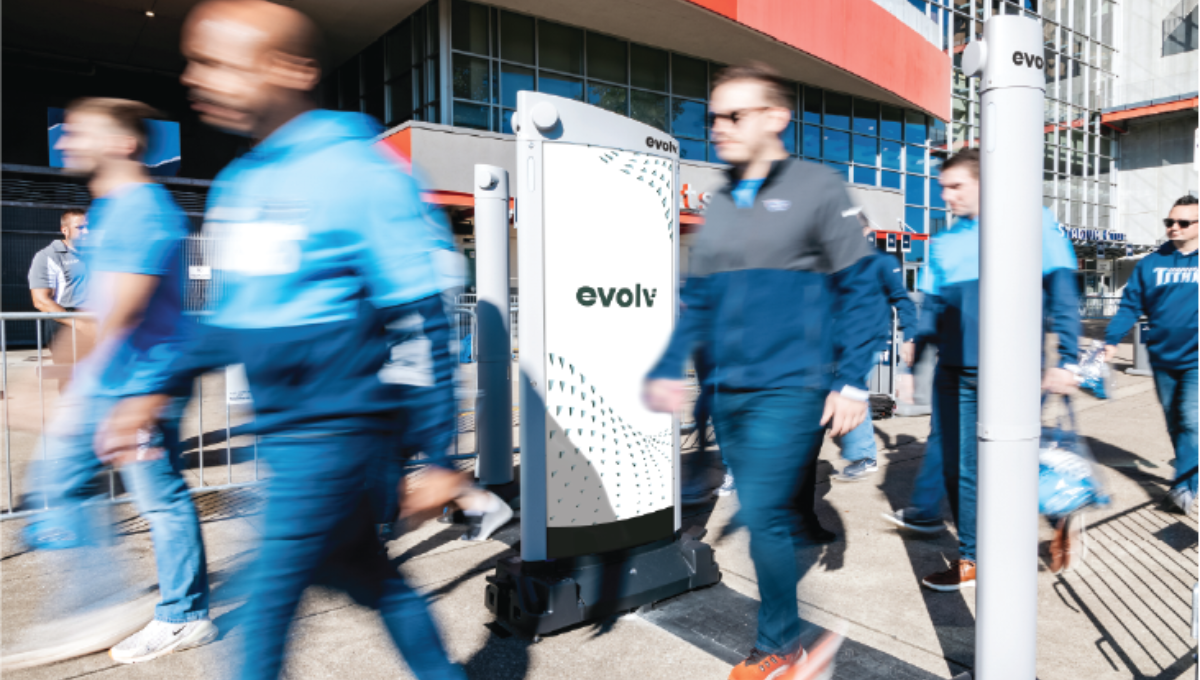
Evolv Edge was designed and built to aid an organization’s move toward a risk-based security approach and provide balanced detection across a range of threats in a changing environment.

Download this whitepaper to learn how Evolv Technology’s Edge system provides the best RBS solution to detect metallic and non-metallic threats that cause mass casualties.

Download Now

Fill out the form to download this whitepaper to learn about balancing security, visitor experience, operational efficiency, and cost considerations

Evolv screening technology at Oakland International Airport

As an innovator in airport security and one of the most traveled airports in California, Oakland International Airport (OAK) installed the Evolv Edge™ earlier this year as a way to enhance its employee screening program. OAK is committed to applying advanced, innovative solutions to complex security operations. The Transportation Security Administration (TSA) recognized this commitment by selecting OAK as a TSA Innovation Task Force Site, a prestigious distinction that promotes improved efficiency and allows the Airport to test technologies to benefit its growing passenger base.

Read Full Story

For some of us at Evolv, the mission of keeping people safe is personal

Fifteen years ago my college roommate perished as the north tower of the World Trade Center came down. Parents lost their child. A man lost his brother. A wife lost her husband. A son lost his father.

Twenty seven years ago I started my career, working two blocks from the World Trade Center. I lived and played in the shadows of those towers. A close friend and colleague from those banking days escaped the tragedy of September 11 and has spent the past fifteen years rebuilding his firm, honoring the sixty six lives that were lost, and helping the firm’s families.

September 11, 2001 has had a profound impact on how I look at the world and my contributions to it each day.

After a career helping companies use technology to address their business challenges, I am fortunate to be the co-founder of a company who is helping society address one of its biggest problems. I am working with a talented team of people that shares this passion and we’re dedicated to applying technology to help solve this difficult challenge in every place people live their daily lives.

As a team, we have worked in, looked at, and experimented with technology that has become pervasive in many other industries. There are so many different technologies: imaging sensors, human augmented machines, miniaturized compute platforms, artificial intelligence models, microservices-based architectures and augmented reality, to name just a few, that can be applied to making this world a safer place. These technologies can be combined in interesting ways using concepts such as a modular design, internet of things, software as a service, user-centric models and crowd sourcing to deliver compelling solutions.

Our team has spent the past three years together developing an architecture, a set of technologies, and our first product to address the persistent problem of ‘known wolves’ perpetrating harm on members of our global community. To address the continuously changing, pervasive threat, we have developed a system that, we hope, can be dynamic, intelligent, and effective in preventing these types of people from committing those types of acts.

I wake up each day driven by our mission. I don’t want another Steve to be taken from his family. I don’t want another Jon to have to comfort the families of lost colleagues. I don’t want my children to be concerned if they should go to a ball game or ride the train or enter an office building. I don’t want them to live that kind of life.